 Anacortes Siding
 Windows Built for a Waterfront Address
Flounder Bay sits close enough to the water that the air itself is part of your home's maintenance plan. Salt-laden moisture off the bay works its way into anything with exposed metal, unsealed wood, or a weak weather seal, and it does this slowly enough that most homeowners don't notice until a window is already failing. Add Skagit County's long wet season and the driving rain that comes off Rosario Strait and Guemes Channel during winter storms, and you have a climate that is genuinely harder on windows than most inland neighborhoods just a few miles away.
Custom windows for a property like this aren't about upgrading for looks. They're about matching the window assembly — frame material, glazing, flashing, and sealant — to conditions that will test every weak point within a few wet seasons. We treat Flounder Bay jobs differently than a standard Anacortes installation because the environment demands it.
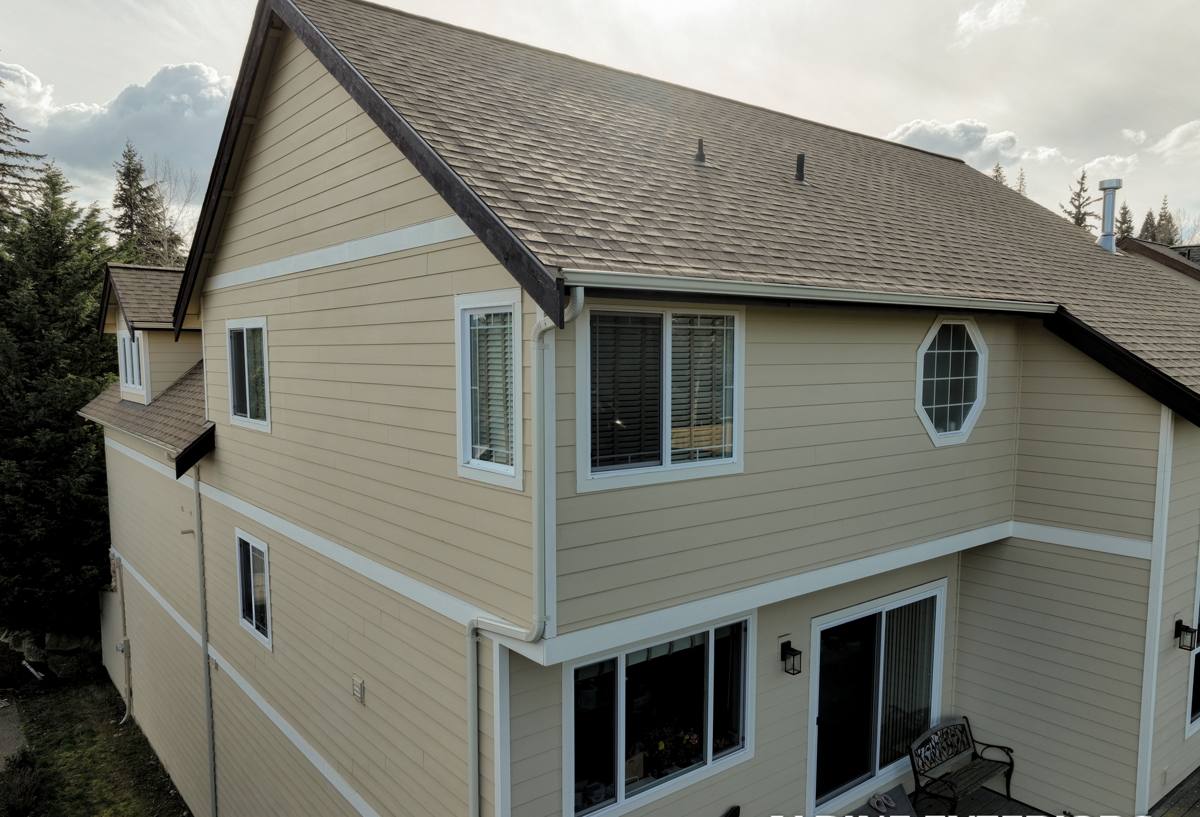
The Three Things Working Against Your Windows Here
Salt Air
Airborne salt accelerates corrosion on aluminum hardware, screws, and cheaper cladding, and it can degrade certain sealants faster than the manufacturer's rated lifespan would suggest inland. This is a slow, cumulative process — it shows up as pitting, discoloration, or hardware that starts sticking years before it should.
Driving Rain
Wind-driven rain doesn't just hit a window, it pushes against it, forcing water into any gap in the flashing or sealant that a calmer rain would never find. Flounder Bay's exposure means this happens more often, and with more force, than at a home set back in the trees a mile inland.
Moss and Prolonged Dampness
Skagit County's moss season is long, and moisture that lingers on sills, trim, and the surrounding siding creates conditions where mildew and moss can take hold around window openings if drainage isn't handled correctly. Once organic growth gets a foothold near a window frame, it holds moisture against the assembly and speeds up everything else on this list.
None of these problems are dramatic on their own. Together, over years, they're why so many replacement window jobs in waterfront neighborhoods turn out to be repeat visits — the first installation didn't account for what the environment was actually going to do.
Choosing the Right Frame Material
There's no single "best" window material for every home — the right choice depends on your home's exposure, your budget, and how much upkeep you want to take on. Here's how the common options hold up specifically in a salt-air, high-moisture environment like Flounder Bay:
| Material | Salt Air Performance | Maintenance | Typical Fit |
|---|---|---|---|
| Vinyl | Very good — won't corrode or rust | Low; occasional cleaning | Most homes; strong value |
| Fiberglass | Excellent — highly stable in temperature swings and moisture | Low | Higher-exposure walls, long-term durability priority |
| Wood-clad | Good if cladding and seals are intact; vulnerable if compromised | Higher; needs monitoring at joints | Homes prioritizing a traditional wood interior look |
| Aluminum | Weakest in salt air without upgraded coatings; prone to pitting | Moderate to high | Generally not our first recommendation this close to the bay |
We lean toward vinyl and fiberglass for most Flounder Bay projects because they don't give salt air and moisture anything to attack. If a homeowner wants a wood-clad look, we're upfront that it comes with more long-term maintenance in this specific location — that's a trade-off, not a defect, and it's worth knowing before you commit.
Glazing: What Actually Matters for This Climate
Double-pane windows with a low-E coating and an argon fill are the practical baseline for the Pacific Northwest, and they perform well in Flounder Bay's moderate but damp temperature range. Triple-pane adds extra insulation value and sound dampening, which is worth considering on a wind-exposed wall facing the bay, but it's a real cost increase and not always necessary on a sheltered elevation of the same house. We look at each wall's exposure separately rather than speccing the whole house the same way by default.
Whatever glazing you choose, the spacer and seal quality matters as much as the glass itself — a cheap edge seal is often the first thing to fail in a persistently damp environment, showing up as fogging between the panes years before the glass itself would ever be a problem.
Installation Details That Prevent the Failures You Don't See Coming
A high-quality window installed poorly will fail faster than a mid-grade window installed correctly. This is the part of the job that doesn't show up in a brochure but determines whether your windows hold up through twenty Skagit County winters:
- Sub-sill flashing pans that direct any water intrusion back out, rather than letting it pool at the sill or migrate into the wall framing
- Proper head flashing integrated with the house wrap or building paper, lapped correctly so water is shed downward and outward, never trapped behind the trim
- Compatible sealants rated for both temperature swings and long-term salt air exposure, applied at the right joints — not just a bead around the outside trim
- Correct shimming and squaring so the window operates smoothly and the weatherstripping compresses evenly on all four sides
- Interior air sealing, not just exterior caulking, to stop condensation from forming inside the wall cavity during cold, damp stretches
Skipping any one of these doesn't cause an immediate problem. It causes a problem in year three or four, usually hidden behind trim or siding, which is exactly why we treat flashing and sealing as non-negotiable steps rather than optional extras.
Signs Your Current Windows Are Losing the Fight
If your home is in or near Flounder Bay, these are the early warning signs worth acting on before they turn into a bigger repair:
- Fogging or haze between the panes of a double-pane window (a failed seal)
- Soft, discolored, or bubbling trim or sill material
- Windows that stick, won't latch fully, or have become harder to open over a season or two
- Visible corrosion or pitting on hardware, hinges, or metal cladding
- Persistent moss, algae, or dark staining around the window opening
- A noticeable draft or cold spot near the frame during winter storms
- Musty smell or visible mildew on interior sills or the wall just below a window
Any one of these on its own might just need attention. Two or more on the same window usually means the seal or flashing has already been compromised and it's time for a real assessment rather than a caulk-and-hope fix.
How We Approach a Flounder Bay Window Project
- On-site assessment. We look at each window's actual exposure — which walls face the bay and prevailing wind, which are sheltered — rather than treating the whole house as one uniform job.
- Material and glazing recommendations. Based on exposure, budget, and how the window will be used, we recommend materials suited to that specific wall, and explain the trade-offs honestly.
- Old window removal and opening inspection. This is often where hidden moisture damage from a prior poor installation gets found — better to catch it now than seal it back up.
- Flashing and sealing done to a consistent standard. Sub-sill pans, head flashing, and sealant application on every unit, every time — not just on the windows that are easiest to reach.
- Installation, squaring, and operational check. Every window gets tested for smooth operation and full weatherstrip contact before we call the job done.
- Cleanup and final walkthrough. You see the finished work and understand what was done and why, before we leave.
Maintenance in a Salt-Air, Moss-Prone Climate
Even correctly installed windows benefit from a little seasonal attention in this environment. Rinsing accumulated salt film off frames and hardware a couple of times a year, keeping gutters and nearby drainage clear so water isn't sitting against the wall below a window, and checking caulk lines for cracking before the wet season sets in will meaningfully extend the life of the installation. None of this is heavy work — it's the kind of five-minute check that prevents a small issue from becoming a wall repair.
Why Hiring a Crew That Already Works Flounder Bay Matters
A contractor who mostly works inland jobs isn't necessarily going to under-build a waterfront installation — but they may not default to the sub-sill flashing, sealant selection, and material choices that this specific exposure calls for, simply because it's not what they see day to day. Working regularly in Flounder Bay and along Anacortes's waterfront means we've seen how windows actually age here, not just how they're rated to perform in a lab. That shows up in the small decisions on your job: which wall gets the upgraded sealant, whether a given elevation justifies triple-pane, how tight the flashing detail needs to be at a given corner. It's also useful when questions come up mid-project — a crew that knows the neighborhood's conditions can make a sound call on-site instead of guessing.
If your Flounder Bay home has windows showing any of the wear signs above, or you're planning a custom window project and want it done to a standard built for this specific environment, we're happy to walk the property with you and put together a straightforward, no-pressure estimate. Use the form below to get started.