 Anacortes Siding
 Building Decks for the Mount Vernon Climate
Mount Vernon sits inland from Anacortes along the Skagit River valley, but it doesn't escape the weather that defines this part of Skagit County. Homes here deal with a long wet season, salt-tinged air drifting in off Puget Sound and the Salish Sea, and enough shade and moisture to grow moss on almost any horizontal surface that isn't maintained. A deck built without that reality in mind will look fine for a season or two, then start showing problems — soft boards, rusted fasteners, a slick green film underfoot. We build decks for this specific climate, not a generic one.
A correctly built deck in this area isn't just about picking a nice-looking board. It's about the framing underneath, the hardware holding it together, the flashing where it meets the house, and a maintenance plan that actually fits how wet this region stays for months at a time.
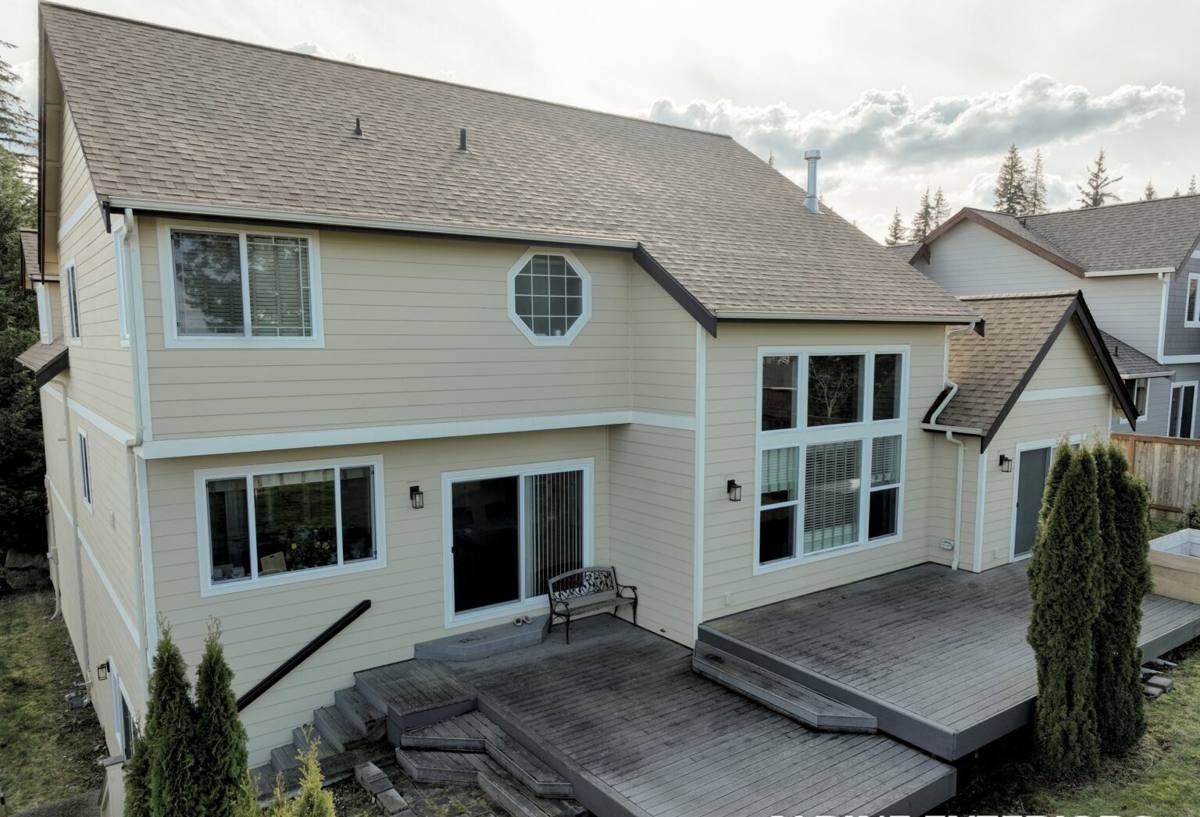
What the Climate Actually Does to a Deck
Most deck failures we get called out to repair aren't dramatic. They're slow, and they start in places homeowners can't easily see.
Moisture and Ledger Board Rot
The ledger board — where the deck attaches to the house — is the single most important structural connection on most decks, and it's also the most common failure point in a wet climate. If it isn't properly flashed to shed water away from the house framing, moisture works its way in behind the siding and rots the structure from the inside, often long before it's visible from outside.
Salt Air and Fastener Corrosion
Being close enough to the Sound for salt-laden air to reach inland means standard fasteners and hardware corrode faster than they would further from the water. Rusted nails, streaking stains around screw heads, and weakened joist hangers are common on older decks built with the wrong grade of hardware.
Moss, Algae, and Slip Hazards
Shade, moisture, and mild temperatures are exactly what moss and algae need to thrive. On deck boards, that buildup isn't just cosmetic — it holds moisture against the wood and creates a genuinely slippery surface, especially on stairs and in shaded corners that never fully dry out between rains.
Freeze-Thaw Movement
Skagit County doesn't get extreme cold most winters, but it does get enough freeze-thaw cycling to stress footings, fasteners, and any wood that's already retaining moisture. A deck that drains poorly will show that stress first — cupped boards, popped nails, a railing post that's started to wobble.
Decking Material Options for This Area
There's no single "best" decking material — there's a best fit for your budget, your maintenance appetite, and how much sun or shade your deck gets. Here's how the common options compare for a Skagit County backyard:
| Material | Moisture & Moss Resistance | Maintenance | Typical Lifespan |
|---|---|---|---|
| Pressure-treated wood | Good if sealed regularly; prone to moss in shaded areas | Annual cleaning and re-sealing | 15–20 years with upkeep |
| Cedar | Naturally moisture-resistant, but softer surface holds moss without cleaning | Cleaning and staining every 1–2 years | 15–25 years with upkeep |
| Composite decking | Very good; doesn't absorb moisture like wood, but can still grow surface algae | Periodic washing, no staining or sealing | 25–30+ years |
| PVC decking | Excellent; fully synthetic, minimal moisture absorption | Occasional washing | 30+ years |
Wood costs less up front and gives a more traditional look, but in a climate this wet, it demands consistent upkeep to avoid moss buildup and gray, weathered boards. Composite and PVC cost more initially but hold up with far less attention, which matters if your deck sits in a shaded, north-facing yard that never gets much direct sun to dry it out. We'll walk through the honest trade-offs for your specific site — sun exposure, tree cover, and how much maintenance you actually want to do — rather than just pushing whatever's easiest to sell.
What a Correctly Built Deck Involves
The visible decking is maybe a third of the job. What holds it up matters more, especially here.
- Footings set below the local frost line and sized to the soil conditions on your lot, not a one-size-fits-all minimum.
- Ledger flashing that properly sheds water away from the house wall, not just a bead of caulk behind the board.
- Corrosion-resistant hardware — stainless steel or heavy hot-dip galvanized joist hangers, screws, and bolts rated for ground contact and coastal exposure.
- Proper board spacing and airflow underneath the deck so wood can actually dry out between rain events instead of trapping moisture.
- Drainage planning so water sheds off the deck surface and away from the foundation, rather than pooling against the house.
- Permitted, inspected work where required, so the structure is signed off by someone other than the crew that built it.
Skip any one of these and the deck might still look good on installation day. The problems just take a year or two of Skagit County rain to show up.
Permits and Local Requirements
Depending on exactly where your property sits, deck permits for the Mount Vernon area are pulled through either the City of Mount Vernon or Skagit County, and the requirements differ based on the deck's height, size, and whether it's attached to the house. Decks over a certain height off grade or attached to the structure typically require a permit and inspection; smaller, low, freestanding decks sometimes don't. We handle the permit process as part of the job rather than leaving it for the homeowner to sort out, and we build to code whether or not a given project technically requires a permit — it's the same structural standard either way.
Our Process for a Mount Vernon Deck Project
1. Site Visit and Design Conversation
We look at your yard, the sun and shade pattern, drainage, and how the house is framed at the connection point, then talk through what you actually want to use the space for.
2. Material and Layout Decisions
We go over decking material trade-offs, railing style, and layout together, with honest input on what will hold up given your site's specific exposure to moisture and shade.
3. Permitting
Where a permit applies, we handle the submittal and inspection scheduling so it's not another thing on your plate.
4. Construction
Footings, framing, flashing, decking, and railing, built in that order with the structural work done right before anything decorative goes on top.
5. Final Walkthrough
We walk the finished deck with you, cover basic care for the material you chose, and make sure everything meets what was discussed up front.
Maintaining a Deck in a Wet, Mossy Climate
Whatever material you choose, a deck in this area needs some seasonal attention to stay safe and look good. A simple yearly routine goes a long way:
- Sweep debris and standing leaves off the surface regularly, especially in fall and winter — trapped organic matter is what feeds moss and algae growth.
- Wash the deck surface at least once a year with a cleaner appropriate to the material — wood and composite call for different products.
- Check and re-seal or re-stain wood decking on the schedule the product calls for; don't wait until it's visibly gray and weathered.
- Inspect fasteners and hardware periodically for rust streaking or loosening, particularly on stairs and railings.
- Keep gutters and downspouts near the deck clear so roof runoff isn't dumping extra water onto or under the structure.
- Trim back overhanging branches to cut down on shade, debris, and the moisture that moss needs to take hold.
Why Hiring a Crew That Already Works This Area Matters
A deck built to a generic national standard isn't necessarily built right for a Skagit County backyard. A crew that works this region regularly already knows which hardware grade holds up against the salt air, how footing depth needs to account for local soil and frost conditions, and which permitting office to deal with depending on where a Mount Vernon property actually falls. That familiarity shows up less in what you can see on day one and more in how the deck performs five and ten years in — whether the ledger stays dry, whether the hardware stays solid, and whether you're fighting moss every spring or just doing normal upkeep.
If you're planning a new deck or need to replace one that's showing its age, we're happy to take a look and talk through what makes sense for your property. Reach out for a free, no-pressure estimate using the form below.