 Anacortes Siding
 Mount Vernon's Weather Asks More of Your Siding Than People Expect
Mount Vernon sits inland along the Skagit River, which makes some homeowners assume their siding has an easier time of it than houses right on Fidalgo Island or the Anacortes waterfront. That's only partly true. The Skagit Valley still pulls in humid marine air off the Sound, funnels fog and moisture up the river corridor, and holds onto damp, shaded conditions on tree-lined lots for much of the year. Add Skagit County's long, wet winters and a moss season that barely takes a break, and you have a climate that's plenty hard on exterior cladding — just in a slightly different way than a home facing open water.
We're based in Anacortes and have done siding work throughout Skagit County long enough to know that a "one size fits all" siding job doesn't hold up here. This page is about one thing specifically: what a correct siding replacement looks like for a Mount Vernon home, and why the details matter more than they might in a drier part of the state.
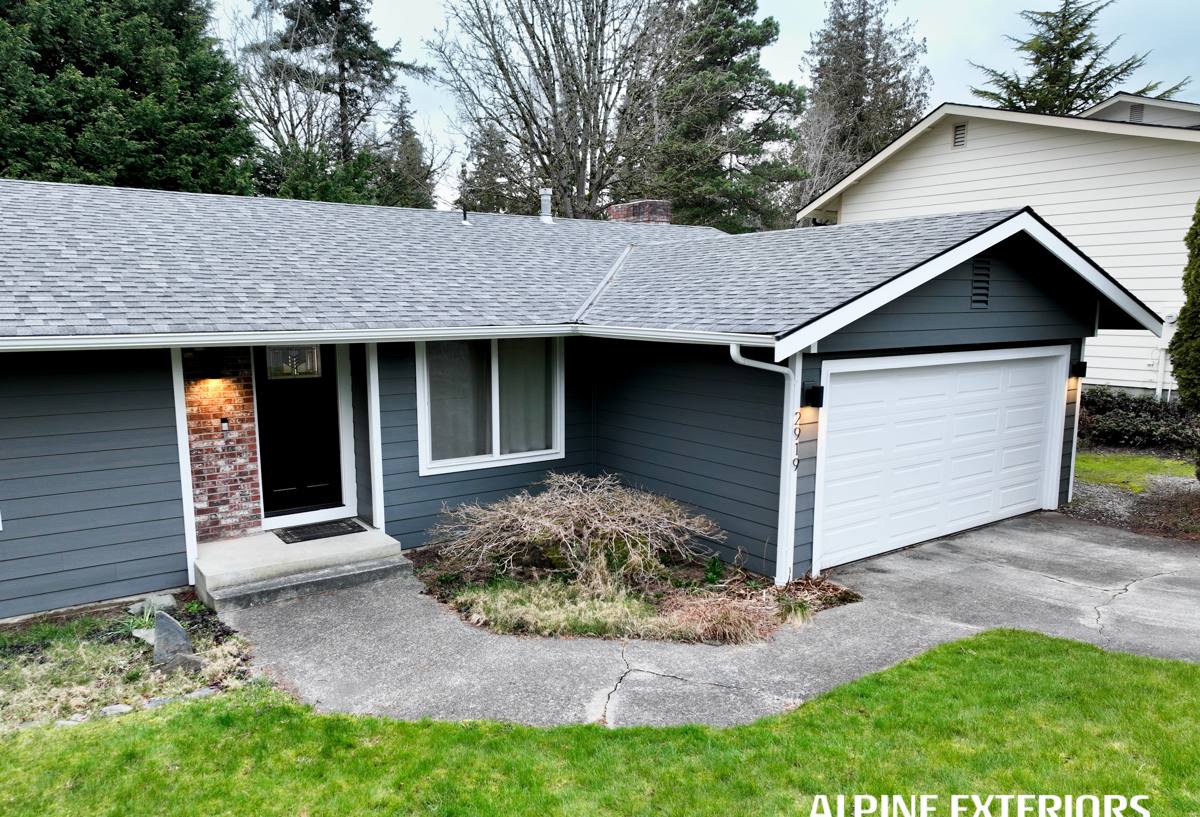
Why Siding Fails Faster in This Climate
Marine-Influenced Humidity
Even inland, Skagit Valley air carries more moisture than most of the country deals with. That constant low-grade humidity keeps wood-based products damp longer after every rain, which is exactly the condition that lets rot, delamination, and paint failure get started. Siding that's rated for a dry climate, or that depends on a perfect paint seal to stay protected, is working against the odds here from day one.
A Moss Season That Doesn't Really End
Mount Vernon's mix of mature trees, shaded lots, and consistent moisture means moss and algae growth isn't a seasonal nuisance — it's close to a year-round condition on north-facing walls and anywhere siding stays shaded. Moss holds water against the surface of the siding, and on materials that aren't built to shrug that off, it accelerates exactly the kind of moisture damage that shortens a siding system's life.
Driving Rain and Wind-Driven Water
Skagit County gets its share of wind-driven rain events, and water doesn't just fall on siding here — it gets pushed sideways into seams, laps, and trim joints. That means the quality of the flashing, the weather-resistive barrier behind the siding, and the caulking at every penetration matters as much as the siding material itself. A great product installed with sloppy flashing details will still let water in.
What a Correct Siding Replacement Actually Involves
Siding replacement done right is not just stripping off the old material and nailing up new panels. For a Mount Vernon home, especially one that's had moisture problems or is on an older wall assembly, the sequence below is what actually protects the house for the next several decades:
- Full tear-off of existing siding and trim, not a re-side over the old layer
- Inspection of the sheathing and framing underneath for rot, soft spots, or prior water damage
- Repair or replacement of any compromised sheathing before anything new goes up
- Installation of a continuous weather-resistive barrier, correctly lapped top-to-bottom
- Proper flashing at every window, door, deck ledger, and roof-to-wall transition
- Rain-screen or drainage gap detailing where the wall assembly calls for it
- Correct fastener type, spacing, and embedment for the siding product being installed
- Factory-finished trim and caulking only at the joints designed to be sealed, not as a substitute for flashing
Skip any one of these steps and you can end up with new-looking siding hiding the same moisture problems that took out the old siding — just delayed a few years.
Material Comparison: What Actually Holds Up Here
Homeowners in Mount Vernon usually compare four options when it's time to replace siding. Here's an honest look at how each one handles this specific climate:
| Material | Moisture & Moss Resistance | Maintenance | Typical Lifespan |
|---|---|---|---|
| Vinyl | Doesn't rot, but seams and J-channels trap moisture and moss behind panels | Low, but panels warp, fade, and crack over time | 15–25 years before fading/warping becomes visible |
| Cedar | Attractive but absorbs moisture readily; moss and mildew take hold without diligent upkeep | High — regular staining/sealing required | 15–20 years with consistent maintenance |
| Engineered Wood (e.g. LP SmartSide) | Improved over raw wood, but still a wood-based product sensitive to edge moisture and improper installation | Moderate — edge sealing and paint upkeep matter | 20–30 years, installation-dependent |
| James Hardie Fiber Cement | Non-combustible, dimensionally stable, engineered for wet climates | Low — factory finish resists moss and fading | 30+ years, backed by a strong transferable warranty |
We only install the last option. Not because we're chasing a brand, but because we've seen what the others cost homeowners in maintenance and early replacement once this kind of climate gets a few years to work on them.
Why We Install Only James Hardie Fiber Cement
We don't install vinyl, LP SmartSide, Cemplank, Allura, primed spruce, or cedar. Each of those products has legitimate uses, but none of them are the right fit for the way we want to stand behind our work in Skagit County's climate. James Hardie fiber cement is engineered specifically for wet, moss-prone, marine-influenced regions like this one:
- Non-combustible — meaningful peace of mind, especially with wildfire smoke seasons becoming a regular late-summer reality in the Pacific Northwest
- Dimensionally stable — it doesn't swell, warp, or crack the way wood-based and vinyl products can after repeated wet-dry cycles
- ColorPlus factory finish — a baked-on finish that resists fading and holds up to moss and mildew far better than field-applied paint
- Climate-engineered HZ product lines — Hardie builds specific formulations for high-moisture regions, which matters in a valley climate like Mount Vernon's
- Strong transferable warranty — backed by a manufacturer with decades of track record, not a warranty that depends on maintenance schedules being followed perfectly
That's the whole reason behind our position: we'd rather install one product correctly and stand behind it fully than offer five options and hope the cheaper ones hold up.
Our Process for Mount Vernon Siding Replacement
- On-site inspection — we look at your current siding, trim, and any visible moisture damage, and check moisture levels at vulnerable spots like base trim and window sills
- Written estimate — a clear scope of work and cost, with no pressure to decide on the spot
- Tear-off and sheathing check — old siding comes off, and we address anything we find underneath before covering it back up
- Weather barrier and flashing — installed to current best practice, with special attention to window and door openings and any roof-to-wall intersections
- Hardie siding installation — installed to manufacturer specification for fastening, clearance, and joint treatment
- Final walkthrough — we go over the finished job with you before we consider it done
Cost Factors for a Mount Vernon Siding Replacement
Every home is different, but the factors below are what actually move the price on a project like this:
| Factor | Why It Affects Cost |
|---|---|
| Extent of hidden damage | Rotted sheathing or framing found during tear-off adds repair scope before new siding can go up |
| Home size and wall complexity | More corners, dormers, and trim details mean more labor and material cuts |
| Siding profile and accessories | Lap width, trim style, and factory-finish color selections affect material cost |
| Access and site conditions | Tight lots, mature landscaping, or multi-story walls affect staging and labor time |
| Current wall assembly | Whether an existing weather barrier and rain-screen gap need to be added or upgraded |
We'll walk you through which of these apply to your specific home before we give you a number — broad ranges without an inspection aren't useful to you or to us.
Why a Crew That Already Works Mount Vernon Matters
Siding installation quality comes down to details that don't show up in a sales pitch: how flashing is lapped, how fasteners are spaced, how a rain-screen gap is detailed at a window sill. A crew that regularly works Skagit County homes has already run into the moisture patterns, wall assemblies, and moss conditions specific to this area, and builds the job around them instead of applying a generic approach and hoping it holds.
Being based in Anacortes and working throughout Skagit County also means we're not learning your area's climate on your project. We know what damp, shaded, valley-fog conditions do to a wall assembly over ten or twenty years, and we install accordingly — not just to pass inspection today, but to still be doing its job when the next wet winter comes through.
Get a Straight Answer About Your Siding
If your Mount Vernon home has siding that's showing its age — fading, soft spots, persistent moss, or paint that won't hold anymore — we're happy to take a look and give you an honest read on what it needs. There's no pressure and no obligation. Use the form below to request a free estimate, and we'll walk the property with you and explain exactly what we see.