 Anacortes Siding
 Board & Batten Siding for Mount Vernon Homes
Board and batten has become one of the most requested siding styles in Skagit County, and it's easy to see why. The bold vertical lines read as modern farmhouse on new construction and as honest, traditional Pacific Northwest on older homes, and it holds up visually in a way that flat lap siding sometimes doesn't on taller gable ends and accent walls. But board and batten is also a style that punishes sloppy installation faster than most other siding profiles. The battens create dozens of extra seams, fastener locations, and shadow lines, and every one of them is a potential water entry point if it isn't detailed correctly. For homes in and around Mount Vernon, where damp weather is the rule rather than the exception for a good chunk of the year, that detailing is not optional.
This page covers what board and batten siding actually needs to perform well on a Mount Vernon home, what a correct installation looks like underneath the surface, and why we install it exclusively in James Hardie fiber cement rather than wood or vinyl.
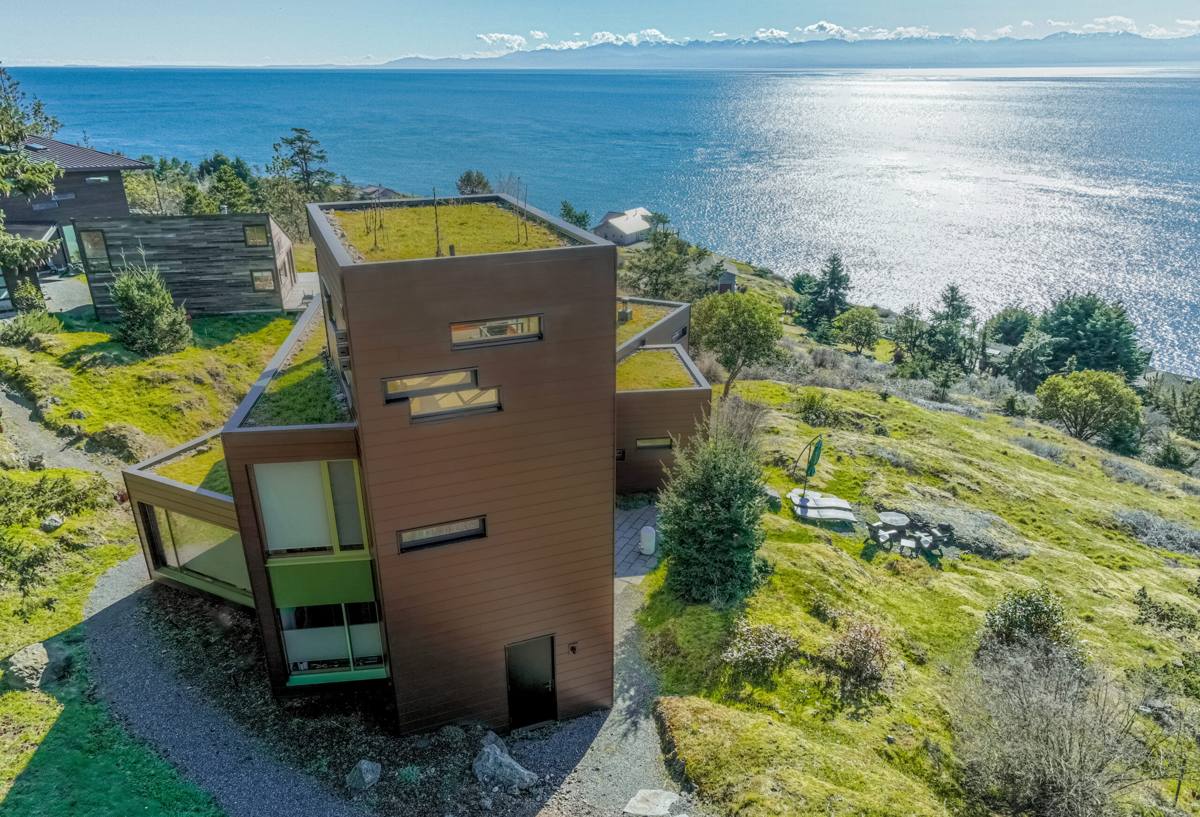
What the Local Climate Does to Board and Batten Siding
Skagit County sits between the Salish Sea and the Cascade foothills, and that combination gives Mount Vernon a climate that's demanding on exterior building materials in a few specific ways.
Driving Rain and Sustained Dampness
Rain here isn't usually violent, but it is frequent and it often comes with wind, which pushes moisture sideways into vertical siding joints rather than letting it run straight down and off. Board and batten has more vertical seams per square foot than lap siding, so a wall that isn't built with a real drainage plane behind it will trap that moisture instead of shedding it.
Salt Air Drift
Mount Vernon sits inland from the water compared to Anacortes proper, but the marine air off the Salish Sea still reaches this part of the valley, especially on homes with more open exposure. Salt-laden air accelerates corrosion on exposed metal fasteners and trim, and it degrades unstable paint films faster than inland climates would.
A Long Moss and Mildew Season
Between the rain, the humidity, and the tree cover common on Skagit Valley lots, siding here spends a large part of the year damp. Shaded north walls and areas near landscaping are especially prone to moss, algae, and mildew growth if the siding material and finish can't resist it.
None of this makes board and batten a bad choice for Mount Vernon. It makes the choice of material and the quality of installation the two things that decide whether the siding looks good for two years or for twenty-five.
What a Correct Board and Batten Installation Actually Involves
The style is simple to look at, but a correct installation has several layers most homeowners never see once the project is finished.
The Drainage Plane Behind the Siding
Every board and batten wall should be built over a weather-resistive barrier with a drainage gap between that barrier and the back of the siding. This is what lets any moisture that does get past the outer surface drain and evaporate instead of sitting against the wall sheathing. Skipping this step is the single most common shortcut we see on failed board and batten jobs in this region, and it's invisible until the siding starts failing from the inside out.
Fastening and Batten Spacing
Battens need to be fastened into solid framing or blocking, not just into the base panel, and spaced consistently so the wall reads correctly and each seam is properly supported. Fastener type and placement matter as much as the siding material itself, especially with salt air in the mix.
Joint, Seam, and Penetration Treatment
Every point where the siding meets a window, door, corner, or roofline is a place water wants to get in. Flashing, caulking, and trim details at these transitions have to be done correctly and in the right order, not just caulked over at the end.
Factory Finish vs. Field-Applied Paint
A factory-applied finish is baked on under controlled conditions and resists UV fading, moisture, and mildew far more consistently than paint applied on site after installation, which is one of the reasons finish quality belongs in the material conversation, not just the labor conversation.
Comparing Board and Batten Material Options
Homeowners in Mount Vernon usually consider three material paths for board and batten siding. Here's how they actually compare under this region's conditions.
| Material | Moisture Behavior in Skagit County | Maintenance Burden | Typical Longevity |
|---|---|---|---|
| James Hardie fiber cement | Non-combustible, engineered to resist moisture-driven damage when installed with a drainage plane; factory ColorPlus finish resists mildew and fading | Low — periodic washing, no repainting cycle with ColorPlus finish | Decades when installed to spec |
| Wood (cedar or similar) | Absorbs and releases moisture with the seasons; prone to cupping, splitting, and rot in sustained damp conditions | High — regular refinishing, sealing, and moss/mildew treatment | Shorter and highly dependent on upkeep |
| Vinyl board and batten | Doesn't rot, but can warp with temperature swings and doesn't offer real drainage detailing the way fiber cement systems do | Low labor, but limited repair options and fading over time | Variable, often shorter service life than fiber cement |
Cost is a real factor in this decision too. Wood typically costs the most over the life of the siding once refinishing labor is counted. Vinyl usually has the lowest upfront material cost. James Hardie sits in between on material cost but carries the lowest long-term maintenance burden of the three, which is the number that actually matters once a homeowner is five or ten years into ownership.
Why We Only Install James Hardie for Board and Batten
We made a decision as a company to install James Hardie fiber cement exclusively, and board and batten is one of the profiles where that decision matters most, because of how many seams and exposed edges the style creates. Hardie's fiber cement is non-combustible, holds paint and factory finish far better than wood over time, and their HZ5 product line is engineered specifically for climates with sustained moisture exposure like ours. The ColorPlus factory finish resists the fading, chalking, and mildew staining that plague field-painted board and batten within a few years in this climate, and it carries a real transferable warranty backed by the manufacturer rather than a promise from whoever painted the wall last.
We don't install vinyl or wood board and batten, and we don't install competing fiber cement brands. That's a deliberate standard, not a lack of options — we'd rather do one system well and stand behind it than offer a menu of products we can't fully vouch for in this climate.
Our Process on a Mount Vernon Project
The steps don't change much from house to house, but the details inside each step do, based on wall exposure, existing sheathing condition, and the home's layout.
1. On-Site Assessment
We look at existing siding condition, sheathing and moisture barrier status, sun and rain exposure on each elevation, and any areas showing prior water damage or moss buildup before we quote anything.
2. Prep and Drainage Plane Installation
Old siding comes off, damaged sheathing gets addressed, and a proper weather-resistive barrier and drainage gap go in before a single board goes up.
3. Board and Batten Installation
Panels and battens go up with correct fastening, spacing, and flashing at every window, door, and roofline transition, following James Hardie's installation specifications for our climate zone.
4. Final Inspection
We walk every elevation before calling the job done, checking seams, trim, and fastener lines for anything that needs adjustment.
Why a Crew That Already Works This Area Matters
Board and batten installation isn't fundamentally different from one town to the next, but the judgment calls involved — how much drainage detailing a given wall needs, where moss and mildew pressure is highest, how salt air exposure factors into fastener and trim choices — get sharper with local repetition. A crew that regularly works Anacortes, Mount Vernon, and the rest of Skagit County has already seen how this climate treats siding over years, not just at the moment of installation. That's the difference between a crew following a generic install manual and one making informed decisions for this specific valley and coastline.
What to Look For Before You Hire
- Confirmation that a proper drainage plane and weather-resistive barrier will be installed behind the siding, not just the siding itself
- A clear plan for flashing and sealing every window, door, and roofline transition
- Use of a factory-finished product rather than field-applied paint as the primary weather protection
- A manufacturer-backed warranty that's actually transferable, in writing
- Local project history in Skagit County or similar Pacific Northwest coastal/valley climates
- A written scope that specifies fastener type, batten spacing, and installation standard being followed
If you're weighing board and batten siding for a Mount Vernon home, we're glad to walk the exterior with you, explain what your specific walls need, and put together a free, no-pressure estimate — no obligation either way.