 Anacortes Siding
 Similk Beach's Deck Problem Isn't the Same as Everyone Else's
Similk Beach sits close enough to the water that homes here take a different kind of weather beating than a deck three miles inland in Anacortes proper. The salt-laden air off Similk Bay works on hardware and fasteners year-round, wind-driven rain gets pushed sideways under railings and against ledger boards, and the shaded, moisture-heavy stretch from October through April gives moss and algae months to get established on any surface that doesn't drain and dry quickly. A deck built without those specifics in mind might look fine for a season or two, then start showing problems that are expensive to reach once they're behind boards or fascia.
We've built and repaired decks all over Skagit County, but the ones closest to the water — Similk Beach included — get a different set of decisions from us at the framing and fastener stage, not just a different board color at the finish stage. That distinction matters more than most homeowners realize until they've replaced a deck once already.
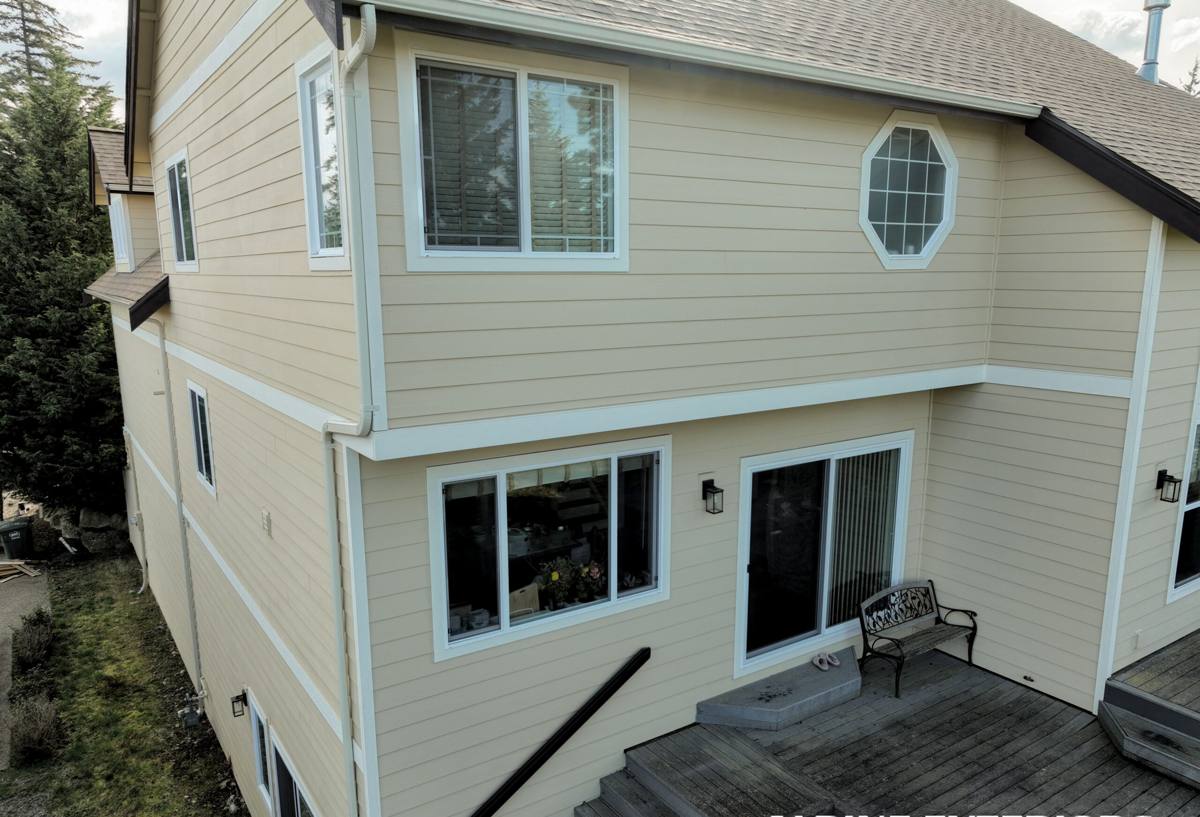
Why Composite Makes Sense for This Location
Composite decking isn't automatically the right call everywhere, but for a shoreline-adjacent property in a wet, moss-prone climate, it solves several problems at once. It doesn't absorb moisture the way wood does, so it isn't feeding the freeze-thaw and rot cycles that break down natural lumber near saltwater exposure. It doesn't need annual staining or sealing, which matters when the boards spend half the year damp. And modern capped composite boards resist the kind of surface staining that salt spray and organic debris leave behind on bare wood.
That said, composite isn't maintenance-free, and we tell every Similk Beach customer that up front. It still needs to be kept clear of debris, it still grows moss and algae if neglected in shaded, low-airflow areas, and the substructure underneath it — which is usually still wood or a wood-composite hybrid — needs the same moisture management any deck near the water needs. Composite changes what you're maintaining, not whether you're maintaining anything.
Where Composite Earns Its Keep
- Shaded decks under tree cover or on the north side of a house, where wood would need frequent cleaning and re-sealing to keep moss from taking hold
- Decks close to grade or with limited airflow underneath, where wood is more likely to hold moisture against the boards
- Homeowners who want consistent appearance year after year without a recurring stain-and-seal schedule
- Properties with direct salt air exposure, where composite's stability holds up better than wood's tendency to cup, warp, or split as it wets and dries
What a Correct Installation Actually Involves
The board itself is the part homeowners see and compare. The part that determines whether the deck lasts is almost entirely underneath it. This is where a lot of decking problems near the water actually start — not with the composite decking, but with framing and fastening decisions that weren't made with salt air in mind.
Substructure and Framing
Composite decking is heavier than wood decking, and it doesn't add structural strength the way solid lumber can. The joists, beams, and posts underneath need to be sized and spaced for composite specifically, not reused from an old wood deck layout without checking span ratings. Near Similk Beach, we also pay closer attention to ledger board flashing and the connection point at the house — that's the single most common spot for hidden rot on any deck close to salt air, because it traps moisture against the structure where you can't see it.
Fasteners and Hardware
This is the detail that gets skipped most often, and it's the one that causes the most trouble in a marine environment. Standard galvanized fasteners corrode faster near saltwater exposure than most people expect, sometimes staining the decking or failing structurally well before the boards themselves show any wear. We use stainless steel or marine-grade coated fasteners and hardware on Similk Beach projects, along with hidden fastener systems where the board manufacturer supports it, because visible fastener corrosion is one of the fastest ways a deck starts looking old.
Drainage and Airflow
Composite doesn't rot, but trapped moisture underneath a deck still causes problems — mold, mildew, and premature wear on the substructure. Correct spacing between boards, proper slope away from the house, and enough clearance underneath for air to move through are all decisions made during framing, not something you can fix after the decking is down. In a location that sees driving rain and long wet stretches, this is not optional detail work — it's the difference between a deck that dries out between storms and one that stays damp for weeks at a time.
Composite vs. Other Decking Materials for a Similk Beach Property
| Material | Salt Air Performance | Moss/Algae Resistance | Ongoing Maintenance |
|---|---|---|---|
| Capped Composite | Strong — won't corrode or absorb salt spray into the board itself | Good, but still needs periodic cleaning in shaded spots | Occasional washing; no staining or sealing |
| Pressure-Treated Wood | Moderate — hardware and fasteners corrode faster near water | Poor without regular sealing and cleaning | Annual staining/sealing, more frequent board replacement |
| Cedar | Moderate — natural oils help some, but still absorbs moisture | Poor to moderate depending on sealant maintenance | Regular sealing; higher long-term cost near water |
| Uncapped Composite | Good structurally, but surface can absorb moisture and stain over time | Moderate — more prone to surface algae than capped boards | Periodic cleaning; less protection than capped composite |
We install capped composite decking for most Similk Beach projects because it's the best match for the combination of salt exposure, moisture, and moss pressure this location deals with. That's a professional recommendation based on how these materials perform in this specific environment — not a claim that other materials can't work with the right upkeep.
Our Process for Similk Beach Deck Projects
- On-site assessment. We look at sun exposure, wind direction, proximity to the water, existing structure condition, and drainage before recommending anything.
- Substructure evaluation or rebuild. If the existing framing isn't rated for composite or shows signs of moisture damage, we address that before decking goes down — not after.
- Material selection with you. We walk through board options, color and grain choices, and railing systems based on your budget and how the deck will actually be used.
- Flashing and fastener detail work. This is where we spend extra time on Similk Beach jobs specifically — ledger flashing, joist protection, and corrosion-resistant hardware throughout.
- Installation with proper spacing and slope. Board gaps and drainage angles are set to shed water quickly, not just to look even.
- Final walkthrough. We go over basic care with you so the deck stays looking good without guesswork.
Cost Factors Homeowners Should Understand
| Factor | Why It Affects Price |
|---|---|
| Substructure condition | Rebuilding or reinforcing framing adds cost but is non-negotiable if the existing structure isn't sound or isn't rated for composite |
| Board tier and brand | Composite pricing varies by cap type, warranty length, and color/finish options |
| Railing system | Composite, aluminum, and cable railings all price differently and affect both look and long-term upkeep |
| Height and access | Elevated decks or difficult site access near the water can add labor time |
| Fastener and flashing upgrades | Marine-grade hardware costs more than standard hardware but prevents the corrosion issues that shorten deck life near saltwater |
Composite decking generally costs more upfront than pressure-treated wood, and homeowners near Similk Beach should also budget slightly more than a typical inland Skagit County project for the hardware and flashing upgrades that make the deck actually hold up. It's a straightforward trade: a bit more spent correctly at installation versus repeated repairs or premature replacement down the line.
Living With Moss Season
Composite decking resists moss better than untreated wood, but "resists" isn't "immune." Shaded areas, spots under overhangs, and boards that don't get much direct sun or airflow will still collect organic buildup over a wet Pacific Northwest winter. A few habits keep it under control without much effort.
- Sweep debris — leaves, needles, seed pods — off the deck regularly through fall so it doesn't sit and trap moisture
- Rinse the deck with a hose periodically during the wet months, focusing on shaded corners and under railings
- Use a soft-bristle brush and a composite-safe cleaner on any spots where green or black buildup starts, rather than letting it spread
- Keep gutters and downspouts near the deck clear so runoff isn't draining directly onto the decking or substructure
- Trim back overhanging branches or shrubs that keep sections of the deck shaded and slow to dry
- Avoid pressure washers on high settings, which can damage the cap layer on composite boards over time
Why a Local Crew Matters Here
A contractor who mostly works inland doesn't always think about ledger flashing or fastener grade the same way a crew that's actually built decks near Similk Bay does — not because the general contractor isn't skilled, but because the failure points near the water are different, and you only learn where they show up by dealing with them repeatedly in this specific setting. We've made the fastener and flashing decisions above the standard on our Similk Beach jobs because we've seen what happens when they're treated as optional. That's the value of hiring a crew that already works this stretch of Anacortes and Skagit County: the corrections other contractors make on their second saltwater-adjacent deck, we're already making on the first.
If you're considering a new composite deck or need to replace one that didn't hold up to the Similk Beach climate, we're happy to take a look and give you a straightforward, no-pressure estimate — just fill out the form below.