 Anacortes Siding
 Decks Near the Water Wear Differently
Similk Beach sits close enough to Similk Bay and the surrounding shoreline that salt-laden air is a daily fact of life, not an occasional weather event. Add Skagit County's long wet season, driving rain off the water, and heavy shade from mature evergreens in many yards, and you get a set of conditions that ages a deck faster than almost anywhere else in the Anacortes area. Wood fibers absorb and release moisture constantly through fall, winter, and spring. Metal fasteners and connectors sit exposed to salt air that speeds up corrosion. And any deck surface that doesn't get direct sun for long stretches of the day becomes a moss farm by December.
A deck built without those specifics in mind — generic lumber, standard hardware, minimal drainage planning — will look fine for a season or two and then start showing problems all at once: soft boards, rust streaks, green film underfoot, and a structure that feels less solid than it used to. Replacing a deck in Similk Beach isn't just swapping old boards for new ones. It's an opportunity to fix the underlying issues that caused the first deck to fail.
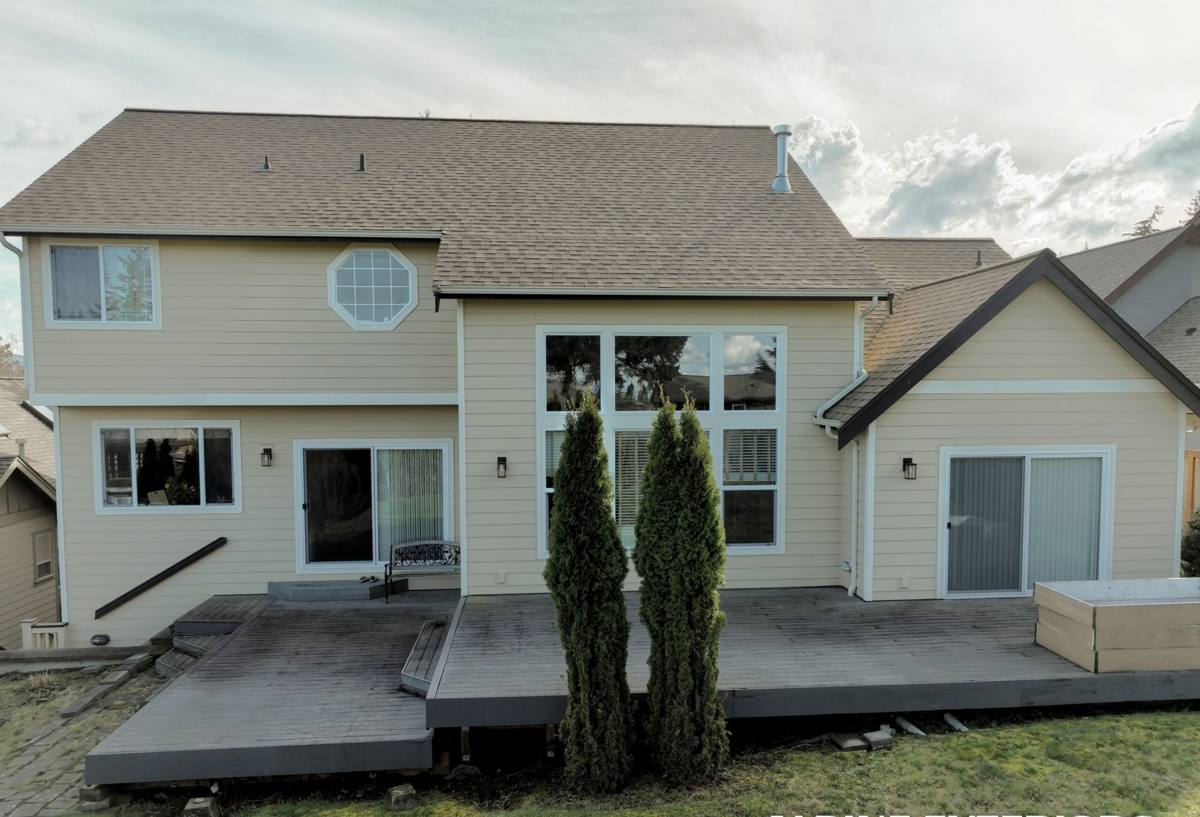
Signs a Deck Needs Replacement, Not Just Repair
Homeowners often ask us to "just replace a few boards" and then find out the problem runs deeper. Here's how we tell the difference during an inspection.
- Soft or spongy decking in multiple spots, not just one isolated board
- Rust stains bleeding out from screw heads or bolt connections
- Ledger board attachment to the house showing gaps, rot, or water staining on the siding above or below it
- Posts that wobble or footings that have shifted or heaved
- Persistent moss or algae that regrows within weeks of cleaning
- Railings that flex more than they should when leaned on
One or two of these on a smaller deck might be repairable. When several show up together, especially on a deck that's ten-plus years old, the framing underneath has usually absorbed more moisture cycles than the wood can keep handling. At that point, patching individual boards just delays the real cost and can mask structural issues that matter for safety.
What a Correct Replacement Actually Involves
Framing and Structure First
The visible decking is the smallest part of the job. What matters most is what's underneath: joists sized and spaced correctly for the intended use, a ledger board properly flashed and bolted to the house framing (not just the siding), and footings set below frost depth and sized for the soil conditions on the lot. In areas with heavier rain exposure, we pay close attention to how water sheds away from the ledger connection, since that's the single most common failure point on older decks we tear out.
Hardware That Matches the Environment
Standard construction screws and connectors are not built for salt air exposure. We use fasteners and structural hardware rated for corrosive coastal environments — stainless steel or heavy hot-dip galvanized, depending on the application — because the alternative is a deck that looks solid for a few years and then develops rust bleed and weakened connections exactly where you can't see them.
Decking Surface and Drainage
Board spacing, gap width, and the slope of the deck surface all affect how fast water and moss-feeding debris clear off. A deck built flat with tight board gaps in a shaded, damp yard will hold moisture and grow moss no matter what material sits on top. Small adjustments in spacing and pitch during a rebuild make a real difference in how much maintenance the deck needs afterward.
Material Options for This Climate
There's no single "right" material for every deck — it depends on budget, how much upkeep you want to do, and how shaded or exposed the site is. Here's how the common options actually perform in a Similk Beach setting.
| Material | Moisture & Moss Behavior | Maintenance | Typical Lifespan Here |
|---|---|---|---|
| Pressure-treated fir/hem-fir | Absorbs water readily; needs sealing to resist moss and swelling | Annual cleaning and re-sealing recommended | 10-15 years with upkeep |
| Cedar | Naturally more decay-resistant, but still needs finish maintenance in wet shade | Periodic cleaning and oil or stain every 2-3 years | 15-20 years with upkeep |
| Composite decking | Does not absorb water like wood, but surface can still grow surface moss/algae film if never cleaned | Occasional washing; no staining or sealing | 25+ years, varies by product warranty |
We don't push one material as universally best. Composite carries a higher upfront cost but the lowest ongoing maintenance burden, which matters if the deck sits under tree cover. Cedar looks and feels the way people expect a Pacific Northwest deck to look, but it only holds up if the finish gets renewed on schedule. Pressure-treated framing underneath any of these choices is standard practice — the decision is really about what goes on top and how much upkeep you're willing to commit to.
The Moss and Algae Problem Specifically
Skagit County's long wet season means moss isn't an occasional nuisance on shaded decks near Similk Beach — it's a recurring maintenance item every fall and winter. During replacement, we build in a few things that reduce how aggressively moss takes hold: adequate board spacing for airflow and drainage, a slight pitch away from the house, and, where the site allows it, trimming back overhanging branches that keep a deck in permanent shade and damp. None of this eliminates moss entirely in a heavily shaded yard, but it stretches out the time between cleanings and keeps the surface from staying saturated long enough to start breaking down the material underneath.
Our Deck Replacement Process
- On-site inspection. We check framing, ledger connection, footings, and overall structure before quoting anything, so the estimate reflects what's actually there, not just the visible surface.
- Plan and permit. Skagit County and the City of Anacortes have permit and guardrail requirements for deck work above certain heights — we handle that paperwork so you don't have to track it down.
- Tear-off. Full removal of the old decking, railing, and any framing that's compromised. We don't reuse rotted or rusted components just to save a step.
- Framing rebuild. Proper ledger flashing, joist spacing, and footings sized for the site and local frost depth.
- Decking and railing installation. Your chosen material, installed with corrosion-appropriate fasteners and correct spacing for drainage.
- Final walkthrough and cleanup. We check the deck with you before calling the job done and clear all debris from the site.
Permits, Code, and Local Requirements
Deck replacement work in and around Anacortes typically requires a permit once you're rebuilding the structure rather than just replacing surface boards, and guardrail height and baluster spacing are governed by building code, not personal preference. Footing depth also has to account for local frost line requirements. Skipping this step to save time is a common shortcut that causes real problems later — at resale, during an insurance claim, or simply because an unpermitted structure isn't built to the standard that keeps people safe on it. We pull the permits and handle inspections as part of the job.
Keeping a New Deck in Good Shape
A properly built deck still needs some seasonal attention, especially this close to the water. This is the basic upkeep routine we recommend to Similk Beach homeowners after a replacement.
- Sweep off standing leaves and debris regularly through fall, when moss gets its start
- Rinse salt residue and grime off the surface a few times a year, especially after storms
- Check fastener heads and railing connections once a year for early rust or loosening
- Re-seal or re-stain wood decking on the schedule appropriate to the material, not just when it looks faded
- Keep nearby vegetation trimmed back so the deck gets some sun and airflow
None of this is complicated, but skipping it is exactly how a deck that should last two decades starts failing after eight or nine years.
Why Local Experience Matters Here
A contractor who mostly works inland doesn't think the same way about hardware corrosion, ledger flashing, or moss-prone shade the way a crew that works Similk Beach and the rest of Anacortes regularly does. We've seen what salt air does to the wrong fastener choice and what a few extra winters of standing moisture does to a deck that wasn't pitched correctly. That's not a sales pitch — it's the reason the material and hardware decisions above matter more here than they would in a drier, inland part of the state.
If your deck is showing its age, or you're planning ahead before it becomes a safety issue, we're happy to take a look and give you an honest read on what it needs. Reach out for a free, no-pressure estimate using the form below.