 Anacortes Siding
 Salt Air, Rain, and Moss: What Similk Beach Siding Is Up Against
Homes near Similk Bay deal with a different kind of weather load than a house twenty miles inland. The air coming off the water carries salt, the rain comes sideways more often than it falls straight down, and shaded exterior walls stay damp long enough for moss and algae to take hold and never really let go. None of this is dramatic weather — no hurricanes, no hail storms — but it is relentless, and relentless is what actually wears siding out. Skagit County's marine climate means long stretches of the year where exterior walls simply do not dry out fully between rain events.
That matters more than most homeowners realize. Siding failure in this region is rarely a single storm event. It is years of moisture sitting where it shouldn't, paint film breaking down under UV and salt exposure, and organic growth holding water against a wall surface long enough for whatever is underneath to start absorbing it. A siding job that looks fine on day one but wasn't built for this specific climate usually shows its weak points within a few wet seasons, not decades.
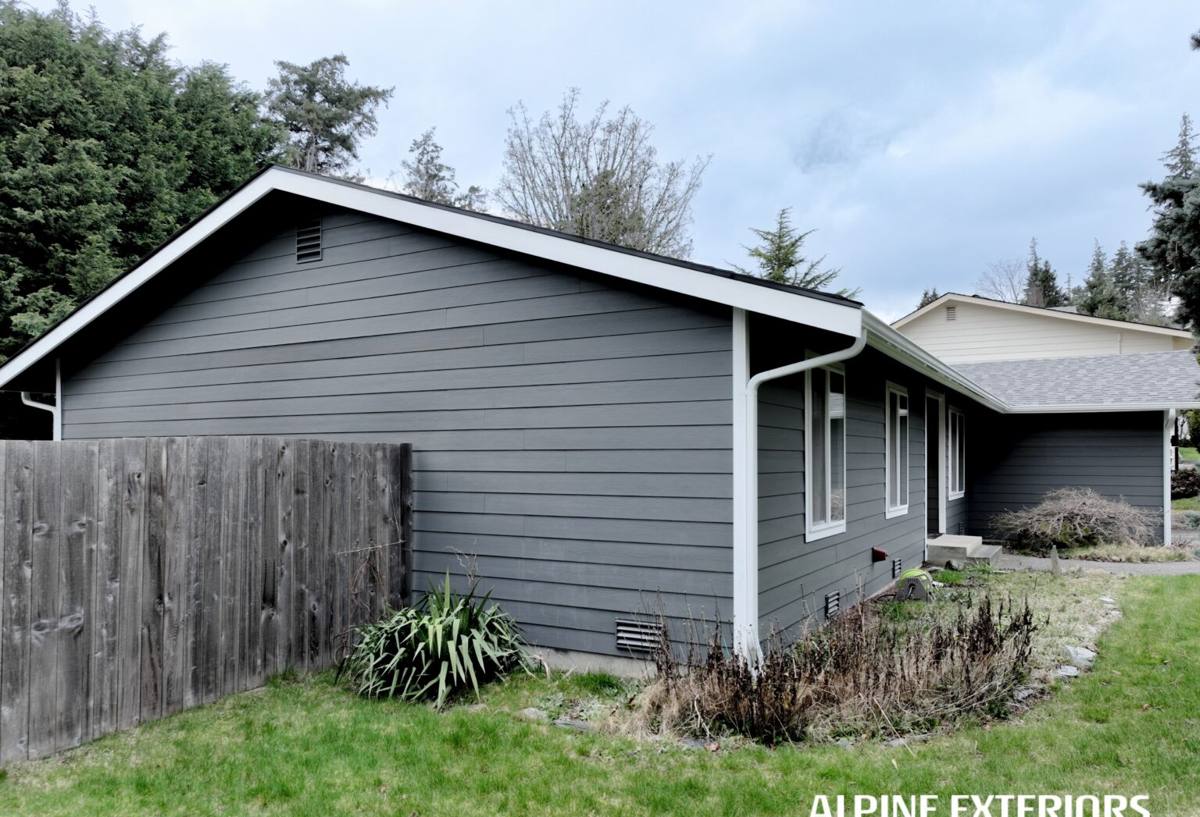
Why James Hardie Fiber Cement Holds Up Here
Engineered for This Moisture Zone
James Hardie makes region-specific formulations, and the HZ5 product line is what's specified for the Pacific Northwest and most of the continental U.S. — climates with sustained moisture exposure rather than extreme heat. It's a different mix than the HZ10 line used in hot, humid regions like the Gulf Coast. That distinction isn't marketing — the fiber cement formulation and the ColorPlus finish are built to hold up against the specific way moisture behaves in a climate like ours: near-constant dampness rather than short, intense heat cycles.
A Substrate That Doesn't Feed Rot
Fiber cement is sand, cement, and cellulose fiber, not solid wood or a wood-fiber composite. It doesn't swell, delaminate, or provide the same food source for the moss, algae, and mildew that thrive in a wet marine environment. Moss can still grow on the surface — nothing stops that entirely in this climate — but on Hardie siding it's a surface cleaning issue, not a structural one. On wood-based products, the same moss buildup is often sitting on a material that's actively absorbing the moisture it's holding against the wall.
Non-Combustible, Which Matters More Every Year
Western Washington's wildfire seasons have gotten longer and drier even on this side of the mountains, and non-combustible siding is a real, practical difference — not a rare-event footnote. James Hardie siding won't ignite from wind-blown embers the way wood siding or vinyl (which can melt and deform) can.
What a Correct James Hardie Installation Actually Involves
Hardie siding's reputation is built on the material, but a huge share of real-world siding failures — on any brand — trace back to installation shortcuts, not the product itself. In a climate that stays wet as long as ours does, the installation details matter even more than usual.
Water Management Comes First
Before a single plank goes up, the water-resistive barrier and flashing details need to be right. That means proper head flashing over every window and door, kick-out flashing wherever a roofline meets a wall (a spot that fails quietly and causes rot for years before anyone notices), and correct lapping so water sheds outward at every horizontal seam instead of finding its way behind the plane of the wall.
Fastening and Clearances to Spec
James Hardie publishes exact nailing patterns, fastener types, and minimum clearances — how far siding needs to sit above a roofline, a deck, or grade, and how far butt joints need to be gapped and caulked rather than tightly butted together. Skipping these details doesn't show up as a problem on installation day. It shows up two or three winters later as moisture intrusion at a joint nobody flashed correctly.
Finish Details That Actually Last
Factory-cut edges need primer touch-up before they're exposed to weather. Caulk needs to be a product rated for the elongation and adhesion demands of constant wet-dry cycling, not whatever tube is cheapest. These are small line items on an estimate and the first things that get skipped when a crew is trying to move fast.
How Siding Options Compare for This Environment
Every siding material has honest trade-offs. Here's how the common options stack up specifically against Similk Beach's marine, wet-heavy conditions — not as a general comparison, but for this climate.
| Factor | James Hardie Fiber Cement | Vinyl | Wood / Cedar | LP SmartSide |
|---|---|---|---|---|
| Moisture resistance | Excellent — cement base doesn't absorb and swell | Good on its own, but seams and fasteners can let water behind panels | Poor to fair — absorbs moisture, needs a sound paint film to hold up | Fair — engineered wood strand, vulnerable if edges or cuts aren't sealed |
| Moss/algae impact | Surface-level only; doesn't feed into the material | Surface-level; can trap moisture behind panel | Structural risk — moss holds moisture against a material that absorbs it | Structural risk if surface moisture reaches the wood fiber core |
| Fire resistance | Non-combustible | Can melt/deform under heat | Combustible | Combustible |
| Maintenance cycle | Rinse annually; repaint only if not ColorPlus factory finish | Low, but cracks/fades over time and can't be easily repainted | Repaint or restain every 3-7 years in this climate | Regular caulk/paint inspection at seams and cuts |
| Typical service life | 30+ years with correct install | 20-30 years, sun/impact sensitive | 15-25 years depending on maintenance | 20-25 years if maintained well |
Our Process for a Similk Beach Home
Every home is different, but the sequence stays consistent:
- Site and moisture assessment. Before quoting anything, we check the existing sheathing condition, especially in shaded or north-facing areas where moisture tends to sit longest.
- Removal of old siding and trim. This is also when hidden rot or past flashing failures get found — better now than after new siding is up.
- Sheathing repair where needed. Any soft or compromised sheathing gets addressed before anything new goes over it.
- Water-resistive barrier and flashing. This is the step that determines how the house performs in year five, not just year one.
- Hardie panel or plank installation. Installed to manufacturer nailing patterns, clearances, and joint spacing.
- Trim, corners, and caulking. Finished with the right sealant for our wet-dry cycling, not a generic caulk.
- Final walk-through and cleanup. We go over the finished work with the homeowner before calling the job done.
Warning Signs Your Current Siding Is Already Failing
If you're not sure whether your siding still has years left in it, these are the signs worth checking for before making a decision:
- Soft or spongy spots when you press on the siding, especially near the bottom edge or corners
- Paint that's peeling, bubbling, or alligator-cracking rather than just fading
- Moss or algae patches that stay damp for days after rain instead of drying out
- Boards that are visibly cupping, warping, or separating at the seams
- Dark streaking or staining below window sills or joints, often a sign of failed flashing
- A musty smell near an exterior wall, especially around corners or below windows
Keeping It Looking Right After Installation
James Hardie siding is low-maintenance, not no-maintenance. A yearly rinse — especially on shaded, north-facing walls where moss and algae take hold fastest in this climate — keeps growth from building up. Gutters need to stay clear given how much water this area sees in fall and winter; overflow running down a wall is one of the most common causes of premature staining and caulk failure. It's worth a quick look at caulk joints every year or two, and keeping sprinklers from hitting the base of the wall directly helps avoid unnecessary moisture exposure at the most vulnerable part of the installation.
Why a Crew That Already Works This Area Matters
Siding installation isn't identical everywhere. A crew that regularly works Similk Beach and the surrounding Anacortes area already knows which walls take the worst of the wind-driven rain, where moss tends to build up fastest, and what level of flashing detail actually holds up here versus what's fine in a drier climate. That's not a sales pitch — it's the difference between a crew following a generic install checklist and one that's watched how houses in this specific environment actually age. It also means realistic scheduling around the wet season instead of promises that don't account for Skagit County's weather patterns.
If you're weighing a siding replacement or just want a straight answer about what your current siding's condition really means, we're glad to take a look. The estimate is free, there's no pressure, and you'll get a plain-English rundown of what we'd actually recommend for your home.