 Anacortes Siding
 Decks in Cap Sante Face a Different Set of Problems
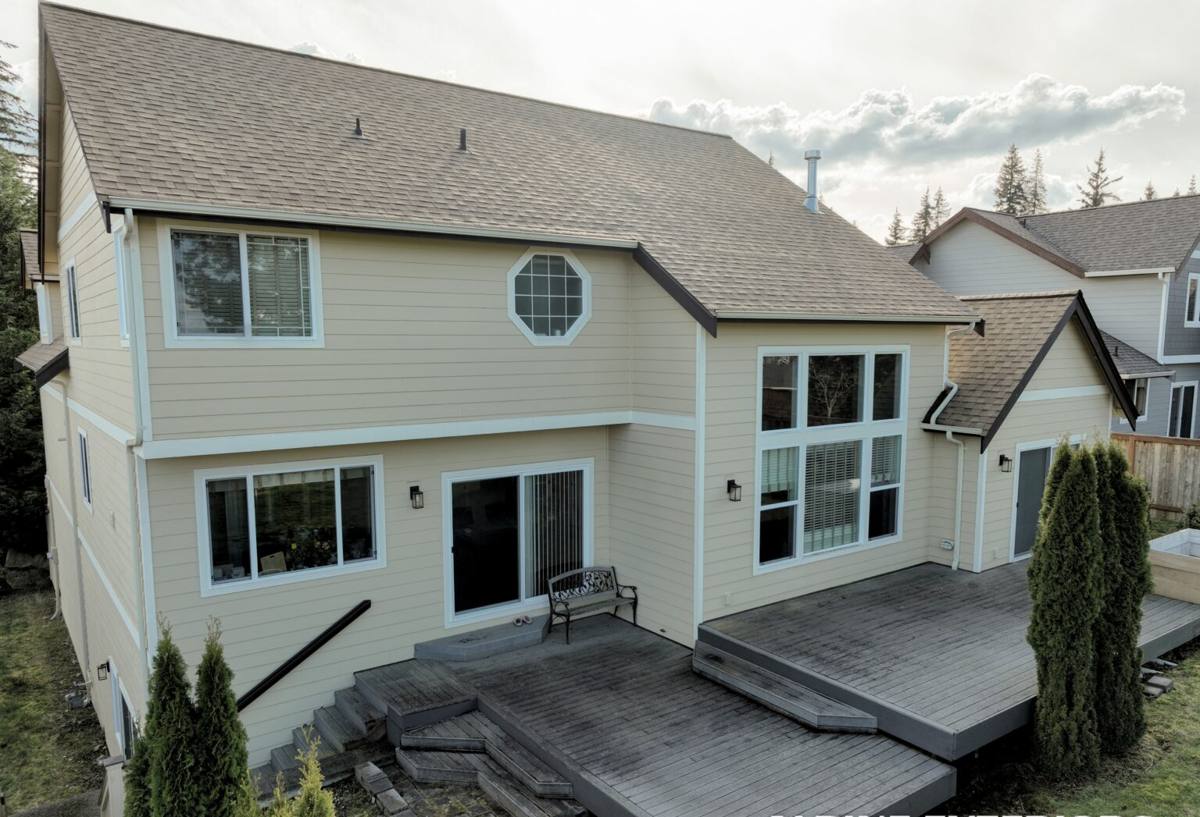
Cap Sante sits up on the bluff above the Anacortes waterfront, and that elevation is exactly why so many homes here have decks in the first place — the views are worth building for. But that same exposure is hard on wood, fasteners, and finishes. A deck perched above Guemes Channel or facing out toward the marina takes wind-driven rain and salt-laden air almost daily, and it doesn't get the drying time that a deck tucked into a sheltered inland yard would get. Add in the shade from mature Douglas fir and cedar that lines a lot of Cap Sante properties, and you've got the two things that kill decks fastest working together: moisture that won't leave, and moss that traps it in place.
We've replaced and repaired enough decks in this part of Anacortes to know the failure pattern by sight before we even get close: dark, spongy boards on the north or shaded side, corrosion streaks bleeding out of screw heads, and ledger boards that have been quietly absorbing water behind the siding for years. None of that is unusual for the area. It's just what Skagit County marine air does to a structure that's outdoors twelve months a year.
What Salt Air, Rain, and Moss Actually Do to a Deck
Salt Air and Metal Fasteners
Salt-laden air accelerates corrosion in anything metal — nails, screws, joist hangers, post bases. On a deck close to the water, standard galvanized fasteners can start showing rust bleed years before they would inland. Once a fastener is corroding, it's losing holding strength, and you often can't tell how bad it is just by looking at the surface. This is the single biggest reason a deck replacement near the water needs different hardware specs than the same deck built a few miles inland.
Driving Rain and Water Intrusion
Anacortes doesn't get the heaviest rainfall in the Pacific Northwest, but wind-driven rain off the water hits decks and ledger connections at an angle, not straight down. That matters because a lot of deck flashing and ledger attachment details are built assuming water falls vertically. On an exposed Cap Sante lot, rain gets pushed sideways into ledger board seams, post bases, and stair stringer connections — the exact spots where rot starts and stays hidden the longest.
Moss and Trapped Moisture
Shaded decks under tree cover build up moss and algae fast, especially through the long wet season that runs from fall into spring. Moss holds water against the decking surface long after the rest of the yard has dried out. On wood decking, that means slow rot from the top down. On composite decking, it usually just means a slick, dark, unattractive surface — annoying, but not structural. That difference matters when you're deciding what to replace your deck with.
Signs a Cap Sante Deck Needs Replacing, Not Patching
- Soft or spongy spots in the decking, especially on the shaded or north-facing side
- Rust streaks bleeding from screw or nail heads across multiple boards
- Gaps opening up between the ledger board and the house siding
- Posts that feel loose or that visibly rock when you push on the railing
- Persistent moss or algae that comes back within weeks of cleaning
- Stair stringers or joists with visible splitting, cupping, or dark staining
- A deck more than 15-20 years old that has never had hardware or ledger connections inspected
Any one of these on its own might just call for a repair. Two or three together, especially if the deck is original to the house, usually means the structure has been losing integrity for a while and a full replacement is the more honest recommendation — patching around rot just relocates the problem.
Framing and Fastener Choices That Actually Matter Here
The decking surface is what everyone notices, but the framing underneath is what determines whether the deck lasts. For a deck going in on an exposed Cap Sante lot, we build the structure to handle the marine environment specifically, not to a generic inland spec.
| Component | What we use and why |
|---|---|
| Fasteners and hardware | Stainless steel or heavy-duty coated (marine-grade) screws, joist hangers, and post bases — standard galvanized corrodes faster this close to salt air |
| Ledger board flashing | Fully flashed and sealed connection at the house, sized to shed wind-driven rain rather than just vertical rainfall |
| Framing lumber | Pressure-treated for ground contact-rated exposure, with all field cuts re-sealed before assembly |
| Post bases | Elevated off the deck surface or concrete footing so posts aren't sitting in standing water after storms |
| Under-deck ventilation | Joist spacing and skirting designed to let airflow through, so wood dries out between rain events instead of staying wet |
Decking Material Trade-Offs for a Shaded, Salt-Exposed Lot
There's no single "best" decking material — there's a best material for your specific lot, budget, and how much upkeep you actually want to do. On a Cap Sante property with tree shade and salt exposure, here's how the honest trade-offs shake out.
| Material | How it handles moss/moisture | Maintenance | Trade-off |
|---|---|---|---|
| Pressure-treated wood | Absorbs moisture; needs regular sealing to resist rot and moss staining | Annual cleaning and re-sealing recommended | Lowest upfront cost, highest ongoing labor |
| Cedar | Naturally rot-resistant but still needs sealing in shaded, wet spots | Sealing every 1-2 years to hold color and resist moss | Attractive natural look, moderate upkeep |
| Composite decking | Doesn't absorb water or rot, though moss/algae can still grow on the surface film | Occasional washing; no sealing or staining | Higher upfront cost, lowest long-term labor |
For shaded, salt-exposed lots specifically, we lean toward recommending composite for homeowners who don't want a yearly maintenance chore — not because wood is a bad product, but because the conditions here work against wood's weak points (moisture absorption, surface staining) more aggressively than they would on a dry, sunny inland lot. If you like the look and feel of real wood and are willing to stay on top of sealing, we'll build it that way instead. It's your deck and your maintenance budget — we'll lay out what each choice actually commits you to.
How We Approach a Deck Replacement in Cap Sante
1. On-Site Assessment
We start by getting under the deck, not just walking on top of it. That means checking ledger board condition, post base corrosion, joist hanger integrity, and how much daylight and airflow the deck actually gets — all of which shapes what we recommend for framing hardware and decking material.
2. Removal and Structural Correction
Old decking, framing, and any compromised ledger flashing come out. If the ledger connection to the house has been letting water in, we address that at the source before anything new goes up — building a new deck on a leaking ledger just buys you a few years before the same problem resurfaces.
3. Framing Built for the Site
New framing goes in with corrosion-resistant hardware, proper ledger flashing, and post bases set to keep wood off standing water. Where the lot is shaded, we look at joist spacing and skirting to maximize airflow underneath.
4. Decking Installation
Whatever material you choose, it goes in with attention to drainage gaps and board spacing that accounts for our wet season — tight spacing that looks good on day one can trap water and moss by year two.
5. Walkthrough
We go over the finished deck with you, including what upkeep (if any) the material you chose will need, so there are no surprises the following spring.
Permits and Practical Considerations for Anacortes Properties
Deck replacements in Anacortes and unincorporated Skagit County typically require a building permit, especially for anything involving structural framing changes, height above grade, or attachment to the house. We handle the permit process as part of the job rather than leaving it to the homeowner to sort out. Elevated decks on bluff-adjacent Cap Sante lots sometimes have additional considerations around railing height and guardrail spacing given the drop-off — worth flagging early so it doesn't become a surprise mid-project.
Why Local Experience with This Specific Area Matters
A deck built to a generic spec sheet can look fine going in and still fail early if it wasn't built for where it actually sits. The difference between a deck that lasts 10 years and one that lasts 25 in Cap Sante usually comes down to a handful of decisions made before the first board goes down: fastener grade, ledger flashing detail, and how much airflow the framing allows under shaded sections. Those aren't things you can fix easily after the fact — they have to be right from the start.
Working regularly in Anacortes and around Skagit County means we're not guessing at how salt air and a long moss season treat a deck over time — we've seen it firsthand on homes not far from yours, and we build accordingly.
Get a Straightforward Estimate
If your Cap Sante deck is showing rot, corrosion, or moss that won't quit, we're glad to take a look and give you an honest read on whether it needs replacing or just targeted repair. Reach out for a free, no-pressure estimate using the form below.