 Anacortes Siding
 Building Decks for Cap Sante's Waterfront Conditions
Cap Sante sits up on the bluff above the boat haven, right where Anacortes gets the full brunt of Rosario Strait weather. That elevation and water exposure make it one of the more demanding spots in Skagit County to build an outdoor structure. Salt-laden air drifts up off the marina and settles into every exposed fastener and joint. Wind-driven rain comes in sideways more often than straight down, which means water finds its way into places a deck built for an inland lot would never have to worry about. And the shaded, damp stretches of fall through spring turn any deck surface that doesn't shed water fast into a moss farm.
None of that means you can't have a great deck in Cap Sante. It means the deck has to be designed and built with those specific conditions in mind from the footings up, not just finished with a nice board on top.
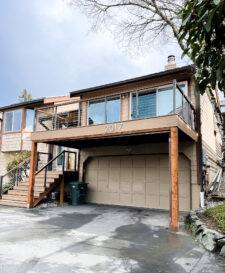
What Cap Sante's Climate Does to a Deck Over Time
Salt Air and Corrosion
Fasteners, brackets, and hardware take the earliest hit. Standard hot-dip galvanized hardware can start showing rust streaks within a few seasons this close to the water. Once a fastener corrodes, it loses holding strength long before it looks bad enough to notice from a distance — which is why the hardware spec matters as much as the decking material.
Driving Rain and Water Intrusion
Wind off the strait pushes rain up and under things — flashing laps, ledger connections, stair stringers — that would stay dry on a calmer lot. Any gap in flashing or a ledger board attached without a proper water-management detail becomes a slow leak path into the house band joist or rim, which is a much more expensive repair than the deck itself.
Moss and Surface Buildup
Shaded areas under overhangs, on the north side of the house, or beneath the deck itself stay damp for long stretches of the wet season. Moss and algae take hold on any surface with poor drainage or a rough, porous texture, and once established they hold moisture against the boards and make the deck slick and dangerous underfoot.
Signs an Existing Deck Isn't Holding Up
- Rust streaking down from screw heads or bracket edges
- Soft or spongy spots in decking, especially near the house or stair landings
- Green or black film that returns within weeks of cleaning
- Gaps or movement where the ledger board meets the house
- Railing posts that flex or feel loose when pushed
- Water pooling instead of running off after rain
Any one of these is worth a look before it turns into a structural issue. On a bluff-top lot like Cap Sante, problems tend to progress faster than homeowners expect because the conditions never really let the wood or hardware dry out and recover between storms.
What a Correctly Built Deck Involves Here
Footings and Framing
Footings need to be sized and set below frost depth with proper drainage around them so standing water isn't sitting against concrete year-round. Framing connections — joist hangers, post bases, ledger bolts — should be stainless steel or a coastal-rated coating, not the standard galvanized hardware that's fine forty minutes inland but marginal this close to salt air.
Ledger Attachment and Flashing
Where the deck ties into the house, the ledger board needs a continuous flashing detail that sheds water out and away from the band joist, with proper stand-off spacing so air can move behind the ledger. This is the single most common failure point we find on older decks in this area, and it's the hardest one to fix after the fact without pulling boards.
Decking Surface and Drainage
Board spacing, slope, and gap width all affect how fast a surface dries out between rain events. A deck built dead level with tight gaps will hold water and grow moss no matter what material sits on top. A slight pitch away from the house and consistent drainage gaps make a real difference here.
Railings and Stairs
Railing posts need solid blocking and corrosion-resistant fasteners, and any stair stringer in contact with soil or concrete needs proper isolation from ground moisture. These are small details that get overlooked on a budget build and become expensive fixes later.
Comparing Decking Materials for This Climate
| Material | How it handles salt air & rain | Moss/algae resistance | Maintenance |
|---|---|---|---|
| Pressure-treated wood | Needs sealing and re-coating regularly to resist moisture cycling | Low — porous surface holds moisture | Annual cleaning and periodic re-sealing |
| Cedar | Naturally rot-resistant but still needs finish upkeep near salt air | Moderate | Regular cleaning, re-oil or stain every 1-2 years |
| Composite decking | Handles moisture cycling well; no sealing required | Moderate to good depending on the capped surface | Periodic washing; no staining/sealing |
| PVC/capped polymer | Fully sealed surface, minimal moisture absorption | Good — smooth cap sheds algae growth | Occasional washing only |
We don't push one product on every job. Wood costs less up front but asks for more attention year after year, which matters if you're not planning to be out there scrubbing and re-sealing every season. Composite and capped polymer cost more initially but shed the salt-air and moss issues better with less upkeep. The right call depends on your budget, how exposed the deck location is, and how much maintenance you actually want to do.
Our Process for a Cap Sante Deck
- Site walk and design: we look at sun exposure, wind direction off the strait, drainage slope, and how the deck ties into the existing structure before drawing anything up.
- Permitting: we handle the City of Anacortes permit requirements for footings, height, and railings so the job is inspected and legal, not something that causes problems at resale.
- Framing: footings, ledger flashing, and coastal-rated hardware go in first — this is the part that determines how the deck ages, even though it's invisible once finished.
- Decking and railings: installed with proper spacing and drainage pitch, using the material you've chosen after we walk through the trade-offs together.
- Final walkthrough: we go over care and cleaning specific to your deck's exposure and material before we consider the job done.
Cost Factors Homeowners Should Know
| Factor | Why it moves the price |
|---|---|
| Size and footprint | More square footage means more footings, framing, and material |
| Height above grade | Taller decks need more substantial framing, railings, and often stairs |
| Decking material | Wood costs less upfront; composite and PVC cost more but need less upkeep |
| Hardware grade | Stainless or coastal-rated hardware costs more than standard galvanized but lasts longer this close to salt air |
| Site access | Bluff-top lots with limited equipment access can add labor time |
| Demo of an existing deck | Removing a failing structure adds cost but is often necessary to get at hidden ledger or framing damage |
We're not going to quote a number here that doesn't apply to your project — every deck is different once you factor in footprint, material, and site conditions. What we can tell you honestly upfront is where the money should go: footings, flashing, and hardware first, then the visible decking material second.
Maintenance Checklist for Cap Sante Decks
- Rinse and sweep debris off the surface regularly, especially after wind events off the water
- Clean moss and algae buildup at the start of the dry season before it spreads
- Check railing posts and stair connections yearly for looseness
- Inspect fasteners and hardware for rust streaking, particularly near the ledger
- Keep gutters and downspouts near the deck clear so runoff isn't dumping directly onto it
- Re-seal or re-stain wood decking on the schedule the product calls for, not just when it looks dry
Why Hire a Crew That Already Works This Area
A deck built to a generic spec sheet will survive fine in a lot of places. Cap Sante isn't one of those places. We've worked on enough homes along this stretch of Anacortes to know which details actually matter here — the hardware grade, the ledger flashing, the drainage pitch — because we've seen what happens when they're skipped. That's not something you can pull from a catalog; it comes from building and repairing decks in this exact climate, on this exact bluff, season after season.
If you're planning a new deck or dealing with one that's showing its age, we're glad to come take a look and give you a straightforward, no-pressure estimate — no hard sell, just an honest read on what your deck needs and what it'll take to build it right the first time.