 Anacortes Siding
 March Point's Weather Is Harder on Siding Than Most Homeowners Realize
March Point sits close to the water on the edge of Anacortes, which means homes here take on a combination of conditions that inland Skagit County houses simply don't deal with as often. Salt-laden air off the surrounding bays works on anything metal or absorbent. Wind-driven rain comes in at an angle, not straight down, which tests every seam, lap, and penetration in a wall system instead of just the flat surfaces. And the long, wet, low-sun stretch of fall through spring here keeps north- and shade-facing walls damp for weeks at a time, which is exactly the environment moss and algae need to take hold.
None of that is unusual for western Washington. What's different about a waterfront-adjacent area like March Point is how much all three factors stack on top of each other at once, on the same walls, for most of the year. Siding that's marginal in a normal Anacortes neighborhood can fail noticeably faster here — cupping, staining, soft spots at the bottom courses, and fastener corrosion all show up sooner when salt air and standing moisture are both working on the same material.
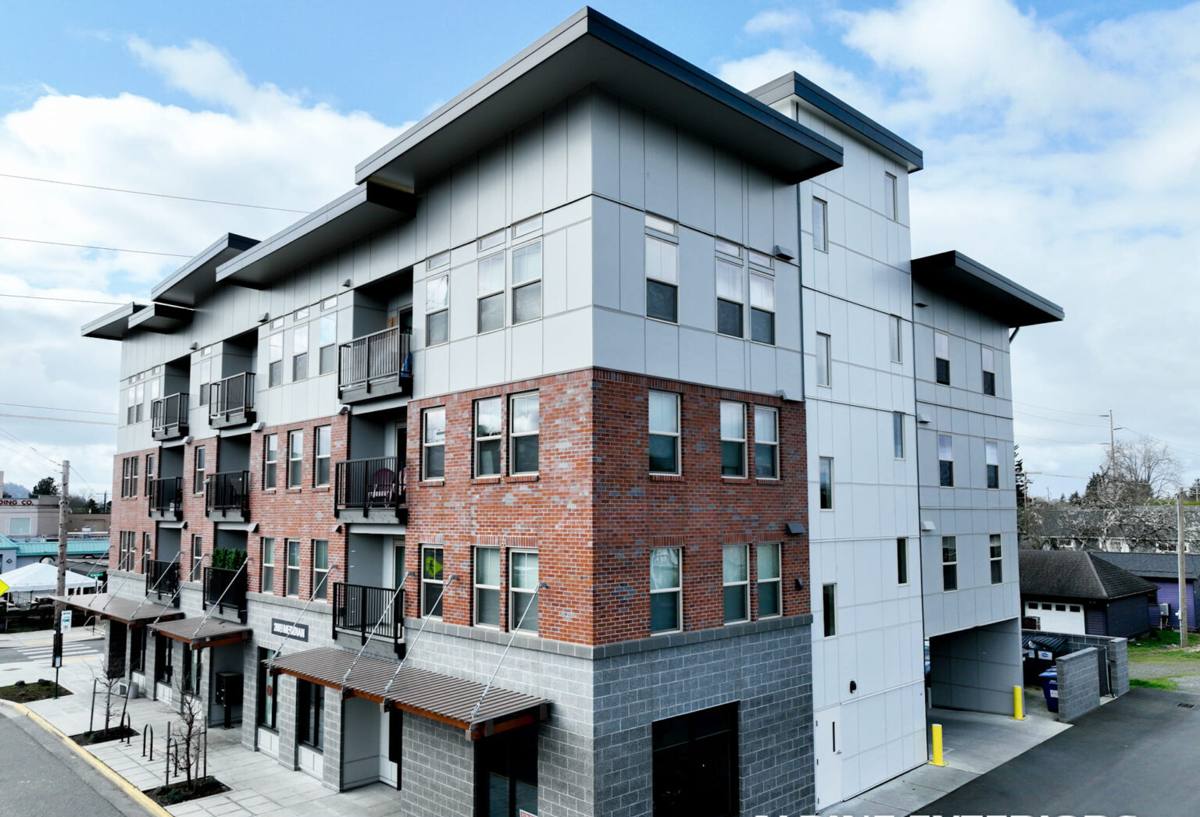
What That Environment Does to the Wrong Siding Material
Salt air doesn't just sit on the surface — it gets into seams, fastener heads, and any exposed edge, and it accelerates corrosion of untreated or lightly coated metal. Combined with near-constant moisture, that corrosion moves faster than it would in a drier inland climate. Materials that depend on paint film or caulking to stay watertight are especially exposed, because salt air and UV both degrade those coatings faster than manufacturers' timelines usually assume.
Moss and algae add a second problem on top of that. Once a biofilm establishes on a wall, it holds a thin layer of moisture against the surface almost permanently during the wet months, even between rain events. On wood-based products, that constant dampness is what leads to swelling, delamination at panel edges, and eventually rot — often starting at the bottom courses and inside corners where water sits longest and airflow is worst.
Why We Install James Hardie and Nothing Else Here
James Hardie fiber cement is engineered specifically for climates like this. It's cement-based rather than wood-based, so it doesn't absorb and swell the way wood, wood composite, or wood-fiber products do, and it isn't a food source for moss and algae the way organic materials are. That doesn't mean a Hardie wall never grows moss — anything exposed to constant damp shade can — but the siding itself doesn't degrade structurally from that exposure the way softer materials do.
Hardie's HardieZone system also matters here. Their panels are engineered and warranted differently by climate zone, and this part of Washington falls in HZ5, the zone built around sustained moisture exposure rather than extreme heat or freeze-thaw cycling. The ColorPlus factory finish is baked on and warrantied separately from the substrate, which matters in a salt-air environment because it holds up longer against the coastal combination of salt, UV, and moisture than most field-applied paint systems do — and it means fewer exposed, unprotected cut edges once trim and joints are handled correctly.
Hardie fiber cement is also non-combustible, which is a real advantage anywhere in Skagit County given regional wildfire smoke and ember exposure in dry summer stretches, even though the wetter months are what dominate the climate story here.
What a Correct Installation Actually Involves
Water Management Comes Before the Siding Goes On
Most siding failures we get called out to fix, on any brand, trace back to water management details that were skipped, not to the siding material itself. On a March Point home that means a properly lapped weather-resistive barrier, correct flashing at every window and door head, kickout flashing wherever a roofline meets a wall, and consistent clearance between the bottom of the siding and grade, roofing, decks, and patios. Skipping any one of these gives wind-driven rain a path behind the siding, and once water gets behind fiber cement it can sit there just as damaging as it would behind any other material.
Fastening and Trim Details for a Salt-Air Site
Fastener choice matters more here than in a drier, inland install. We use fasteners rated for the exposure and follow Hardie's HZ5 fastening pattern rather than cutting spacing to save time, because under-fastened panels move more, which stresses joints and accelerates caulk failure. Trim and flashing metal get chosen to avoid galvanic corrosion between dissimilar metals, which is a bigger factor near saltwater than most homeowners expect.
Joints, Caulk, and Where They Should — and Shouldn't — Be Used
Caulk is a maintenance item, not a waterproofing strategy. Correct installation uses flashing and proper laps to keep water out structurally, and reserves sealant for the specific joints Hardie's install specs call for. A wall that relies heavily on caulk to stay dry is a wall that will start leaking the day that caulk ages out — which happens faster in this climate than in a drier one.
How Siding Materials Actually Hold Up in This Climate
| Material | Response to salt air | Response to driving rain | Response to moss/algae exposure |
|---|---|---|---|
| James Hardie fiber cement | Cement substrate doesn't corrode; factory finish resists salt/UV degradation | Holds shape and doesn't swell if water reaches it; relies on correct flashing, same as any product | Non-organic substrate isn't a food source; surface film can still form and needs occasional cleaning |
| Vinyl siding | Panels themselves are inert, but can become brittle over time; trim fasteners still corrode | Prone to water intrusion behind panels at seams and penetrations if not flashed well | Textured surfaces can hold moss film; panels can warp under heat/cold cycling |
| LP SmartSide / wood-strand products | Exposed or damaged edges absorb moisture and swell faster in salty, humid air | Engineered to resist moisture better than raw wood, but edge and cut protection is critical | Wood-based substrate is more vulnerable to sustained damp/moss exposure than cement |
| Cedar / primed spruce | Salt air accelerates finish breakdown, increasing repaint frequency | Absorbs water at any unprotected surface; needs consistent refinishing to stay sealed | Organic material, most susceptible to moss, algae, and rot in prolonged damp shade |
This is why we standardized on Hardie rather than offering all of these side by side. We'd rather install one product correctly and stand behind it than sell homeowners something we know needs more maintenance in this specific environment to perform the same way.
Our Process for a March Point Siding Project
- Walkthrough and inspection. We look at existing siding, trim, flashing, and — where accessible — sheathing condition, especially at grade lines, deck ledgers, and roof-wall intersections where hidden moisture damage is most common.
- Scope and estimate. We give a written estimate based on what we actually find, including an honest note if we suspect hidden sheathing damage that won't be confirmed until tear-off.
- Tear-off and prep. Old siding comes off, sheathing gets assessed and repaired as needed, and the weather-resistive barrier and flashing details go in before any new siding is hung.
- Installation to Hardie's HZ5 spec. Fastener pattern, clearances, and joint treatment follow manufacturer requirements for this climate zone, not shortcuts.
- Final walkthrough. We go over the finished job with you, including where touch-up or trim caulking was used and what maintenance to expect going forward.
Living With Hardie Siding Near the Water
Correctly installed Hardie siding is low-maintenance, not no-maintenance. In a salt-air, high-moss environment like March Point, a little routine attention goes a long way toward keeping it looking and performing the way it should for the long haul.
- Rinse salt residue and grime off exterior walls periodically, especially on elevations facing open water or prevailing wind
- Trim back shrubs and trees that block airflow or sun on damp-prone walls to help siding dry out between rain events
- Check caulking at trim, window, and penetration joints annually and touch up before gaps open up behind them
- Keep gutters and downspouts clear so roof runoff isn't dumping extra water onto siding below
- Address roof moss treatments carefully — runoff from roof-moss chemicals can stain or stress siding and landscaping if it isn't rinsed away
Why It Matters That We Already Work in This Area
A crew that mostly works drier, inland jobs can install Hardie siding competently and still miss the details that matter most near the water — where kickout flashing is non-negotiable, which elevations need extra attention to moss and shade exposure, and how much clearance really needs to be left at grade and hardscape edges given how wet this ground stays for parts of the year. Working repeatedly in and around Anacortes and Skagit County waterfront neighborhoods means we're not guessing at how March Point's combination of salt air, wind-driven rain, and moss season behaves on a wall — we've already seen what happens when those details are skipped, and we build every job to avoid it.
If you're planning a siding replacement or new build in March Point, we're happy to walk your property, look at what your current siding and trim are telling us, and give you a straightforward, no-pressure estimate for a correctly installed James Hardie system built for this exact climate.