 Anacortes Siding
 Windows Built for Where March Point Actually Sits
March Point isn't a typical inland neighborhood. It's a peninsula surrounded by water on multiple sides, exposed to wind off Fidalgo Bay and Padilla Bay, and it takes weather differently than homes tucked into town or up against the hillside. Salt-laden air moves through here constantly, driving rain comes in sideways more often than straight down, and the long gray stretch of fall through spring keeps everything damp long enough for moss and algae to take hold on anything that doesn't drain and dry properly. Windows on a March Point home aren't just letting in light — they're one of the primary barriers standing between that environment and your framing, insulation, and interior finishes.
When we talk about "custom windows" for this area, we don't mean fancy shapes or unusual glass for the sake of it. We mean windows sized, flashed, and specified to match what this specific exposure demands, installed in a way that accounts for wind-driven moisture rather than assuming it behaves like a calm afternoon rain.
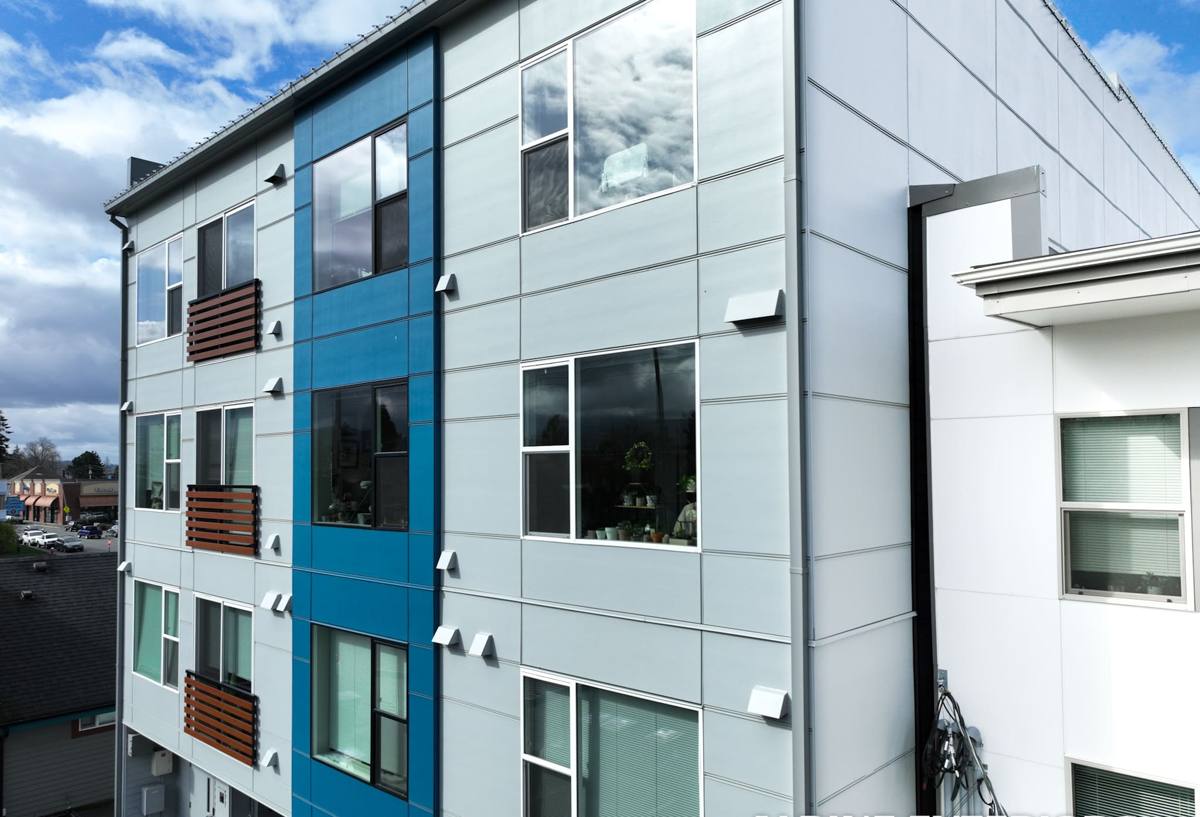
What Salt Air, Driving Rain, and Moss Season Do to Windows
Salt Air
Airborne salt accelerates corrosion on hardware, fasteners, and lower-grade metal components. Cheap or mismatched hardware on a window frame near the water will pit and seize years before it would inland. This is why hardware and fastener selection matters as much as the frame material itself.
Driving Rain
On an exposed point, wind pushes rain sideways and upward against the wall, not just straight down onto the sill. That means water can be forced into gaps that would stay dry on a more sheltered lot. A window that's watertight in a lab test but poorly flashed in the field will still leak here, because the water is coming from angles a standard installation doesn't always plan for.
Moss and Algae Season
Skagit County's wet season runs long, and anything with poor drainage — a sill that doesn't shed water, a trim detail that traps moisture, gaps around the frame — gives moss, algae, and mildew time to establish themselves. Once organic growth gets a foothold in a window opening, it holds moisture against the wood or trim behind it and accelerates rot.
None of this means March Point homes need exotic products. It means the ordinary steps — correct flashing, proper sill pitch, quality sealants, hardware rated for coastal exposure — can't be skipped or shortcut, because this environment will find every gap you left.
Signs Your Current Windows Are Losing the Fight
- Wood trim or sills that feel soft, spongy, or show dark staining at the corners
- Visible moss or green/black growth building up on sills or exterior casing
- Fogging or condensation between panes on double- or triple-glazed units (a sign the seal has failed)
- Drafts you can feel near the frame even when the window is fully latched
- Hardware that's stiff, corroded, or difficult to lock — especially on windows facing the water
- Paint or finish that's peeling or bubbling specifically around the window opening, not the rest of the wall
- Interior sill or drywall discoloration after a hard wind-driven storm
Any one of these on its own might be minor. Several together, especially on the sides of the house that face open water or prevailing wind, usually mean the window system — not just the glass — has reached the end of its useful life.
Choosing the Right Material for This Exposure
There's no single "best" window material for every home — it depends on your budget, your home's style, and how much upkeep you're willing to do. What we won't do is recommend a product that looks good on paper but creates a maintenance burden we know this climate will punish. Here's how the common options actually compare for a March Point setting:
| Material | Moisture & Salt Air Performance | Maintenance | Best Fit |
|---|---|---|---|
| Vinyl | Good — won't rot or corrode; quality matters more than in mild climates | Low; occasional cleaning | Budget-conscious replacements, rental or resale-focused projects |
| Fiberglass | Excellent — very stable in temperature and moisture swings, resists warping | Low; holds paint/finish well if ever changed | Homes with high wind/rain exposure wanting long service life |
| Wood-clad (exterior clad, wood interior) | Good on the exterior if cladding and flashing are correct; interior wood needs a dry, well-sealed opening | Moderate; exterior is low-maintenance, interior wood benefits from periodic finish checks | Homes prioritizing interior wood aesthetics, willing to trade some maintenance for it |
| Aluminum | Fair — prone to corrosion near salt air unless marine-grade and properly finished | Moderate to high in this environment | Specific architectural applications; we discuss trade-offs case by case |
For most March Point homes, we steer people toward vinyl or fiberglass because they hold up to salt air and moisture cycling with the least ongoing attention. If you love the look of interior wood, a clad option can work well — the key is making sure the exterior detailing and flashing are done right, since that's what actually protects the assembly, not the frame material alone.
Glass and Performance Options
Double-pane, argon-filled, low-E glass is the standard baseline for this region and it's worth it — not for a dramatic energy bill change on its own, but because it reduces condensation on the interior glass during our cold, damp winters, which matters for both comfort and long-term window health. Triple-pane is available for homes with more direct exposure to wind and noise off the water, but it's a bigger investment and not every home needs it. We'll tell you honestly whether the upgrade makes sense for your specific windows and orientation rather than upselling it across the board.
What a Correct Installation Actually Involves
The window unit itself is maybe half the job. The other half — the part that determines whether it's still performing in ten or twenty years — is how it's set into the wall.
- Opening inspection: Before anything goes in, we check the existing framing, sill, and sheathing for hidden rot or moisture damage, especially common on homes with wind-facing exposure.
- Flashing, not just caulk: Proper flashing tape and pan flashing at the sill direct any water that does get behind the trim back out, rather than trapping it. This is the single most important step for a driving-rain environment, and it's also the step that's most often shortcut on rushed jobs.
- Sill pan and drainage path: The sill is sloped and detailed so bulk water sheds away from the framing instead of pooling.
- Correct fasteners and hardware: Coastal-rated fasteners and hardware resist the corrosion that standard hardware sees near salt air.
- Insulation and air-sealing around the frame: Gaps around the unit are properly insulated and sealed — not overpacked, not left open — to control both drafts and condensation risk.
- Interior and exterior trim finishing: Trim is sealed and finished so it sheds water and doesn't give moss or algae a place to start.
Skipping or rushing any one of these steps is how a brand-new, expensive window ends up with a soft sill and a leak three years later. The product warranty covers the window unit — it does not cover a bad installation.
Our Process, Start to Finish
We keep the process straightforward because homeowners deserve to know what's happening at each stage:
- On-site assessment: We look at your current windows, the condition of the openings, and which walls take the worst of the weather.
- Honest material and product recommendation: Based on your budget, your home's style, and this specific exposure — not a one-size-fits-all pitch.
- Clear, written estimate: Scope, materials, and cost laid out before any work starts.
- Careful removal and opening prep: Including addressing any rot or moisture damage found underneath the old windows before new ones go in.
- Installation with full flashing and sealing detail: No shortcuts on the steps that actually keep water out.
- Cleanup and final walkthrough: We check operation, seals, and finish work with you before calling the job done.
Why a Crew That Already Works March Point Matters
General contracting knowledge gets you most of the way to a decent window install almost anywhere in the country. What it doesn't automatically give you is a feel for how a specific site takes weather — which walls catch the worst of the wind-driven rain, how quickly moss establishes on north-facing trim in this part of Skagit County, or what hardware actually holds up after a few winters this close to the water. A crew that's done work on and around March Point and greater Anacortes has already seen which shortcuts fail here and which details matter most, and that experience shows up in fewer callbacks and windows that are still performing well a decade in.
It also means we're not guessing about permitting, typical construction in this area's older versus newer homes, or how local building patterns interact with this exposure. That local familiarity is part of what you're paying for when you hire a local crew instead of a traveling outfit passing through.
What This Typically Costs
Every home is different, and we won't quote a number without seeing the actual openings, but a few honest cost factors are worth knowing going in:
| Factor | Why It Affects Cost |
|---|---|
| Window count and size | More and larger openings mean more material and labor |
| Material choice | Vinyl is typically the most budget-friendly; fiberglass and wood-clad cost more upfront but often cost less over time in upkeep |
| Condition of existing openings | Hidden rot or framing damage found during removal adds repair work before new windows can go in correctly |
| Exposure and access | Wind-facing or hard-to-access windows (second story, tight sightlines) can add labor time |
| Glass package | Upgrading from standard low-E to triple-pane or specialty coatings adds cost per unit |
We'd rather walk your home and give you real numbers than throw out a broad range that doesn't mean much once we see what's actually there.
Get a Straight Answer on Your Windows
If your windows are showing wear, feel drafty, or you're just planning ahead for a home on an exposed piece of March Point, we're happy to take a look and give you an honest read on what's going on — no pressure, no upsell. Fill out the form below to request a free estimate, and we'll walk the property with you and talk through what actually makes sense for your home and budget.