 Anacortes Siding
 Why March Point Siding Wears Differently Than Siding Inland
March Point sits close to open water on Fidalgo Bay, which means homes here take a different kind of weathering than a house tucked further into Anacortes or back toward the county's interior. Wind off the water carries salt, and that salt lands on siding, trim, and fasteners day after day, year after year. Add Skagit County's long wet season — months of driving rain pushed sideways by bay winds — and you have an environment that finds every weak point in a siding system faster than a mild, dry climate ever would.
Then there's moss. The Anacortes area's combination of shade, moisture, and mild temperatures gives moss and algae a long growing season on north-facing walls, under eaves, and anywhere siding stays damp longer than it should. On the wrong material, that moss holds moisture against the surface for months at a time. On siding with poor drainage detailing behind it, that trapped moisture doesn't just sit on the surface — it works its way into seams, fastener holes, and butt joints.
None of this means March Point homes need exotic materials or unusual construction. It means the ordinary steps of a siding replacement — flashing, drainage gaps, fastener choice, caulking, product selection — matter more here than they would in a drier, calmer climate. A siding job that would hold up fine for twenty years in a sheltered inland neighborhood can fail in half that time a few hundred yards from the bay if it's cut corners.
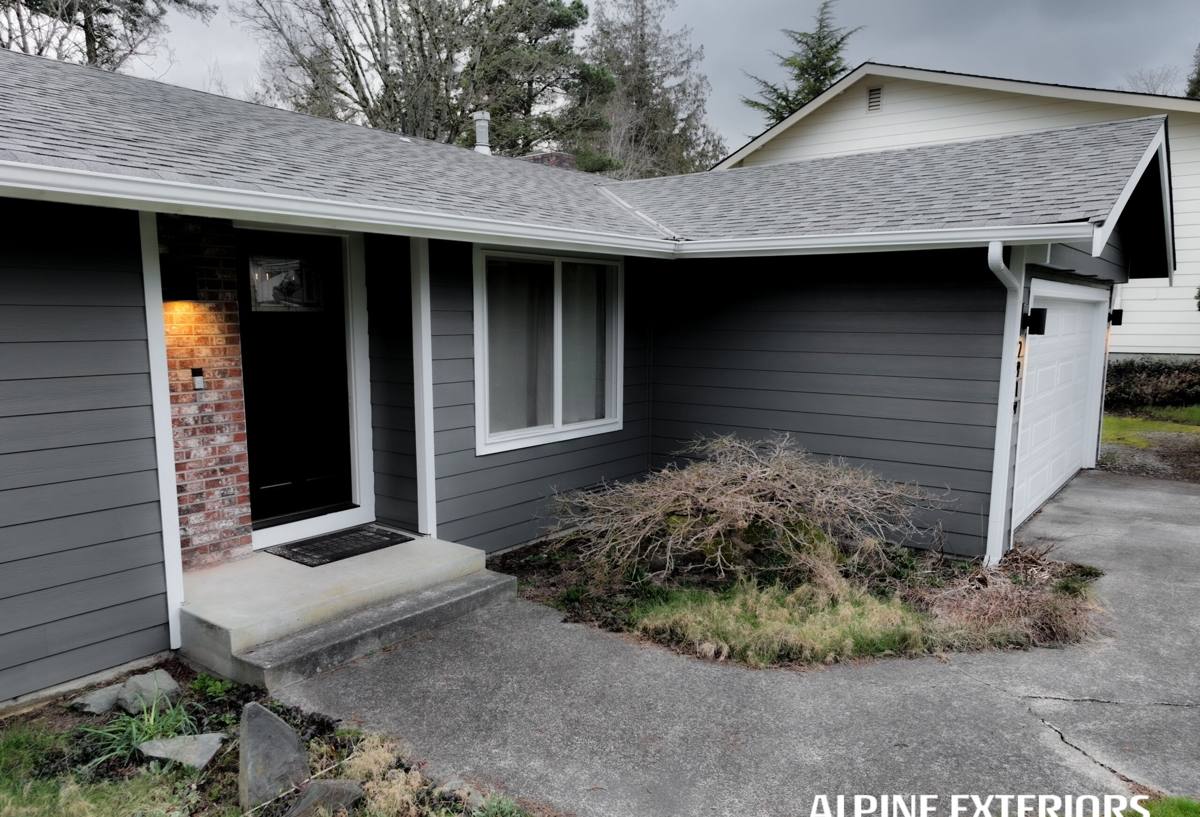
Signs a March Point Home Needs Siding Replacement
Salt air and moisture damage don't always show up as obvious cracks. Some of the clearest warning signs are subtle, especially on the water-facing side of a house:
- Paint that's chalking, peeling, or needing repainting far more often than it used to
- Soft or spongy spots when you press on siding near the bottom courses or around window trim
- Persistent moss or dark streaking that comes back within weeks of cleaning
- Visible cupping, warping, or separation at panel seams and butt joints
- Rusting or bleeding fastener heads showing through the paint
- A musty smell near exterior walls, or interior drywall staining that lines up with an exterior wall
- Corroded or pitted metal trim, gutters, or flashing near the siding line — a sign the salt exposure is real and ongoing
Any one of these on its own might just mean a maintenance item. Several together, especially on a wall facing the water or prevailing wind, usually means the siding system itself — not just the paint — is past the point of patching.
What a Correct Siding Replacement Actually Involves
It starts underneath the siding, not with the siding
The single biggest factor in how long a siding job lasts in a place like March Point isn't the finish material — it's what's behind it. A correct replacement means removing the old siding down to the sheathing, inspecting for rot or moisture damage, and repairing anything compromised before a single new panel goes up. Skipping this step and installing new siding over damaged sheathing just buries a problem that will keep growing.
Drainage and flashing detail work
In a high-rain, salt-air environment, water management behind the siding is not optional. That means a properly lapped weather-resistant barrier, correctly flashed windows and doors, and a drainage plane that lets any moisture that does get behind the siding escape instead of pooling. This is detail-level work — the kind that's invisible once the job is finished but determines whether the house stays dry for the next several decades.
Fastener and hardware choice
Salt air is hard on standard fasteners. Correct installation near the water means using corrosion-resistant fastener types and following the manufacturer's fastening pattern exactly — not just close enough. Loose or corroding fasteners are one of the most common causes of early siding failure in coastal Skagit County neighborhoods.
Product selection for the climate
This is where material choice actually matters. We install James Hardie fiber cement siding exclusively, in the HardieZone HZ5 product line engineered for the Pacific Northwest's wet, moderate climate. It's non-combustible, dimensionally stable in wet-dry cycling, and finished with the factory ColorPlus coating system, which holds color and resists the fading and chalking that plain-primed products show quickly under coastal sun and salt exposure.
Why We Only Install James Hardie
We get asked why we don't offer vinyl, LP SmartSide, primed wood, or the other fiber cement brands on the market. The honest answer is that we looked at how each of those performs over time in exactly this climate — wet, salty, moss-prone — and standardized on the one product line that gave us the fewest callbacks and the longest real-world lifespan.
Vinyl can crack in cold snaps, warp in direct sun, and its seams give moss and grime somewhere to collect. Primed wood and spruce products need a maintenance commitment — recaulking, repainting, watching for rot — that most homeowners underestimate until the first signs of failure show up. Other fiber cement brands aren't necessarily bad products, but James Hardie's factory-applied ColorPlus finish, engineered HZ5 formulation for our region, and transferable warranty backing gave us the most confidence installing a product we're willing to put our name behind. We're not saying other products can't work somewhere — we're saying that after years of installs in this specific climate, this is the one we trust on March Point homes.
Our Process for March Point Projects
- On-site assessment — We walk the exterior, check for moisture intrusion, rot, and drainage issues, and look specifically at how the home is oriented relative to wind and water exposure.
- Written estimate — A clear scope covering tear-off, sheathing repair allowances, flashing and moisture barrier work, and the Hardie product and color selected.
- Tear-off and sheathing inspection — Old siding comes off, sheathing is inspected and repaired as needed before anything new goes up.
- Weather barrier and flashing — Properly lapped house wrap, window and door flashing, and drainage detailing installed to manufacturer spec.
- Hardie installation — Panels, fasteners, and joints installed to James Hardie's published fastening and clearance requirements.
- Final walkthrough — We review the finished work with you and cover basic care before wrapping up.
Cost Factors for March Point Siding Replacement
Every home is different, but the same handful of factors drive cost on most March Point projects:
| Factor | Why It Matters Here |
|---|---|
| Sheathing condition | Salt-air moisture intrusion sometimes means hidden rot that isn't visible until old siding comes off |
| Home size and wall complexity | More corners, dormers, and trim detail mean more labor and cut waste |
| Siding profile and texture | Lap width, shake-style panels, and trim boards vary in material and install cost |
| Water/wind exposure | Bay-facing walls may need extra attention to flashing and fastening detail |
| Existing moss or algae staining | Heavier buildup can indicate more extensive prep and cleanup before install |
| Access and site conditions | Waterfront lots, slopes, and landscaping can affect staging and scaffolding needs |
We don't publish flat prices because so much depends on what we find once old siding comes off — but we'll walk you through the real drivers of your specific estimate before any work starts, not after.
Why a Crew That Already Works March Point Matters
A siding crew that's done work in this specific pocket of Skagit County already knows what to expect before they pull the first piece of old siding off the wall. They know which wall orientations tend to take the worst of the wind-driven rain, where moss builds up fastest, and how the salt air here affects fastener and flashing choices differently than it would twenty miles inland. That local pattern recognition shows up in fewer surprises mid-project and a finished job that's built for the conditions actually hitting the house — not generic conditions from a manufacturer's install guide written for the whole country.
It also means familiarity with permitting and inspection expectations in the Anacortes and Skagit County area, so the project moves through approvals without unnecessary delays.
Caring for Your Siding After Installation
James Hardie siding is low-maintenance, not zero-maintenance — especially in a salt-air, moss-prone environment like March Point. A few habits go a long way:
- Rinse siding gently once or twice a year to clear salt residue and organic buildup, especially on water-facing and shaded walls
- Trim back vegetation and tree branches to keep airflow and sunlight reaching shaded siding sections
- Check caulking around windows, doors, and trim annually and touch up as needed
- Address any moss regrowth early, before it has a chance to hold moisture against the surface for an extended period
- Keep gutters clear so overflow doesn't run down and saturate siding repeatedly in the same spot
If you're seeing early signs of wear on a March Point home, or you're just ready to stop maintaining siding that was never built for this climate, we're happy to take a look. Reach out for a free, no-pressure estimate using the form below — we'll walk the property, answer your questions honestly, and give you a clear picture of what your home actually needs.