 Anacortes Siding
 Siding Repair Built for March Point's Exposure
March Point sits out on the water, and that location shapes everything about how siding ages there. Homes on this peninsula face a longer, wetter exposure window than houses tucked into town — wind off Fidalgo Bay and Padilla Bay, driving rain that comes in sideways during winter storms, and a near-constant film of salt air that settles on exterior surfaces year-round. Add Skagit County's long, shaded moss season, and you get a combination that finds every weak point in a siding system faster than almost anywhere else in our service area.
Siding repair in March Point isn't just patch-and-paint work. It's diagnostic work first, matched to how water, salt, and organic growth actually behave on this stretch of shoreline, and repair work second. We treat every call here the same way: figure out why the siding failed before we touch it, then fix it in a way that holds up to the next ten winters, not just the next inspection.
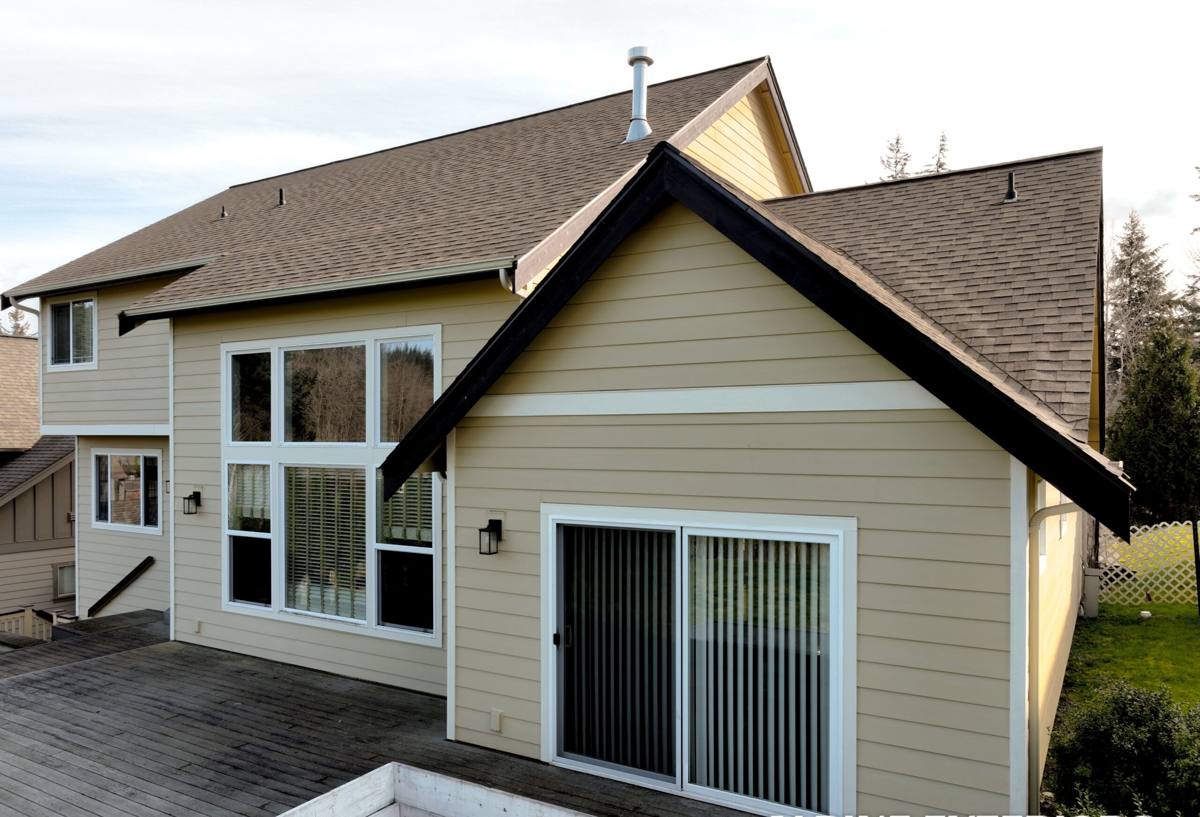
Why March Point Wears Siding Down Faster
A few conditions specific to this area combine to accelerate siding wear compared to more sheltered parts of Anacortes and the rest of Skagit County:
Salt Air and Metal Fasteners
Salt-laden air corrodes exposed or improperly coated fasteners and metal trim faster than inland air does. Once a fastener starts corroding, it loses grip, siding boards work loose, and water finds a path behind the cladding. This is one of the most common root causes we find behind "mystery" siding failures on waterfront and near-waterfront properties.
Driving Rain and Wind-Driven Water
March Point's open exposure means rain rarely falls straight down — it's pushed sideways by wind coming off the water. Wind-driven rain finds gaps in caulking, poorly lapped panels, and undersized flashing that would never leak on a more sheltered lot. Repairs that don't account for this directional water load tend to fail again within a season or two.
Moss, Algae, and Shade
Skagit County's damp, mild climate supports a long moss and algae season, and shaded north- and west-facing walls on wooded or closely-spaced March Point lots are especially prone to it. Moss holds moisture against the siding surface far longer than open air would, softening caulk joints and, on non-fiber-cement products, contributing to swelling and rot at the substrate.
Signs Your March Point Home Needs Siding Repair
Most siding problems announce themselves quietly before they become expensive. Homeowners in this area should watch for:
- Soft or spongy spots when you press on the siding, especially near the bottom courses or around windows and doors
- Visible gaps, cracks, or separation at butt joints and corner boards
- Streaking, bubbling, or peeling paint that keeps returning to the same section
- Moss or algae buildup that returns quickly after cleaning, particularly on shaded walls
- Rust streaks below nail heads or trim fasteners
- Warping, bowing, or visible waviness along a wall plane
- Musty odors or visible staining on interior walls that back up to exterior siding
- Caulk joints that have cracked, shrunk, or pulled away from the siding edge
Any one of these on its own might be minor. Several appearing together, especially on the sides of the house facing the water or prevailing wind, usually means moisture has been working behind the siding for a while.
What a Correct Repair Actually Involves
Diagnosing the Cause, Not Just the Symptom
Replacing a damaged board without finding out why it failed is a temporary fix. Before any repair work starts, we check the flashing, house wrap, and sheathing behind the damaged area. If water intrusion has reached the wall assembly, patching the visible siding and leaving the underlying moisture problem in place just guarantees a repeat call in a year or two — this is especially true on exposed March Point walls where the original cause of failure is still present after the patch goes in.
Matching Materials the Right Way
A siding repair that doesn't match the existing profile, reveal, and finish is obvious from the street and can undercut the resale value of the home. On James Hardie fiber cement siding, we match plank width, exposure, and ColorPlus finish so the repaired section blends into the surrounding wall rather than standing out as an obvious patch.
Rebuilding the Water Path
Siding is a water management system, not just a cosmetic layer. A correct repair restores proper lapping, flashing at penetrations, and drainage behind the cladding — not just a fresh bead of caulk over a crack. On a site with March Point's wind and rain exposure, skipping this step is the single biggest reason repairs fail early.
Repair vs. Replacement: How We Decide
Not every siding problem calls for full replacement, and not every problem should be patched. We look at the extent of the damage, the condition of the material behind it, and how much of the wall is affected before recommending either path.
| Factor | Repair Usually Makes Sense | Replacement Usually Makes Sense |
|---|---|---|
| Extent of damage | Isolated to one or two sections or walls | Spread across multiple walls or the whole exterior |
| Sheathing condition | Dry and sound behind the affected area | Soft, stained, or showing rot behind siding |
| Age of existing siding | Newer material still within its expected service life | Original material is decades old or a discontinued product |
| Material type | Existing James Hardie fiber cement in good general condition | Vinyl, LP SmartSide, cedar, or primed wood showing widespread wear |
| Cause of failure | Isolated impact damage, a single failed flashing detail | Systemic moisture intrusion or a failed original installation |
We'll always tell you honestly which category your home falls into. If a targeted repair will genuinely hold up to March Point's conditions, that's what we'll recommend — we don't push replacement on a house that doesn't need it.
Why Our Repairs Are Built Around James Hardie Fiber Cement
We install and repair with James Hardie fiber cement siding exclusively. We don't install vinyl, LP SmartSide, Cemplank, Allura, primed spruce, or cedar, and that standard shapes how we approach repair work too. Fiber cement doesn't absorb water the way wood-based products do, it's non-combustible, and Hardie's ColorPlus factory finish holds color and resists the moss, mildew, and salt exposure that this stretch of coastline sees far better than field-applied paint systems.
For repair and patch work specifically, this matters because Hardie's HZ5 product line is engineered for the Pacific Northwest's wet climate zone — the moisture performance of the patched section matches the moisture performance of the surrounding wall, instead of introducing a different material with different expansion, absorption, and finish behavior into an otherwise consistent siding system. When we repair a Hardie wall, we're extending a system that was already built for this climate, not bridging two incompatible materials.
How a March Point Repair Call Works
1. On-Site Inspection
We walk the exterior, check the areas you've flagged, and look at flashing, caulk joints, and grade clearance around the whole home — not just the spot you called about. Waterfront and near-waterfront exposure often means a problem visible on one wall has a related issue starting on another.
2. Honest Scope and Estimate
You get a clear explanation of what's causing the damage, what the repair involves, and a written estimate before any work begins. If we think replacement is the smarter long-term move, we'll say so and explain why.
3. The Repair Itself
We remove only what needs to come out, address the underlying cause — flashing, house wrap, fastener corrosion, whatever it is — and rebuild the wall assembly correctly before the new or matched siding goes back on.
4. Finish and Cleanup
Trim, caulking, and touch-up finish work are matched to the surrounding siding so the repair reads as part of the wall, not a patch. We clean up debris and fasteners before we leave.
Why It Matters That We Already Work in March Point
A crew that regularly works this part of Skagit County knows what to check first. We know that salt air corrodes fasteners faster here than it does a few miles inland, that wind-driven rain hits certain wall orientations harder on an exposed point, and that moss returns quickly on shaded walls near the water unless the underlying moisture issue is actually solved. That local pattern recognition shortens the diagnostic phase and helps us catch related problems before they turn into their own repair call next season.
It also means we're realistic about scheduling around this area's weather windows — repair work involving open wall sections needs a dry stretch, and we plan accordingly rather than rushing a patch in ahead of an incoming system off the water.
Keeping Repaired Siding in Good Shape Through Moss Season
A correctly repaired wall still benefits from basic upkeep, especially in a climate that supports moss and algae growth for much of the year:
- Keep gutters clear so water isn't overflowing onto siding below
- Trim back vegetation and tree limbs that keep walls shaded and damp
- Rinse visible moss or algae buildup with a garden hose rather than a pressure washer, which can drive water behind panels and damage caulk joints
- Have caulk joints and flashing checked periodically, since this is where most repair calls originate
- Watch grade and landscaping near the foundation to keep soil and mulch from holding moisture against the bottom courses of siding
If you're seeing any of the warning signs above on a home in March Point or elsewhere around Anacortes, we're happy to take a look and give you a straight answer about what it needs. Reach out for a free, no-pressure estimate using the form below.