 Anacortes Siding
 Siding Built for March Point's Peninsula Weather
March Point sits out on its own finger of land between Fidalgo Bay and Padilla Bay, which means homes here take on a different weather load than houses just a few miles inland in downtown Anacortes. The peninsula setting puts siding in near-constant contact with salt-laden marine air, wind that has a clear run across open water before it hits a wall, and rain that comes in sideways more often than it falls straight down. Add in Skagit County's long, gray, wet stretch from October through April, and you've got a climate that is genuinely hard on exterior materials — not dramatically, but relentlessly, year after year.
A siding installation in March Point isn't just about picking a color and nailing up panels. It's about choosing a material that can take on salt exposure without corroding, a weather barrier system that can shed wind-driven rain instead of trapping it, and detailing that resists the moss and algae growth that thrives in this kind of damp, low-sun environment. That's the standard we hold every March Point project to.
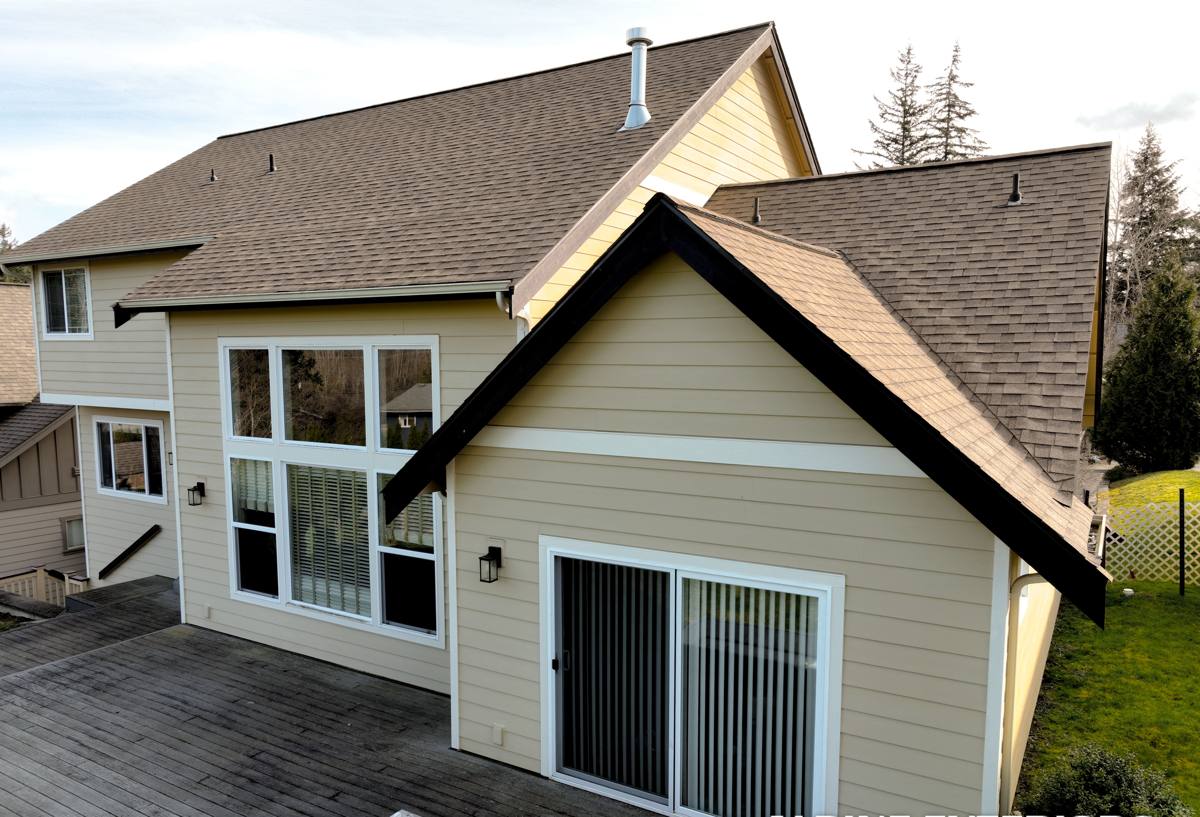
What the Peninsula Climate Actually Does to Siding
Salt Air and Metal Fasteners
Homes closer to the water deal with airborne salt that settles on every exterior surface. Over years, that salt accelerates corrosion on unprotected metal — fasteners, trim flashing, and hardware. Siding that relies on exposed metal components or fasteners that aren't corrosion-resistant will show rust streaks and premature failure well before a comparable product further inland.
Wind-Driven Rain
Open water on two sides means March Point gets less wind-blocking than a property tucked into town. Rain doesn't just fall here — it gets pushed sideways and driven into seams, laps, and penetrations. If the flashing details and drainage plane behind the siding aren't done correctly, that wind-driven rain finds its way behind the cladding, and you don't see the damage until it's already rotted sheathing or framing.
Moss, Algae, and the Long Wet Season
Skagit County's moss season isn't a few weeks — it's most of the year. North-facing walls, shaded siding, and anything near overhanging trees stay damp for extended stretches, which is exactly what moss and algae need to take hold. Porous or absorbent siding materials hold onto that moisture longer, feeding the growth cycle and softening the material underneath it.
Why We Install Only James Hardie Fiber Cement
We standardized on James Hardie fiber cement siding for every project we take on, including here in March Point, and we don't install vinyl, LP SmartSide, primed spruce, cedar, or other fiber cement brands. That's a deliberate call based on what actually holds up in this climate over decades, not just what looks good going in.
Fiber cement is non-combustible, dimensionally stable in wet-dry cycling, and doesn't feed mold or moss the way wood-based products can. James Hardie's ColorPlus factory-applied finish is baked on under controlled conditions, which gives it more consistent color retention and edge protection than field-applied paint. And Hardie engineers separate product lines for different climate zones — coastal Pacific Northwest homes like those on March Point get products built for high-moisture, marine-air conditions rather than a one-size-fits-all panel. Between the material itself and the transferable warranty backing it, it's the product we're willing to put our name behind.
Siding Options at a Glance for March Point
| Material | Salt Air Behavior | Moss/Algae Resistance | Typical Longevity Here |
|---|---|---|---|
| James Hardie Fiber Cement | Non-metallic core, corrosion-resistant fastening details | Doesn't feed organic growth like wood fiber does | Decades with correct install and normal upkeep |
| Vinyl Siding | Can become brittle and fade faster under UV/salt combo | Growth washes off surface but seams trap moisture | Shorter service life in coastal exposure |
| Cedar / Primed Wood | Vulnerable to moisture wicking at end grain and laps | High — wood fiber is an organic growth medium | Requires frequent repainting and maintenance |
| LP SmartSide (Engineered Wood) | Manufacturer treatment helps, but wood core still moisture-sensitive | Better than raw wood, still needs careful sealing at cuts | Installation quality is critical to lifespan |
What a Correct Installation Involves
The Weather-Resistive Barrier
Everything starts behind the siding. A continuous, properly lapped weather-resistive barrier is what actually keeps wind-driven rain out of the wall assembly — the siding itself is the first line of defense, not the only one. On a peninsula lot exposed to open water, we don't cut corners here.
Flashing at Every Penetration
Windows, doors, hose bibs, vents, and any other wall penetration need flashing that directs water back out and away from the sheathing, not just caulk covering a gap. Caulk fails over time; flashing is a mechanical drainage path that keeps working even after the sealant ages.
Fastening and Clearances
James Hardie specifies exact fastener types, spacing, and minimum clearances from grade, roof lines, and decks. Skipping these specs voids the warranty and creates the exact wicking and trapped-moisture conditions that lead to early failure — especially in a climate that gives siding little chance to fully dry out between rain events.
Caulking and Joint Treatment
Butt joints, corners, and trim transitions need the right sealant applied correctly, not just a bead run down every seam. Over-caulking can trap moisture as badly as under-caulking lets it in.
Signs a March Point Home Needs New Siding
- Soft or spongy spots when you press on the siding, especially near the bottom courses or window sills
- Persistent moss or dark streaking that comes back within weeks of cleaning
- Visible warping, buckling, or panels pulling away from the wall
- Rust staining running down from fasteners or trim
- Paint that's chalking, peeling, or fading unevenly, particularly on water-facing walls
- Rising energy bills that suggest the wall assembly isn't sealing the way it used to
- Visible gaps at corners, seams, or around windows and doors
Our Installation Process
1. On-Site Assessment
We walk the exterior, check for existing moisture damage, note wind exposure on each elevation, and look at how the current siding — if any — has held up given the site's specific orientation to the water and prevailing weather.
2. Tear-Off and Sheathing Check
Once old siding comes off, we inspect the sheathing underneath for rot or soft spots. This is often the first time hidden moisture damage becomes visible, and it needs to be addressed before anything new goes back on.
3. Weather Barrier and Flashing Installation
We install the weather-resistive barrier and flash every window, door, and penetration before a single piece of siding goes up. This step matters more on an exposed peninsula lot than almost anywhere else in the service area.
4. James Hardie Installation to Spec
Panels or planks go up following manufacturer fastening, clearance, and joint-treatment specifications — not shortcuts that might look fine on day one but fail years down the road.
5. Final Detailing and Walkthrough
Trim, caulking, and touch-up work get finished, and we walk the job with you so you know exactly what was done and why.
Why Hire a Crew That Already Works March Point
A contractor who's worked this specific stretch of Skagit County knows which elevations take the worst of the wind off the water, how much moss pressure to expect on shaded north walls, and what level of flashing detail is actually necessary versus overkill. That local pattern recognition matters — it's the difference between a generic installation and one tailored to how weather actually behaves on your particular lot. It also means someone who understands Skagit County permitting and can plan around the area's wet-season scheduling realities, so your project isn't fighting the weather the whole way through.
Maintenance in a Marine Climate
Even the right material needs some upkeep. On March Point, that generally means an annual rinse-down to keep salt film and organic buildup from accumulating, a periodic look at caulked joints and trim for any separation, and prompt attention if you notice new staining, soft spots, or gaps. James Hardie fiber cement is engineered to handle this climate with far less maintenance than wood, but "low maintenance" isn't "no maintenance" — a quick yearly check goes a long way toward getting the full service life out of the material.
If your March Point home is showing signs of wear from the salt air, wind, or moss, we're happy to take a look and give you a straightforward, no-pressure estimate on what a James Hardie installation would involve for your specific property. There's a form below — reach out and we'll get you scheduled.