 Anacortes Siding
 Composite Decking Built for March Point's Exposure
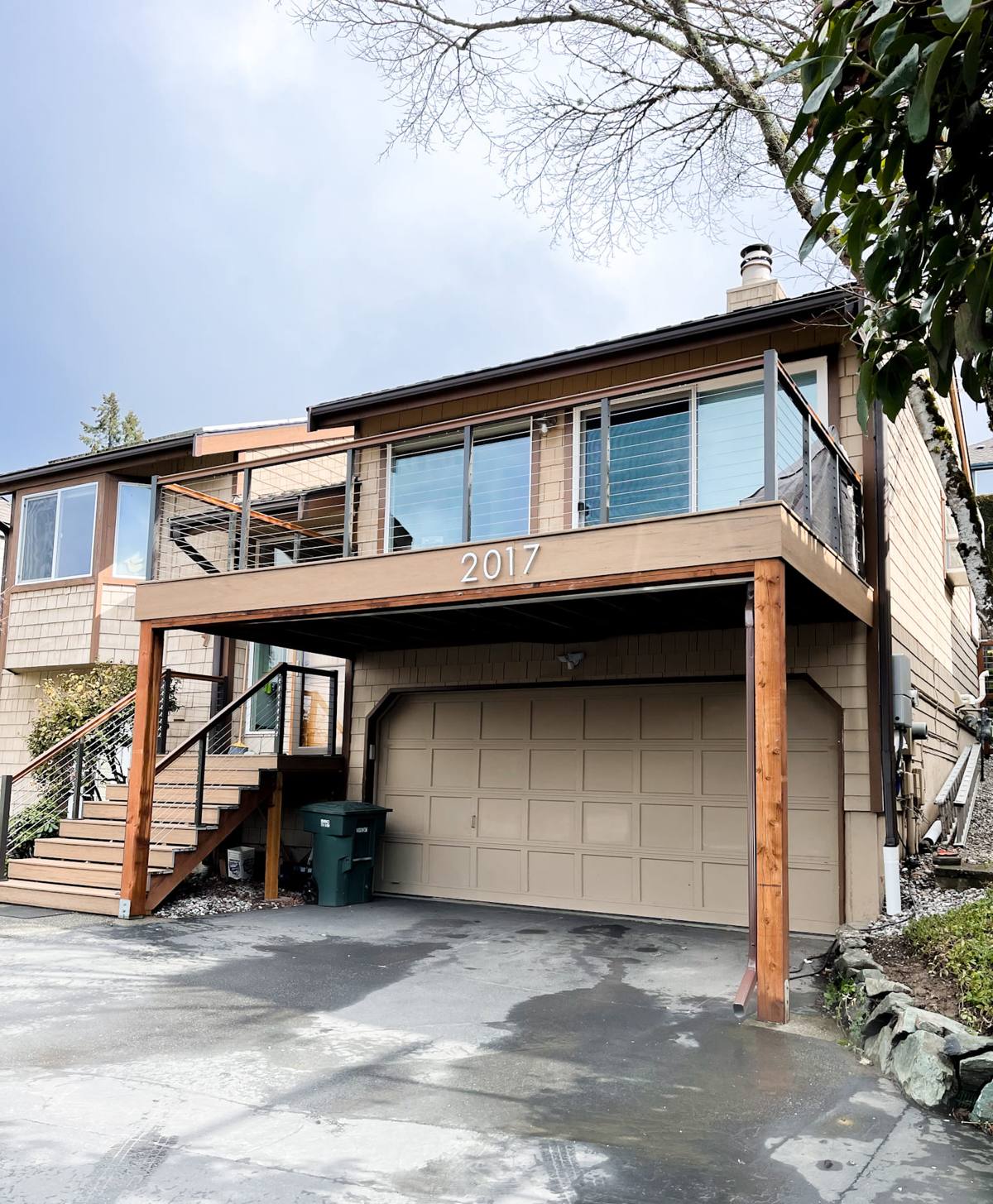
March Point sits out on the water, and that location cuts both ways. The views are part of why people build decks out here in the first place, but that same open, peninsula setting means homes take a steadier beating from salt-laden air, wind-driven rain, and the long gray stretch of moss season that defines this part of Skagit County. A deck built to a generic spec sheet doesn't hold up the same way out here as it might twenty miles inland. We build composite decks for March Point homes with that exposure in mind from the framing up, not just the board color on top.
This page covers composite decking specifically — what the local climate asks of it, what a correct install actually involves underneath the surface, and why it matters to hire a crew that already understands how this stretch of Anacortes weather behaves.
What Salt Air, Rain, and Moss Actually Do to a Deck
Three conditions define deck performance in March Point, and they compound each other:
- Salt air: Being close to the water means airborne salt settles on every exposed surface — including fasteners, brackets, and any exposed metal in the substructure. Standard hardware corrodes faster here than it would further inland.
- Driving rain: Wind off the water doesn't just fall straight down — it drives rain sideways under railings, into ledger connections, and along any gap that isn't properly flashed or sealed.
- Moss and algae season: Western Washington's wet, mild winters give moss and algae months to establish themselves on any deck surface that stays damp — especially shaded areas, north-facing sections, and spots under trees or overhangs.
None of these problems are unique to March Point, but the combination and intensity is more consistent here than in more sheltered parts of Anacortes. A deck design that ignores any one of the three tends to show it within a few seasons — usually as staining, soft spots at the ledger, or a slick, green film that never fully goes away.
Why Composite Makes Sense for This Climate
Composite decking doesn't rot, splinter, or need annual staining, which is a real advantage in a climate that keeps wood damp for months at a stretch. But composite isn't maintenance-free, and it isn't immune to the same moisture and organic growth that affects every outdoor surface here. The board itself resists rot — the framing underneath it, the fasteners holding it together, and the way water is allowed to drain away from it still have to be done right, or the composite surface ends up sitting on a substructure that's failing quietly beneath it.
Composite vs. Wood in a Marine Climate
| Factor | Composite Decking | Cedar / Pressure-Treated Wood |
|---|---|---|
| Moisture & rot resistance | Will not rot or absorb water into the board itself | Vulnerable to rot at fastener holes, end grain, and shaded areas over time |
| Refinishing | No staining or sealing required | Needs re-staining or sealing every 1-3 years to hold up in this climate |
| Moss & algae | Surface can still grow algae in damp, shaded spots; cleans off, doesn't stain into the board | Moss and algae can work into the wood grain and accelerate decay |
| Fastener & hardware needs | Requires corrosion-resistant hidden fasteners and coated structural hardware | Requires corrosion-resistant fasteners; exposed nail/screw heads more common |
| Upfront cost | Higher material cost | Lower material cost, higher lifetime maintenance cost |
| Typical lifespan here | 25-30+ years with proper substructure care | 10-20 years depending on species, maintenance, and exposure |
The trade-off is honest: composite costs more up front, and the framing underneath still has to be built correctly, or you've just spent more money to put a durable surface on a structure that won't last as long as it should.
What a Correct Composite Install Involves
Most composite deck problems we get called out to fix in this area didn't start with the composite boards — they started underneath them. A few details matter more here than they would in a drier climate:
Ledger and House Connection
Where the deck attaches to the house is the single most common source of hidden water damage. Proper flashing at the ledger board — installed so water sheds away from the house wall rather than behind it — is not optional in a climate that gets sustained, wind-driven rain. This is also where corrosion-resistant, code-rated fasteners matter most, since this connection carries structural load.
Framing and Ventilation
Composite decking doesn't rot, but the joists underneath it usually aren't composite — they're wood or engineered lumber, and they need airflow underneath the deck to dry out between rain events. Low decks built tight to grade, or decks with landscaping crowding the underside, stay damp longer and put the substructure at risk even though the surface above looks fine.
Fasteners and Hardware
Given the salt air, we don't treat fastener choice as a minor detail. Hidden fastener clip systems, structural screws, and joist hangers all need to be rated for coastal or marine exposure — standard galvanized hardware corrodes faster this close to the water and can fail years before the composite boards themselves show any wear.
Board Spacing and Drainage
Composite boards need consistent gapping for drainage and thermal movement. Too tight, and water sits between boards and never fully drains, giving algae a place to establish. Too loose, and the deck feels and looks unfinished. Getting this consistent across the whole deck is a fit-and-finish detail that shows up in how the deck ages, not just how it looks on install day.
Choosing the Right Composite Board for a March Point Home
Not all composite decking is built the same way, and the right choice depends on how exposed and how shaded a particular deck is.
- Capped composite: Has a protective outer shell wrapped around the core board, which holds up better against moisture absorption and staining than uncapped composite. We typically recommend capped boards for anything close to the water or in a shaded location prone to staying damp.
- Grooved vs. solid-edge boards: Grooved boards allow for hidden fastener systems, giving a clean surface with no visible screw heads — a common preference, though it does affect drainage slightly differently than a solid board with face screws.
- Color selection: Lighter colors show less contrast when moss or water spotting develops between cleanings; darker colors can run hotter in direct sun but hide certain kinds of surface wear better. It's a genuine trade-off, not a right-or-wrong choice, and it's worth talking through based on where your deck sits and how much sun or shade it gets.
We work with several established composite decking manufacturers rather than pushing one product line, because the right board really does depend on the specific deck — its orientation, shade, and how it's used.
Our Process for a March Point Composite Deck
- On-site assessment: We look at the existing structure (if there is one), the ledger connection, drainage path, sun/shade exposure, and how close the deck sits to grade or to the water.
- Structural plan: We spec framing, flashing, and fastener hardware to match the exposure of that specific deck — a covered, sheltered deck and an open, waterfront-facing deck don't get treated the same.
- Board and layout selection: We walk through capped vs. standard composite options, color, and board orientation based on your home and how the deck will be used.
- Installation: Correct ledger flashing, ventilated framing, corrosion-resistant hardware, and consistent board spacing — done in that order, not shortcut.
- Walkthrough: Before we consider the job finished, we walk the deck with you and go over basic care specific to this climate.
Maintaining a Composite Deck in a Salt Air, High-Moss Climate
Composite decking cuts down on maintenance significantly compared to wood, but "low-maintenance" isn't "no-maintenance" here. A little seasonal attention keeps the surface looking right and prevents the kind of buildup that becomes a real cleaning project later.
- Sweep off debris and standing organic matter (leaves, needles, moss spores) regularly, especially in shaded areas and under overhangs
- Rinse salt residue off the surface periodically, particularly after storms with wind off the water
- Clean algae or moss film with a soft brush and a composite-safe cleaner before it has a chance to establish — pressure washing on the wrong setting can damage the cap layer, so keep pressure moderate and the nozzle moving
- Check that gaps between boards stay clear of debris so water keeps draining properly
- Once a year, take a look underneath the deck if you can access it — check that framing looks dry and ventilation isn't blocked by landscaping or storage
- Inspect railing posts and stair connections for any looseness, since these take the most wind load in an exposed setting
Why Hire a Crew That Already Works March Point
A lot of deck problems we're called to fix started with a contractor who builds decks well in general but doesn't build specifically for this exposure — wrong fastener grade, a ledger flashing detail that works fine in a drier climate but fails here, or framing set too low to ever dry out properly. We're based in Anacortes and work throughout Skagit County, including March Point, so the framing and hardware decisions on your deck aren't a generic template — they're built around what actually happens to a deck sitting this close to the water through a Pacific Northwest winter.
Get a Free Estimate for Your March Point Composite Deck
If you're thinking about a new composite deck or replacing an aging one, we're happy to come take a look, walk the site with you, and put together a straightforward estimate — no pressure, no obligation. Use the form below to get started.