 Anacortes Siding
 Why La Conner Roofs Wear Differently
La Conner sits right on the Swinomish Channel, close enough to open water that salt-laden air is a daily fact of life, not an occasional nuisance. Add in Skagit County's long wet season, heavy tree cover in some neighborhoods, and the shaded, damp conditions that let moss take hold, and you get a roofing environment that is genuinely tougher than what a roof faces further inland. A roof built for a dry climate, or installed without this area's conditions in mind, will show its age here years before it should.
Salt air accelerates corrosion on any exposed metal — fasteners, flashing, vents, gutters. Driving rain off the water finds every gap in flashing and underlayment that a calmer climate would never expose. And moss doesn't just sit on the surface; given enough time, it holds moisture against the roofing material and works its way under shingle tabs, lifting them and creating paths for water to get underneath. None of this means a roof in La Conner is doomed — it means the installation has to account for all three from day one.
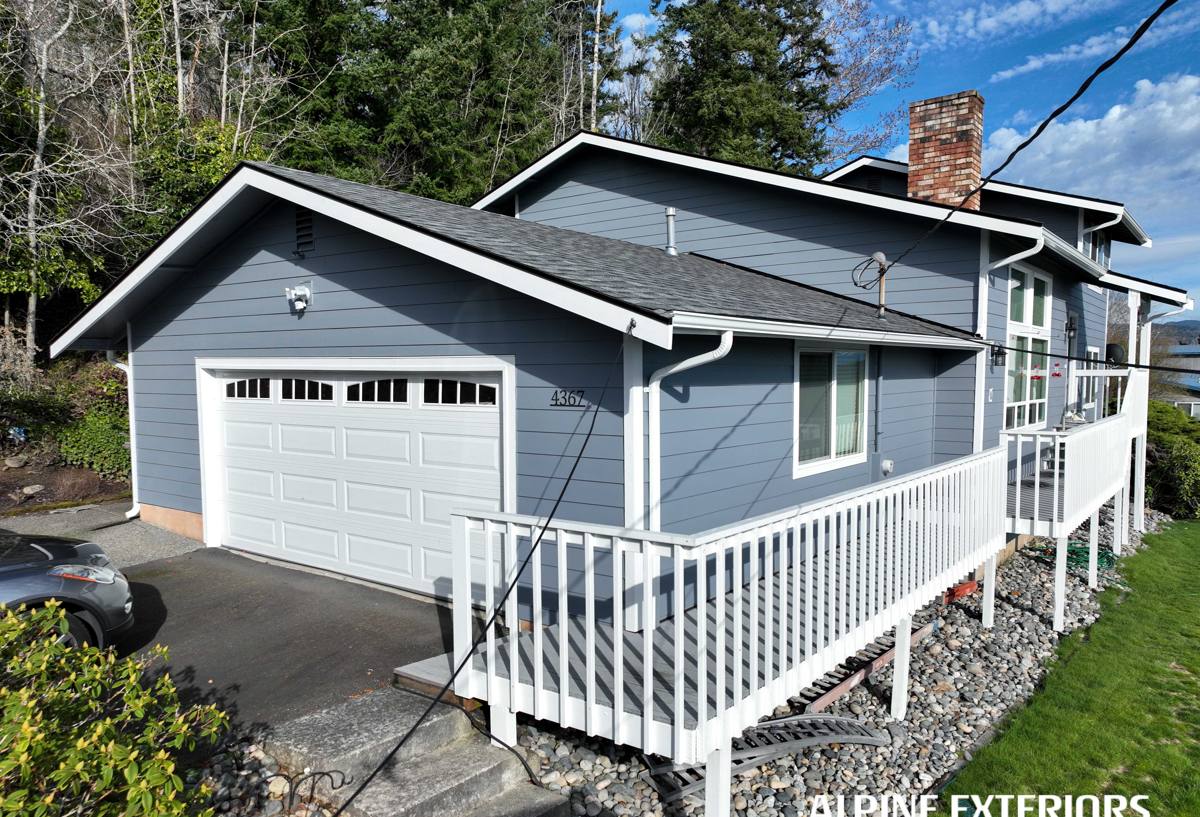
Signs Your La Conner Home Needs a New Roof, Not Another Repair
Homeowners often ask us to look at "one bad spot" and end up learning the roof has reached the point where patching is a short-term fix on a long-term problem. Some signs point clearly toward full replacement rather than another repair:
- Granule loss heavy enough that you're finding grit in gutters and downspouts regularly
- Shingles that are cupping, curling, or cracking across multiple areas of the roof, not just one section
- Moss or algae staining that keeps returning within a season or two of cleaning
- Soft spots in the decking you can feel when walking the roof, or sagging visible from the ground
- Daylight visible through the roof deck from inside the attic
- Repeated leaks around the same penetration (chimney, vent, skylight) despite prior repairs
- A roof that's already at or past the manufacturer's expected service life for this climate
If you're seeing two or more of these, a repair is usually just delaying the inevitable — and in a wet, salt-air environment, delayed roofs tend to cause damage to decking and framing that gets more expensive the longer it waits.
What a Correct New Roof Installation Actually Involves
Tear-Off and Deck Inspection
We remove the old roofing down to the deck rather than installing over existing layers. Overlaying hides problems — soft or rotted decking, deteriorated flashing, hidden moisture damage — that are common on homes exposed to years of coastal moisture. Every deck we uncover gets inspected board by board, and any compromised sheathing is replaced before anything new goes down.
Underlayment Built for Wind-Driven Rain
Standard felt underlayment is not our default in a location that sees sideways rain off the water. We use synthetic or self-adhering underlayment products designed to resist wind-driven moisture, with extra attention paid to valleys, eaves, and any area where water naturally concentrates.
Flashing That Actually Sheds Water
Flashing failure is the single most common cause of "mystery leaks" we find on older La Conner roofs. Around chimneys, skylights, dormers, and wall intersections, we install new flashing rather than reusing old pieces, and we size and lap it to handle sustained, heavy rain — not just an occasional shower.
Ventilation Sized for the Climate
A roof deck that can't breathe traps moisture underneath the roofing material, which speeds up rot and gives moss and algae an even easier foothold from below. We check and correct intake and exhaust ventilation as part of every installation, not as an afterthought.
Choosing the Right Roofing Material for a Salt-Air, High-Moss Climate
There's no single "best" roofing material for every home — the right choice depends on your roof's slope, your budget, how much shade and moss exposure you deal with, and how long you want to go between maintenance visits. Here's how the common options compare for a La Conner property:
| Material | Moss & Moisture Resistance | Maintenance Needs | Typical Lifespan Here |
|---|---|---|---|
| Algae-resistant asphalt shingles | Good — copper or zinc granules slow algae/moss growth | Periodic cleaning, gutter checks | 20–30 years with proper care |
| Standard asphalt shingles | Fair — no built-in resistance, moss takes hold faster | More frequent cleaning required | 15–20 years in this climate |
| Metal roofing | Very good — sheds moisture fast, little surface for moss to grip | Low; occasional coastal-fastener checks | 40–50+ years with correct coatings/fasteners |
| Cedar shake/shingle | Poor in shaded, damp spots without diligent upkeep | High — regular treatment and moss removal | Highly variable; shortened by neglect |
For homes with significant tree cover or north-facing slopes that stay damp longer, we're often more cautious about wood roofing options — not because the material is inherently bad, but because the maintenance commitment needed to keep it performing in this specific climate is real, and we'd rather set that expectation up front than sell a product that needs more upkeep than a homeowner wants to take on.
A Note on Metal Fasteners and Trim
If you go with metal roofing near the water, fastener and flashing material matter as much as the panels themselves. We use corrosion-resistant fasteners and coatings appropriate for a marine environment — mismatched or bargain hardware is where premature rust and staining usually start.
Our Installation Process, Start to Finish
- On-site inspection and honest assessment of whether you need repair or replacement
- Written estimate covering material options, scope of work, and timeline
- Permitting handled on your behalf where required
- Property protection — landscaping, siding, and windows covered before work begins
- Full tear-off and deck inspection, with any repairs approved before proceeding
- Installation of underlayment, flashing, ventilation components, and roofing material
- Cleanup, including magnetic sweep for stray fasteners and debris haul-away
- Final walkthrough so you can see the completed work before we consider the job done
We build in flexibility around weather. Skagit County's rain patterns don't always cooperate with a fixed schedule, and we'd rather adjust timing than install underlayment or shingles in conditions that compromise the seal.
Ventilation and Moisture Control Don't Stop at the Roofline
A new roof performs best when the attic behind it is working with it, not against it. Poor attic ventilation traps humid air, which condenses on the underside of the deck and creates the exact damp conditions that shorten a roof's life from the inside. As part of a full installation, we check ridge and soffit venting, look for blocked airflow paths, and correct what we find. This is a small part of the overall job but one of the most overlooked reasons roofs in wet climates fail early.
Maintaining Your New Roof in a La Conner Climate
A properly installed roof still benefits from basic upkeep in this environment. A short, regular maintenance routine goes a long way toward hitting the full expected lifespan of your new roof:
- Clean gutters and downspouts at least twice a year, more often under heavy tree cover
- Have moss and algae growth addressed promptly rather than letting it spread across a season
- Trim back overhanging branches that keep sections of the roof shaded and damp
- Schedule a visual inspection after major windstorms, which are common off the water
- Check attic ventilation isn't blocked by insulation or debris
- Address any flashing or sealant issues as soon as they're noticed, not at the next scheduled visit
A Note for Homes in La Conner's Historic District
Some La Conner properties fall within areas that carry additional design or appearance guidelines because of the town's historic waterfront character. If your home is in one of these areas, roofing material, profile, and color may need to fit specific local requirements in addition to the county's building and permitting rules. We factor this into the estimate and paperwork rather than leaving it for you to sort out separately.
Why Local Roofing Experience Matters More Than It Seems
Anacortes and the surrounding Skagit County waterfront communities, La Conner included, have a specific combination of salt exposure, rainfall volume, and moss pressure that isn't universal even within Washington State. A crew that mainly works drier, inland areas may default to standard underlayment, standard ventilation, and standard fastener choices — all reasonable elsewhere, all under-built for a home a few hundred yards from tidal water. Working in this specific climate regularly means we've seen where roofs here actually fail, not just where a manufacturer's spec sheet assumes they might.
If your La Conner home needs a new roof, we're happy to take a look and give you a straightforward assessment — no pressure, no inflated urgency, just an honest read on what your roof actually needs. Reach out for a free estimate using the form below.