 Anacortes Siding
 Why Oak Harbor's Marine Climate Changes the Roofing Equation
Oak Harbor sits close enough to open water that homes here take a different kind of weathering than roofs even a few miles inland. Salt-laden air moves through constantly, driving rain comes in sideways during winter storms, and the shaded, damp stretches of the year give moss and algae months to get established before anyone notices. A roof that performs fine in a drier, more sheltered part of the region can start showing problems here years ahead of schedule — rusted fasteners, lifted shingle tabs, soft spots where moss has been holding moisture against the deck.
Metal roofing isn't a trend pick for this area — it's a practical response to what the climate actually does to a house. Done correctly, with the right panel type, coating, and fastening details, it handles salt exposure and sustained wet weather better than most other roofing materials available at a comparable price point. Done incorrectly, it can trap moisture or corrode at the fastener points faster than a well-installed asphalt roof would. The difference almost always comes down to installation quality, not the material itself.
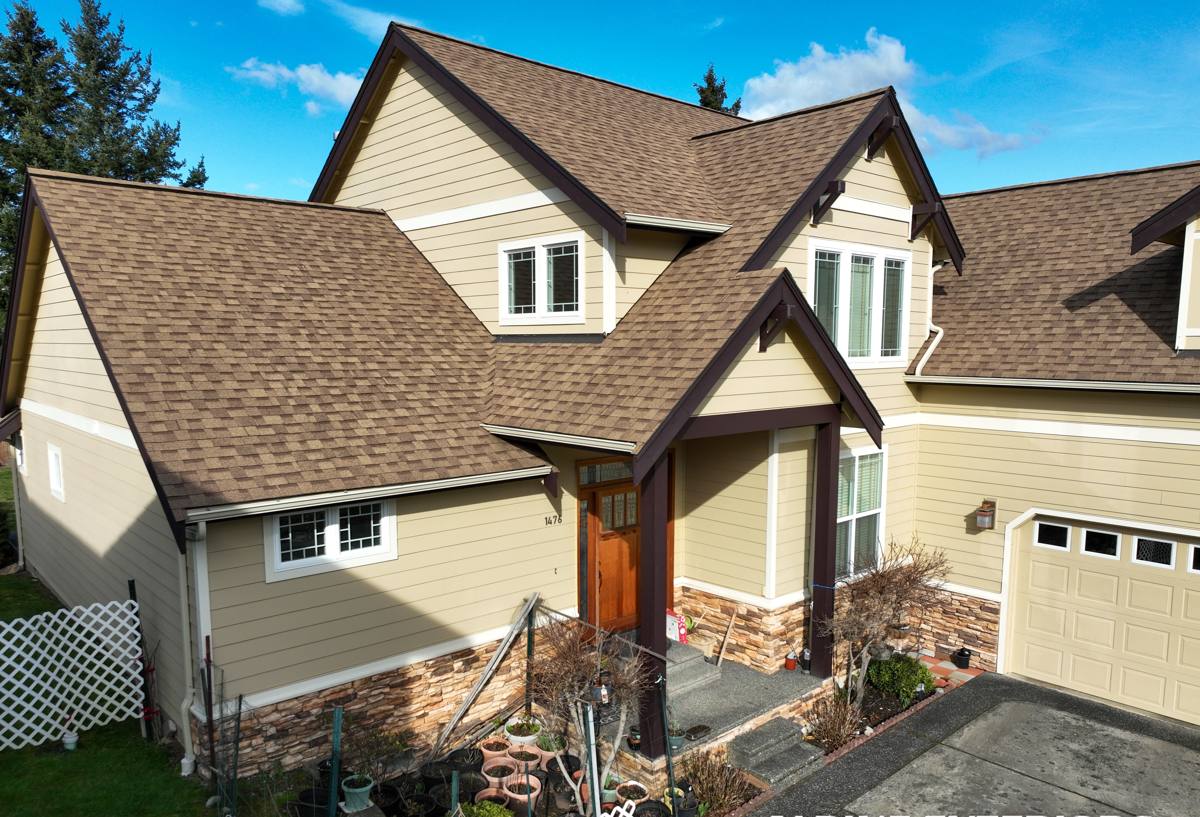
What Salt Air, Driving Rain, and Moss Actually Do to a Roof
Each of these three conditions stresses a roof in a different way, and a correct system has to answer all three at once:
- Salt air accelerates corrosion on any exposed metal — fasteners, flashing, panel edges — especially where dissimilar metals touch and set up galvanic reaction.
- Driving rain pushes water sideways and upward under normal wind pressure, which means laps, seams, and penetrations need to shed water uphill and against wind-driven pressure, not just downhill under gravity.
- Extended moss and algae growth holds moisture against roofing surfaces for weeks at a time in shaded or north-facing areas, which is what causes granule loss on shingles and can trap dampness against wood decking if ventilation is poor.
None of these are unique to Oak Harbor, but the combination — and how long the wet season runs here compared to drier parts of the state — is what makes roofing choice and installation detail matter more than they would somewhere less exposed.
Why Metal Roofing Holds Up Where Other Materials Struggle
Metal roofing gives you a continuous, largely seamless water-shedding surface with very little that moss can grip onto or that trapped moisture can degrade the way it degrades organic shingle mat. It also sheds snow and heavy rain faster than a textured surface, which matters during the wettest stretches of the year.
Standing Seam vs. Exposed-Fastener Panels
Standing seam panels use concealed clips and interlocking seams, so there are no exposed fastener heads for salt air to attack over time. This is generally the better choice for full sun and wind exposure, and it's what we recommend for most Oak Harbor homes where budget allows. Exposed-fastener panel systems cost less up front and can still perform well, but every screw penetration is a point where the washer and coating need to stay intact — which means fastener quality and installation care matter even more in a salt-air environment.
Coatings and Corrosion Resistance
Not all "metal roofing" is equally suited to coastal exposure. Steel panels need a proper protective coating system (such as a Galvalume base with a quality paint finish) to resist corrosion long-term, and aluminum is naturally corrosion-resistant but a different cost and performance tradeoff. We spec materials and fastener hardware based on what actually holds up in salt air, not just whichever option has the lowest sticker price — cutting corners on coating or fastener grade here tends to show up as premature rust within a handful of years rather than decades.
What a Correct Metal Roof Installation Involves Here
The panels get the attention, but most of what determines whether a metal roof performs for 40-plus years happens underneath and around them.
Underlayment and Moisture Barriers
In a climate with this much sustained rain, we use a synthetic or self-adhered underlayment rated for metal roofing, not a bargain felt product. Ice-and-water shield style membrane at eaves, valleys, and penetrations gives a secondary barrier in the spots most likely to see wind-driven water get past the panel laps.
Fastening, Flashing, and Ventilation
Flashing at chimneys, vents, walls, and valleys is where the majority of roof leaks actually originate, on any roof type. We detail these with metal-specific flashing profiles and proper lap sequencing so water is always directed onto the next surface down, never trapped against a seam. Ridge and soffit ventilation gets checked and corrected where needed, because a metal roof over a poorly ventilated attic can still trap moisture underneath, which defeats a lot of the material's natural advantage.
| Factor | Metal Roofing (Standing Seam) | Architectural Asphalt Shingle |
|---|---|---|
| Typical lifespan | 40–70 years | 20–30 years |
| Salt air / corrosion resistance | High, with correct coating and hardware | Moderate — granule and fastener wear over time |
| Moss and algae resistance | High — little surface for growth to grip | Lower — organic mat holds moisture, needs regular treatment |
| Upfront cost | Higher | Lower |
| Maintenance over life of roof | Low — periodic inspection and gutter/debris clearing | Moderate — moss treatment, spot repairs, earlier replacement |
Our Process, Start to Finish
We keep the process straightforward and give you clear information at each step rather than surprises after the tear-off starts.
- On-site assessment. We look at your existing roof, decking condition, ventilation, and any problem areas (valleys, chimneys, low-slope sections) before quoting anything.
- Material and system selection. We walk through panel type, coating, and fastener options based on your home's exposure, roof pitch, and budget — with honest tradeoffs, not upselling.
- Deck inspection and prep. Once tear-off starts, we check the decking for soft spots or water damage before anything new goes down. Any repairs needed get flagged and priced before we proceed, not discovered after the fact.
- Underlayment, flashing, and panel installation. Done in the sequence that keeps water moving downhill and off the structure at every stage, even mid-project.
- Final walkthrough. We go over the completed roof with you, including how to spot early signs of any issue and what routine maintenance looks like.
Why a Crew That Already Works Oak Harbor Matters
Roofing crews that mostly work drier, more sheltered inland areas don't always adjust their detailing for marine exposure — they'll use the same fastener grade, the same underlayment spec, and the same flashing approach everywhere, because it's what they're used to. A crew that regularly works Oak Harbor and the surrounding Puget Sound shoreline knows which details actually need upgrading for salt air and driving rain, and which corners genuinely can't be cut here even if they'd be fine somewhere drier.
There's also a practical scheduling side to it. Weather windows for tear-off and dry-in work are tighter in a wetter coastal climate, and a crew familiar with the area's seasonal patterns plans the job to minimize the time your roof deck is exposed.
Keeping a Metal Roof Performing for the Long Haul
Metal roofing is genuinely low-maintenance compared to most alternatives, but "low-maintenance" doesn't mean "no maintenance" — especially in a climate this wet. A short annual routine goes a long way:
- Clear gutters and downspouts of debris before the fall rains start, so water isn't backing up under eave flashing.
- Walk the roofline (or have it checked) after major windstorms for any lifted panel edges or displaced flashing.
- Trim back overhanging branches that keep sections of roof shaded and damp, which encourages moss even on metal.
- Rinse off accumulated debris or moss growth on low-slope or shaded sections rather than letting it build up over multiple seasons.
- Have penetrations — vent boots, chimney flashing, satellite mounts — checked periodically, since these are the most common source of any leak regardless of roof material.
What Affects the Cost of a Metal Roof in This Area
| Cost Factor | Why It Matters |
|---|---|
| Panel type and coating | Standing seam with premium coatings costs more than exposed-fastener systems, but requires less long-term upkeep |
| Roof complexity | More valleys, dormers, and penetrations mean more flashing work and labor time |
| Existing deck condition | Rot or water damage found during tear-off adds repair cost before new roofing goes on |
| Ventilation upgrades | Correcting inadequate attic ventilation adds cost but protects the new roof's lifespan |
| Access and site conditions | Steep pitches, limited staging area, or difficult access affect labor and equipment needs |
We don't give ballpark numbers without seeing the roof — too many of these factors change the total to make a flat estimate honest. What we can tell you upfront is that the material and installation quality suited to Oak Harbor's exposure costs more than the cheapest available metal roofing system, and that's a deliberate tradeoff for longevity, not padding.
If you're weighing a metal roof for a home in Oak Harbor, we're happy to take a look and give you a straightforward assessment — no pressure, no inflated urgency. Use the form below to request a free estimate.