 Anacortes Siding
 Board & Batten Siding for Skyline's Waterfront Exposure
Skyline sits out on Fidalgo Island's western shoreline, close enough to the water that homes here take a different kind of weather than houses a few miles inland in Anacortes proper. Board and batten siding — with its clean vertical lines, wide flat panels, and narrow battens covering the seams — is one of the most popular looks for the modern and craftsman-style homes going up and being re-sided in this part of Skagit County. Done right, it's a durable, good-looking system. Done wrong, or with the wrong material, it's one of the faster ways to end up with moisture problems behind the wall.
We install board and batten siding on Skyline homes regularly, and this page is about what actually matters for that specific style, in that specific location: the exposure, the detailing, and the material choice.
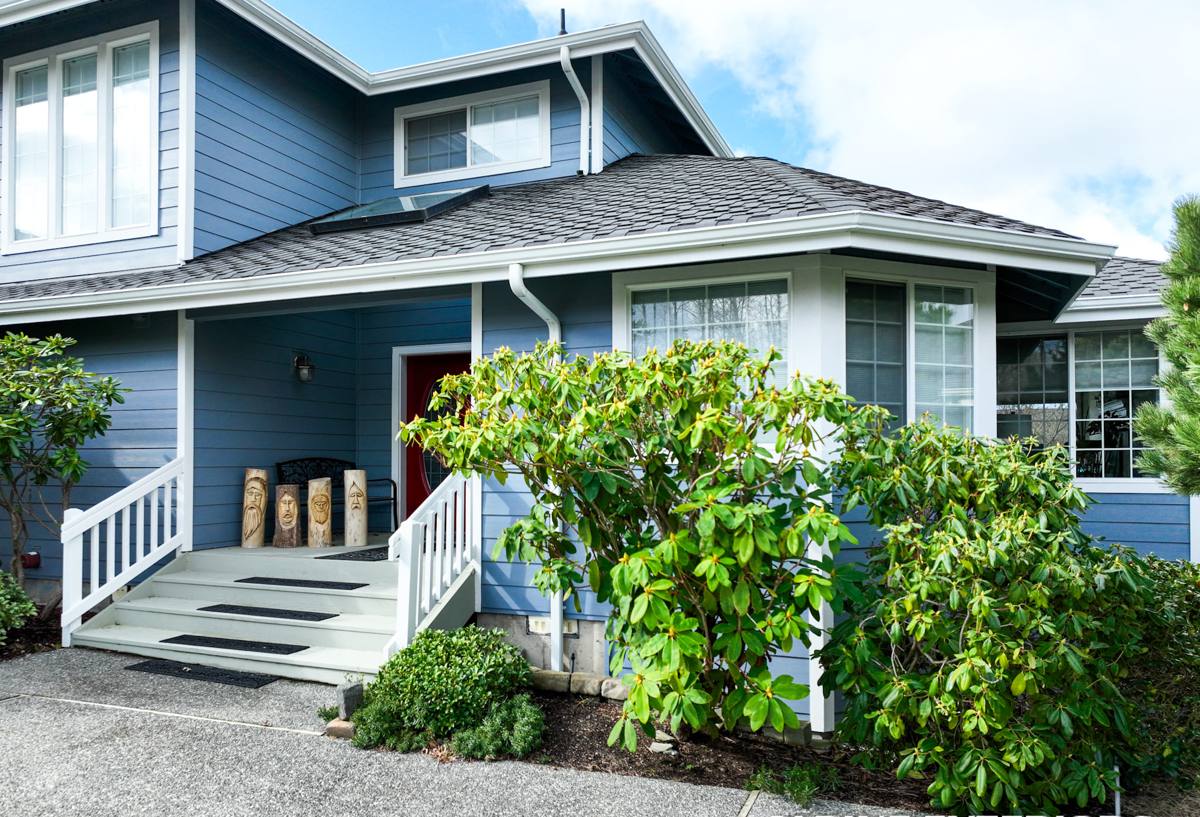
What Salt Air, Driving Rain, and Moss Actually Do Here
Three things define siding performance in Skyline, and they compound each other:
Salt air
Homes closer to the water pick up airborne salt that accelerates corrosion on anything exposed — fasteners, trim caps, hardware. Board and batten has more exposed vertical seams than lap siding, and every one of those seams has fasteners behind it. If those fasteners aren't rated for a coastal environment, they can start failing years before the siding itself does.
Driving rain
Wind off the water doesn't just fall as rain — it drives sideways into walls, especially on west- and south-facing elevations. Vertical board and batten has more linear seam length per square foot than horizontal lap siding, which means more joints where wind-driven water can find a way in if the flashing and drainage plane behind it aren't built correctly.
Moss and algae
The long, wet, mild-temperature stretch that Skagit County sees every year is close to ideal growing conditions for moss and algae. North-facing walls, shaded elevations, and anywhere siding stays damp longer than it can dry are the first places it shows up. On board and batten, moss tends to collect in the shadow line where the batten overlaps the panel — a spot that's hard to see from the ground and easy to ignore until it's established.
None of this means board and batten is a bad choice for Skyline. It means the installation has to account for all three, and the material has to be able to take it.
What a Correctly Installed Board & Batten System Actually Involves
Weather-resistive barrier and rainscreen gap
Every wall gets a code-compliant weather-resistive barrier underneath the siding. In a high-moisture climate like this one, we build in a drainage gap (a rainscreen) behind the panels rather than fastening siding tight to the sheathing. That gap lets any water that does get past the siding drain down and out, and lets the wall dry from both sides instead of trapping moisture against the WRB. This one detail is the single biggest factor in how long vertical siding lasts on the water side of Anacortes.
Fasteners and hardware
We use corrosion-resistant fasteners suited to coastal exposure, not standard interior-grade hardware. On board and batten, fastener placement also matters more than people expect — panels and battens need to be fastened to hit framing correctly without over-driving or under-driving, both of which create long-term problems (popped fasteners, cracked panels, or gaps that let water in).
Flashing at every seam and penetration
Every panel joint, every window and door, every place a batten meets a horizontal trim board gets flashed — not just caulked. Caulk is a first line of defense, not a substitute for flashing, and it's the first thing to fail under repeated wetting and drying cycles.
Factory-finished edges
Field-cut edges on any fiber cement product should be sealed with a manufacturer-approved edge sealer before installation, especially on board and batten where vertical cut edges sit exposed to running water for the life of the siding. This is a step that's easy to skip and impossible to check once the wall is closed up — it's one of the reasons who installs your siding matters as much as what siding you choose.
Comparing Board & Batten Material Options
We get asked why we only install James Hardie fiber cement for board and batten rather than vinyl, LP SmartSide, or cedar. Here's the honest comparison, specific to how each performs in a vertical-panel format in a wet, salt-air climate:
| Material | How it handles Skyline's exposure | Long-term consideration |
|---|---|---|
| James Hardie fiber cement | Non-combustible, dimensionally stable, factory ColorPlus finish resists moisture at the surface | Requires correct rainscreen and flashing detail, like any cladding — but doesn't rot or support moss growth in the material itself |
| Vinyl board and batten | Won't rot, but expands and contracts more with temperature swings; seams can loosen over time | Not repaintable if it fades or discolors; can crack in impact or in hard freezes |
| LP SmartSide (engineered wood) | Wood-based core is more vulnerable to sustained moisture exposure than fiber cement | Depends heavily on caulking and paint maintenance staying ahead of any exposed edges |
| Cedar or primed spruce | Traditional look, but a wood substrate in a wet coastal climate needs vigilant maintenance | Repainting/restaining cycles are shorter here than in a drier inland climate |
We're not going to tell you cedar looks bad — it doesn't. But we made a professional decision to standardize on James Hardie because we don't want to be back at a Skyline home in five years explaining why the batten seams are swelling or the north wall is growing moss into the substrate itself. Hardie's HZ5 product line is engineered specifically for climates like ours, and the ColorPlus factory finish means the color coat was baked on under controlled conditions rather than field-applied paint that has to fight our weather from day one.
Our Process for a Skyline Board & Batten Project
- On-site assessment. We look at wall exposure by elevation — which sides take the worst of the wind-driven rain, which stay shaded and damp longer — before we spec anything.
- Tear-off and substrate check. We inspect sheathing for existing moisture damage before covering it back up. This is the point where hidden problems get caught, not after the new siding is on.
- WRB and rainscreen installation. Weather barrier goes on correctly lapped, then furring strips or a rainscreen product create the drainage gap.
- Flashing at all openings. Windows, doors, and any wall penetrations get flashed before panels go up around them.
- Panel and batten installation. Hardie panels and battens go up plumb, fastened to framing with coastal-rated fasteners, edges sealed.
- Final detail and cleanup. Caulking at appropriate joints, touch-up on any field-cut edges, and a walk-through so you know what to expect from the finish over time.
Maintaining Board & Batten Siding in This Climate
Fiber cement is low-maintenance compared to wood, but "low-maintenance" isn't "no-maintenance" anywhere near the water. A simple annual routine goes a long way:
- Rinse siding down once or twice a year, focusing on north-facing and shaded walls where moss and algae take hold first
- Check caulking at trim joints and around windows for cracking or separation
- Look along the base of the walls for any staining or soft spots that could indicate water pooling
- Keep gutters clean and downspouts directed away from the foundation so runoff doesn't wash directly down siding walls
- Trim back landscaping that keeps siding shaded and damp longer than it needs to be
- Have any small impact damage or fastener pops addressed promptly rather than waiting
Signs Your Current Siding Needs Attention
If you're in an existing Skyline home, a few warning signs are worth a look before they become bigger repairs: moss or algae established in the batten shadow lines, visible fastener heads rusting or backing out, caulk that's cracked or missing at panel joints, soft or discolored spots near the base of walls, and paint that's chalking or peeling on wood-based siding. Any of these are worth a professional look, whether that leads to a repair or a full re-side.
Why It Matters That We Already Work in Skyline
Coastal exposure isn't uniform even within Anacortes — a wall facing open water takes different weather than one tucked behind a rise or a stand of trees a quarter mile away. Working in Skyline regularly means we already understand how exposure varies block to block here, what elevations tend to need extra flashing attention, and where moss shows up first. That's the kind of judgment that doesn't come from a general specification sheet — it comes from having done the work on homes with the same wind, the same rain angle, and the same salt air you're dealing with.
If you're planning a board and batten project in Skyline — new construction, a re-side, or repairs to an existing installation — we're happy to take a look and walk you through what your home specifically needs. Reach out for a free, no-pressure estimate using the form below.