 Anacortes Siding
 Windows in Bow Face a Different Set of Problems Than Windows Inland
Bow sits low, close to the water, and open to weather that comes straight off Samish Bay with nothing to slow it down. That combination — salt-laden air, wind-driven rain, and long stretches of shade under fir and cedar canopy — puts more stress on windows here than on windows twenty miles inland in Mount Vernon or Sedro-Woolley. A window that's rated fine on paper can still fail early in Bow if it wasn't installed with this specific exposure in mind.
This page is about one job, done right, in this one area: replacing or installing windows on a Bow property in a way that actually holds up to what Skagit County's coastline throws at a house year after year.
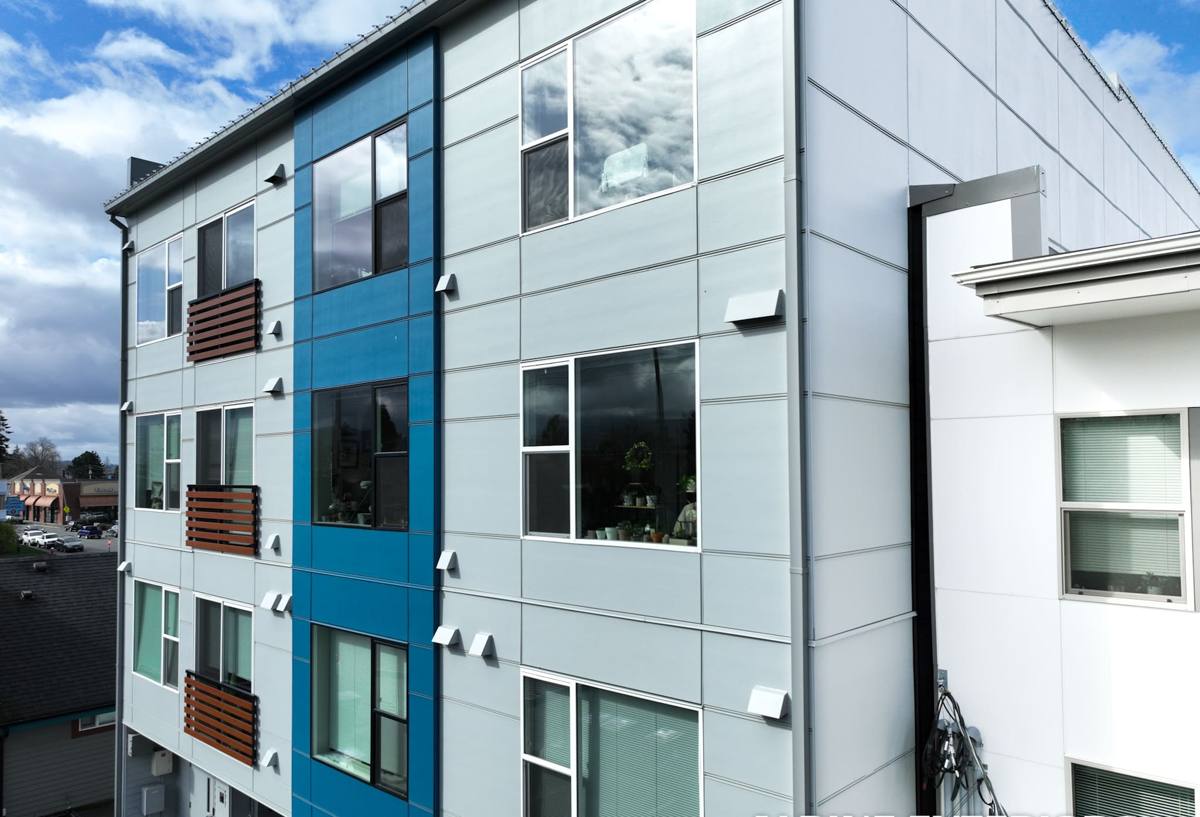
What Skagit County's Coastal Climate Does to Windows Over Time
Salt Air and Metal Fatigue
Salt in the air doesn't just affect boats and dock hardware. It settles on window frames, screens, and hardware, and over years it accelerates corrosion on lower-grade fasteners, aluminum components, and unprotected metal flashing. Homes closer to the bay see this faster than homes set back from the water, but almost everywhere in Bow is close enough to matter.
Driving Rain and Wind-Driven Water
Rain that falls straight down is easy for any window to shed. Rain that's being pushed sideways by wind off the water is a different problem — it finds gaps in flashing, undersized sills, and old caulk lines that vertical rain never would. Most window leaks we find in this area aren't from bad glass, they're from water getting behind the frame through a flashing or sealant detail that was never built for sideways rain in the first place.
Moss, Mildew, and Shaded Exposures
Bow's tree cover and long wet season mean north- and east-facing walls often stay damp for days at a time. Moss and mildew take hold on wood trim, sills, and even vinyl surfaces that don't get direct sun to dry them out. Left alone, that moisture load works its way into any gap in the window's seal, softening wood components and giving mildew a foothold on the interior side of the wall.
Signs a Bow Home's Windows Need Replacing, Not Just Recaulking
Some window problems are cosmetic and some mean water is already inside the wall. Here's how to tell the difference before you spend money on the wrong fix:
- Fogging or a visible haze between the panes — the seal on the insulated glass unit has failed and the glass itself needs replacing
- Soft or spongy wood at the sill or bottom corners of the frame — sign of ongoing water intrusion, not just surface weathering
- Drafts you can feel even with the window fully latched — usually a failed weatherstrip or a frame that's racked out of square
- Peeling paint or bubbling drywall on the interior wall below or beside a window — often the first visible sign of a leak that's been running behind the siding for a while
- Persistent moss or black staining on the exterior trim that comes back within weeks of cleaning
- Windows that are hard to open, won't stay up, or have visibly sagged in the frame
- Noticeably higher heating bills compared to similar-sized rooms elsewhere in the house
Fogged glass alone can sometimes be handled with a sash or glass-unit replacement. Soft wood, active drafts, or interior staining usually mean the whole window and its flashing need to come out.
What a Correct Window Installation Actually Involves
Swapping a window is straightforward. Installing one so it survives Skagit County's wet season for the next 20-plus years takes more steps than most homeowners realize:
- Sill pan flashing — a sloped, sealed pan under the window opening so any water that does get past the sash has somewhere to drain besides your wall framing
- Proper flashing sequencing — flashing tape and building paper layered so water always sheds downward and outward, never trapped behind a layer above it
- Correct shimming and squaring — a window that's out of square binds, leaks at the corners, and wears its hardware out early
- Low-expansion foam or mineral wool insulation around the frame — enough to stop drafts without bowing the frame out of square
- Weather-appropriate exterior sealant — the right sealant for the siding material and exposure, applied at the joints that actually need it rather than every visible gap
- Interior air sealing — closing the gap on the room side of the wall, which matters as much for condensation control as the exterior work does for rain
Skip any one of these and the window may look fine for a year or two before a problem shows up — usually as a leak, a draft, or wood rot that costs more to fix than it would have cost to do the flashing right the first time.
Choosing the Right Window for a Bow Property
There's no single "best" window material — the right choice depends on your home's exposure, your maintenance appetite, and your budget. Here's how the common options stack up for a coastal Skagit County setting:
| Window Type | Moisture & Salt Air Tolerance | Maintenance | Relative Cost |
|---|---|---|---|
| Vinyl | Good — won't rot or corrode; seams and hardware are the weak points to watch | Low — occasional cleaning, no repainting | Lower |
| Fiberglass | Very good — stable in wet-dry cycling, resists warping better than vinyl in full sun/shade contrast | Low | Mid to higher |
| Wood, unclad | Poor in direct weather exposure without diligent upkeep — attractive but needs protection from driving rain | High — regular repainting or refinishing | Mid to high |
| Wood with aluminum or fiberglass cladding | Good — cladding shields the wood, but any breach in the cladding seal lets moisture get trapped against wood | Moderate — cladding is low-maintenance, but seams need periodic inspection | Higher |
For homes with direct exposure to wind off the bay, we generally steer clients toward vinyl or fiberglass on those elevations — not because wood windows are bad products, but because unclad wood in a driving-rain, salt-air exposure asks for a maintenance commitment a lot of homeowners underestimate. Where appearance calls for a wood look, clad options give you that without the same upkeep burden, as long as the cladding seams are detailed correctly at installation.
Our Installation Process
- On-site assessment — we look at each window opening individually, not just the whole house at once. Sun exposure, wind direction, and existing water damage vary window to window on the same house.
- Honest scoping — we tell you which openings need full replacement with new flashing versus which can be handled with a simpler sash or glass swap.
- Old window and flashing removal — we check the framing underneath for hidden rot before anything new goes in. Concealed damage gets flagged and priced separately rather than papered over.
- Sill pan and flashing installation — built for the driving-rain exposure this property actually gets, not a generic detail copied from an inland job.
- Window set, shim, and square — checked, not eyeballed.
- Insulation, interior and exterior sealing — done in the sequence that keeps water moving out and away from the wall assembly.
- Final walkthrough — we operate every window with you before we consider the job done.
Why It Matters to Hire a Crew That Already Works Bow
A contractor who mostly works drier, inland parts of Skagit County can install a technically fine window that still isn't built for what happens here. Crews that regularly work Bow and the surrounding coastal lowlands know which elevations catch the worst of the wind off the bay, how much shade tends to sit on the north side of a property this close to tree cover, and where moss problems tend to start — because they've seen it on the last several jobs down the road, not just read about it.
That local pattern recognition shows up in small decisions: which sealant holds up to the salt exposure, how far to prioritize drainage on a shaded wall, whether a particular opening needs extra flashing attention because of how the roofline sheds water onto it. None of that is exotic knowledge — it's just familiarity with this specific stretch of Skagit County, built by doing the work here repeatedly.
Maintaining New Windows Through Skagit County's Wet Season
A correctly installed window still benefits from basic upkeep, especially in a salt-air, high-moss environment:
- Rinse salt residue off frames and hardware a few times a year, especially on bay-facing elevations
- Clear moss and debris from sills and tracks before it holds moisture against the frame
- Check exterior caulk lines annually for cracking or separation, particularly after a hard winter
- Make sure gutters and downspouts near windows are clear so roof runoff isn't sheeting directly across the glass and frame
- Operate every window at least a couple of times a year so hardware doesn't seize from disuse
None of this replaces a correct installation — it just protects the investment once the flashing and sealing work is already done right.
If you're dealing with drafty, fogged, or water-stained windows on a Bow property, or you're planning ahead for a replacement before the next wet season, we're glad to take a look and give you a straightforward, no-pressure estimate. Use the form below to get started.