 Anacortes Siding
 Skyline sits up on the bluff on the west side of Anacortes, and most of the decks up there were built to take advantage of one thing: the water view. That same exposure that makes the view worth having is exactly what wears a deck out faster than one built a few blocks inland. Wind off the Salish Sea, salt-laden air, driving rain, and shade from mature trees on a lot of Skyline properties all add up to conditions that shorten the life of framing, fasteners, and decking material alike. We replace decks throughout Skagit County, and Skyline is one of the neighborhoods where we see the clearest gap between a deck built for looks and a deck built to actually hold up.
Why Decks Wear Out Faster on a Skyline Lot
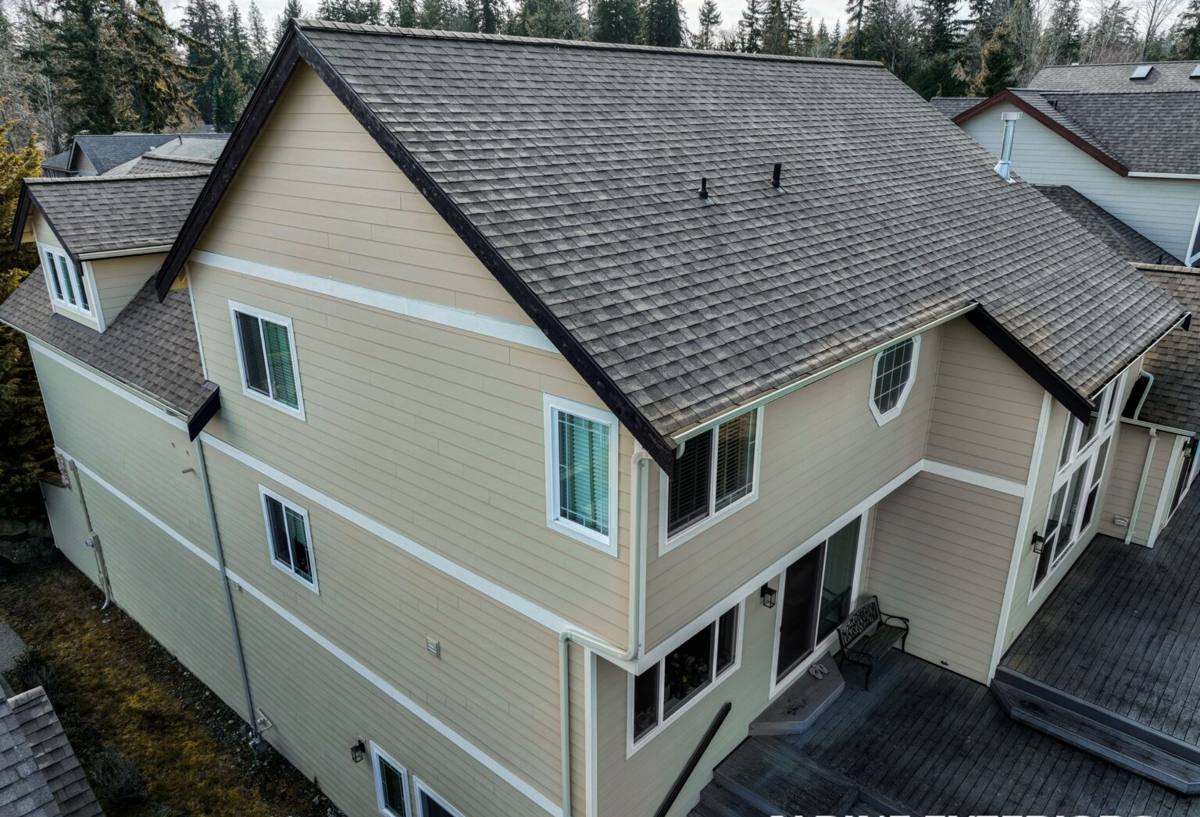
A deck is one of the most exposed structures on a house — no roof overhang, no wall to block wind-driven rain, and in a lot of cases on Skyline, direct or near-direct exposure to weather coming off the water. Add tree cover, which many bluff lots have to soften the wind, and you get shade that keeps a deck surface damp longer after every rain. That combination of salt air, moisture, and slow drying time is hard on wood, hard on metal fasteners, and hard on the ledger connection where the deck meets the house — which is usually where the most serious failures start.
None of this means a Skyline deck is doomed to a short life. It means the framing lumber, hardware, flashing, and decking product all need to be chosen and installed with that exposure in mind, not just built to whatever the original spec called for twenty or thirty years ago. A deck built the same way you'd build one on a sheltered inland lot in Anacortes is going to age noticeably faster up here.
Signs a Skyline Deck Needs Replacing, Not Just Repairing
- Soft, spongy, or spring-back decking boards, especially near the house or in shaded areas that stay damp
- Rust streaking or visibly corroded fasteners, brackets, or railing hardware
- Gaps or movement at the ledger board where the deck attaches to the house — a sign the connection itself may be compromised
- Posts or footings that feel loose, or a deck that sways more than it used to under normal foot traffic
- Persistent moss or algae growth on the deck surface that keeps coming back no matter how often it's cleaned
- Visible rot or splitting at joist ends, stair stringers, or anywhere wood meets wood without a gap to dry
Repair or Replace? How We Make That Call
Not every aging deck needs a full replacement, and we're not going to tell a homeowner they do if the structure underneath is sound. The decking boards on top are the easiest and cheapest part to replace — if the framing, ledger connection, and footings are solid, sometimes a resurfacing job is the honest answer. But if the problems are in the structure itself — a rotting ledger, undersized or corroded framing hardware, footings that were never adequate to begin with — resurfacing just puts new boards over a problem that's going to resurface within a few years.
On Skyline specifically, we pay close attention to the ledger board and its flashing, because that's the connection point most exposed to wind-driven rain and most likely to develop hidden rot behind the decking. A deck that looks fine from the surface can still have a compromised ledger connection, which is a structural and safety issue, not just a cosmetic one. When we're not sure from a visual inspection, we'll open up a section to check rather than guess.
What a Correct Deck Replacement Actually Involves
Replacing a deck properly is more than pulling old boards and screwing down new ones. In a climate like ours, the parts nobody sees — framing, flashing, fasteners, and drainage — matter more to how long the deck lasts than the decking material itself.
The Structural Details We Don't Skip
- Ledger flashing: A properly installed ledger flashing (and, where called for, a self-adhered membrane) keeps wind-driven rain from tracking behind the ledger board and into the house structure — one of the most common sources of hidden rot on older decks
- Joist protection: Joist tape or an equivalent moisture barrier on top of framing lumber slows water absorption at the fastener holes, where rot most often starts
- Corrosion-rated hardware: Fasteners, joist hangers, and structural connectors rated for exterior and, where exposure calls for it, coastal use — standard interior-rated hardware corrodes noticeably faster in salt air
- Footings sized for the load: Footings and post bases sized and set to current code, not just matched to whatever was there before, especially on a bluff lot where soil and drainage conditions vary
- Proper drainage and airflow: Decking spaced and framed so water sheds and air can circulate underneath, rather than pooling and holding moisture against the structure
Skip any one of these and the new deck can look great for a few years while the same problems that took down the old one quietly start again underneath. We build the structure to handle the exposure first, and the decking surface — whatever material a homeowner chooses — sits on top of a system that's actually built for this climate.
Decking Material: What Actually Holds Up in Shade and Salt Air
We build decks with pressure-treated or cedar wood, capped composite, and cellular PVC decking, depending on a homeowner's budget and what they want out of the deck. There's no single right answer for every Skyline property, but the shade and moisture common on this side of town do shift the trade-offs compared to a sunnier, more open lot.
| Material | Upfront Cost | Maintenance | How It Handles Skyline's Shade and Salt Air |
|---|---|---|---|
| Pressure-treated wood | Lower | Regular sealing or staining, more often in shaded, damp spots | Workable, but needs consistent upkeep to avoid graying, splitting, and moss staining |
| Cedar | Mid | Sealing or staining to preserve color and resist rot | Attractive, but demanding when it stays damp longer under tree cover |
| Capped composite | Higher | Occasional washing, no staining or sealing | Strong fit for shaded, wet lots — the cap layer resists moisture absorption and moss staining |
| Cellular PVC | Highest | Occasional washing | Contains no wood fiber, so it doesn't absorb moisture even at cut edges or fastener holes — a solid choice for a deck that rarely gets direct sun |
Wood decks aren't a bad choice on Skyline, but they ask more of the homeowner. A shaded, salt-exposed deck that isn't sealed and stained on schedule will show graying, splitting, and moss growth faster than the same deck in a sunnier, more sheltered spot. Capped composite and PVC cost more upfront but largely remove that maintenance burden, which is a big part of why more homeowners on this side of town choose one of those two when they replace an aging wood deck.
Railings, Fasteners, and Hardware
Hardware failure is one of the more overlooked reasons decks fail early in a coastal climate. Standard fasteners and brackets can corrode well before the decking or framing lumber around them is actually worn out, and a corroded fastener loses holding strength long before it looks obviously bad. On a Skyline replacement, we use fasteners and structural hardware rated for exterior and salt-air exposure, and we favor hidden fastener systems on composite and PVC decking where the product supports it — that keeps exposed screw heads, and the corrosion that comes with them, off the walking surface entirely.
Railing systems matter here too. Cable rail and aluminum systems handle salt air better than untreated steel components, and any wood railing needs the same maintenance attention as wood decking to avoid the same moisture problems. We'll walk through railing options as part of a replacement estimate, since it's often a smaller cost difference than homeowners expect relative to the rest of the job.
Permitting and Footings on a Skagit County Bluff Lot
Deck replacement in Anacortes generally requires a permit, and the requirements can shift depending on deck height, size, and proximity to property lines — details that vary lot to lot, especially on bluff properties where setback and grading rules can be more involved than on a flat interior lot. We handle the permitting process as part of the job rather than leaving it to the homeowner to sort out, and we size footings to current code rather than simply matching what was there before, since older decks in this area were sometimes built to standards that have since changed.
Access is another practical consideration specific to a lot of Skyline properties. Bluff-lot driveways, tree cover, and slope can affect how materials get staged and how equipment reaches the work area, and that's something we plan for up front rather than discovering mid-project.
Our Deck Replacement Process
- On-site inspection of the existing deck, including the ledger connection, framing, footings, and any visible rot, corrosion, or movement
- An honest assessment of whether the deck needs full replacement or whether a resurfacing or targeted repair would genuinely hold up
- A walkthrough of decking material options — wood, capped composite, or PVC — with real trade-offs for a shaded, salt-exposed lot like Skyline
- A written scope and estimate covering structure, flashing, hardware, decking material, and railing, with permitting handled as part of the job
- Demolition of the old deck, followed by framing, ledger flashing, and footing work built to current code
- Installation of the chosen decking and railing system, with a final walkthrough before we consider the job done
Why a Crew That Already Works Skyline Matters
Skagit County's coastal microclimates aren't uniform, and Skyline's mix of bluff exposure, water-facing wind, and tree shade is something you learn from working on homes here repeatedly — not from a generic deck-building checklist. We know which parts of a Skyline lot take the worst of a winter storm, which framing details actually matter for this exposure versus which ones are just code minimums, and what access and staging challenges tend to come up on bluff properties before we ever show up with equipment.
That local experience shapes how we scope a deck replacement from the first walkthrough — what hardware grade makes sense, how much shade a spot really gets over a full year, and whether a ledger connection needs extra attention because of how a particular home is sited. It's the difference between a deck that's built to a spec sheet and one that's built for the lot it's actually sitting on.
Get a Free, No-Pressure Estimate
If your Skyline deck is showing soft spots, corroded hardware, persistent moss, or just isn't holding up the way it should, we're happy to take a look and give you a straight answer about whether it needs replacing, resurfacing, or just a repair. Reach out for a free estimate — no pressure, no upsell, just an honest read on what your deck actually needs.