 Anacortes Siding
 Roofing in Edison Isn't the Same Job as Roofing Inland
Edison sits low, close to the water, out on the flats between Anacortes and Bow in Skagit County. That location is part of what makes it a beautiful place to live, and it's also exactly why roofs here wear differently than roofs twenty miles inland. Salt-laden air off Samish Bay, wind-driven rain that comes in sideways off the water, and shade from surrounding trees and low winter sun angles all add up to a roof environment that's harder on materials and harder on workmanship than a typical suburban lot. An asphalt shingle roof installed the way it's installed in a drier, more sheltered part of the county won't hold up the same way out here. It needs a few things done differently, and it needs someone paying attention to the details that don't show up until year three or four.
This page is specifically about asphalt shingle roofing for homes in and around Edison — what the climate demands, what a correct installation actually involves, and why local experience matters more than it might seem.
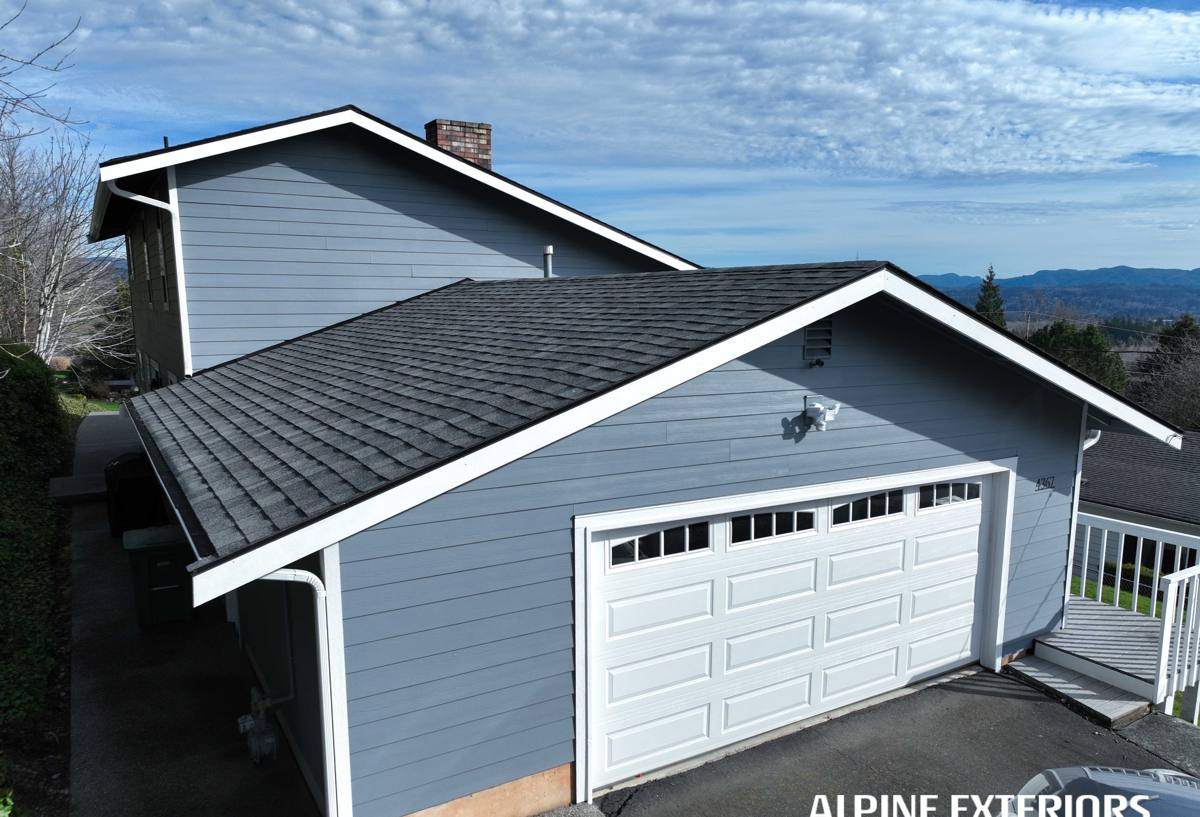
What Salt Air, Rain, and Moss Actually Do to a Shingle Roof
Each of these three factors attacks a roof in a different way, and a good roofing job accounts for all three at once rather than treating them as separate problems.
Salt air
Airborne salt doesn't rot asphalt shingles the way it corrodes metal, but it does accelerate the breakdown of exposed metal components — nail heads, flashing, vent stacks, and drip edge. Over time, salt exposure combined with moisture speeds up corrosion at every metal-to-roof connection point. That's exactly where leaks start, so the quality of flashing and fastener material matters more here than it would on a roof further from the water.
Driving rain
Rain that falls straight down mostly runs off. Rain that comes in at an angle, which is common with the wind patterns around the bay, gets pushed up under shingle tabs and around penetrations. A roof built for vertical rain and a roof built for wind-driven rain aren't installed the same way — the difference shows up in underlayment choice, shingle nailing pattern, and how flashing is layered.
Moss and shade
Anacortes and the surrounding Skagit County lowlands have a long moss season, and Edison's tree cover and damp, low-lying setting make it worse in spots. Moss holds moisture against the shingle surface long after the rest of the roof has dried out. That constant dampness shortens shingle life, lifts tabs, and — if left unaddressed — works its way under the shingle edge and into the deck below.
What a Correct Installation Involves in This Climate
An asphalt shingle roof is a system, not a single product. In Edison, a few parts of that system need more attention than they would in a drier climate.
Underlayment and water barrier
We use synthetic underlayment as standard, and we add self-adhering ice-and-water barrier at all the vulnerable points — eaves, valleys, around chimneys and skylights, and along any low-slope transitions. This isn't an upsell; it's the difference between a roof that sheds wind-driven rain and one that lets it wick back under the shingles.
Ventilation
A roof that can't breathe traps moisture in the attic, which speeds up deck rot and shortens shingle life from underneath — often before any problem is visible from the outside. We check intake (soffit vents) and exhaust (ridge or roof vents) as a balanced pair, not just whatever vents happen to already be there. Poor ventilation is one of the most common issues we find on older Edison-area roofs during an inspection.
Flashing and metal details
Given the salt-air corrosion factor, we pay close attention to flashing material and fastener choice around chimneys, walls, valleys, and any roof-to-roof transitions. Flashing that's cut short or reused from a tear-off is one of the most common causes of the leaks we get called out to fix.
Nailing and wind resistance
Correct nail placement and count matter everywhere, but they matter more where wind-driven rain is common. Shingles that are under-nailed or nailed too high are the ones that lift in a storm and let water behind them.
Choosing a Shingle for This Environment
Not every asphalt shingle product is built the same, and the right choice for Edison leans toward algae resistance and wind rating over the cheapest option on the shelf.
| Factor | Standard 3-Tab | Architectural (Laminate) |
|---|---|---|
| Typical lifespan | 15–20 years | 25–30+ years |
| Wind resistance | Lower rating | Higher rating — better for driving rain and gusts |
| Algae/moss resistant granules | Sometimes available | Widely available, worth specifying here |
| Appearance | Flat, uniform | Dimensional, heavier look |
| Upfront cost | Lower | Moderately higher |
For most Edison homes, we recommend an architectural shingle with algae-resistant granules. The higher wind rating and better moisture resistance generally pay for themselves over the life of the roof, given what the climate puts the roof through. That said, budget, roof pitch, and the home's style all factor into the right call — this is a conversation, not a one-size answer.
Signs Your Roof Is Telling You Something
Homeowners in this area often wait too long to call, partly because moss and dark streaking can look like a cosmetic issue rather than a warning sign. A few things worth checking or asking about:
- Moss growth concentrated on the shaded or north-facing side of the roof
- Granules collecting in gutters or downspouts
- Shingle tabs that look curled, cupped, or lifted at the edges
- Dark staining that doesn't wash off, especially near valleys
- Soft spots or sagging when viewed from a distance
- Daylight visible through the attic roof deck
- Rusty or corroded flashing around chimneys and vent pipes
- Water stains on interior ceilings, even faint ones
Any one of these on its own isn't necessarily an emergency, but it's worth a professional look rather than waiting for a leak to show up during the next storm.
How We Approach a Job in Edison
Our process is the same core steps on every roof, adjusted for what a given home actually needs:
- Inspection first. We walk the roof and the attic, not just look from the ground. Ventilation, decking condition, and existing flashing all get checked before we talk about shingle choice.
- Honest scope. We tell you what's actually needed — full replacement, partial repair, or just better ventilation and moss treatment — rather than defaulting to the biggest job.
- Tear-off and deck check. We don't roof over rotten decking. Any soft or water-damaged plywood gets replaced before new shingles go down.
- Underlayment and flashing done to the climate. Ice-and-water barrier at vulnerable points, new flashing rather than reused flashing, and a nailing pattern suited to wind exposure.
- Ventilation balance. We correct intake/exhaust imbalances as part of the job, not as a separate upsell later.
- Cleanup and walk-through. Magnetic sweep for nails, debris removal, and a final review of the work with you.
Why Local Experience Matters More Than It Seems
A roofing crew that's worked in Edison and the surrounding Anacortes area already knows which details tend to fail here — which is different from a crew that mainly works drier, more sheltered neighborhoods further from the water. That shows up in small decisions: how much ice-and-water barrier to use and where, what flashing material holds up against salt air, how aggressive to be about ventilation on a home with heavy tree shade, and how to sequence a tear-off around the wetter stretches of the year. None of that is exotic knowledge, but it only comes from actually doing the work in this specific environment, storm season after storm season.
It also matters for warranty follow-through and simple logistics — being a crew that's genuinely local to Skagit County means we're not disappearing after the invoice is paid, and we're not learning the area's quirks on your roof for the first time.
After the Roof Goes On: Keeping It That Way
A correctly installed roof still benefits from basic upkeep, especially given the moss pressure in this area:
- Keep gutters and valleys clear of debris so water has a clear path off the roof
- Have moss treated or gently removed before it spreads, rather than after it's established
- Trim back overhanging branches that keep sections of the roof shaded and damp
- Schedule a periodic check-up rather than waiting for a visible leak
None of this requires a large time investment, but it does meaningfully extend the life of the roof you're paying for.
Get a Straight Answer About Your Roof
If you're dealing with moss buildup, a roof that's getting up in age, or you just want an honest read on what condition your roof is really in, we're happy to take a look. There's no pressure and no pushy sales pitch — just a clear assessment from a crew that works this part of Skagit County regularly. Use the form below to request a free estimate.