 Anacortes Siding
 Guemes Island Asks More of Siding Than a Sheltered Anacortes Lot
Guemes Island sits a short ferry ride from Anacortes, but a house out there lives in a different microclimate than one tucked into a sheltered neighborhood on the mainland. Island homes often face open water on more than one side, catch wind that has traveled unobstructed across Rosario Strait, Guemes Channel, or Bellingham Channel, and sit under enough tree cover that north- and east-facing walls stay damp for months at a stretch. Siding that performs fine a few miles inland can fail years early out here if it isn't the right product, installed the right way, for this specific exposure.
Salt Air and the Slow Corrosion It Causes
Salt-laden air doesn't just sit offshore — wind carries it onto siding, trim, fasteners, and hardware, where it settles and stays. Over years, that exposure corrodes fasteners that aren't rated for it, breaks down paint films not engineered for marine air, and leaves a chalky residue that makes a house look tired faster than the calendar would suggest. It's a slow process, which is exactly why it gets ignored until the damage is already done.
Driving Rain on Exposed Elevations
Waterfront and near-waterfront lots on the island often have no real windbreak, so rain doesn't just fall on siding here — it's driven into it sideways. That matters because wind-driven rain finds every gap a normal rain shower wouldn't: a poorly lapped course, a flashing detail that was "close enough," a caulk joint left where it shouldn't be. On a sheltered lot those shortcuts might never show up as a problem. On an exposed Guemes Island wall, they usually do.
A Long Moss and Algae Season
Between the shade from mature trees and the Pacific Northwest's damp stretch from fall through spring, moss and algae season runs long on the island. Siding materials that hold moisture, or paint finishes that can't shed it, become a growth surface. That's a cosmetic problem at first and a maintenance burden after that.
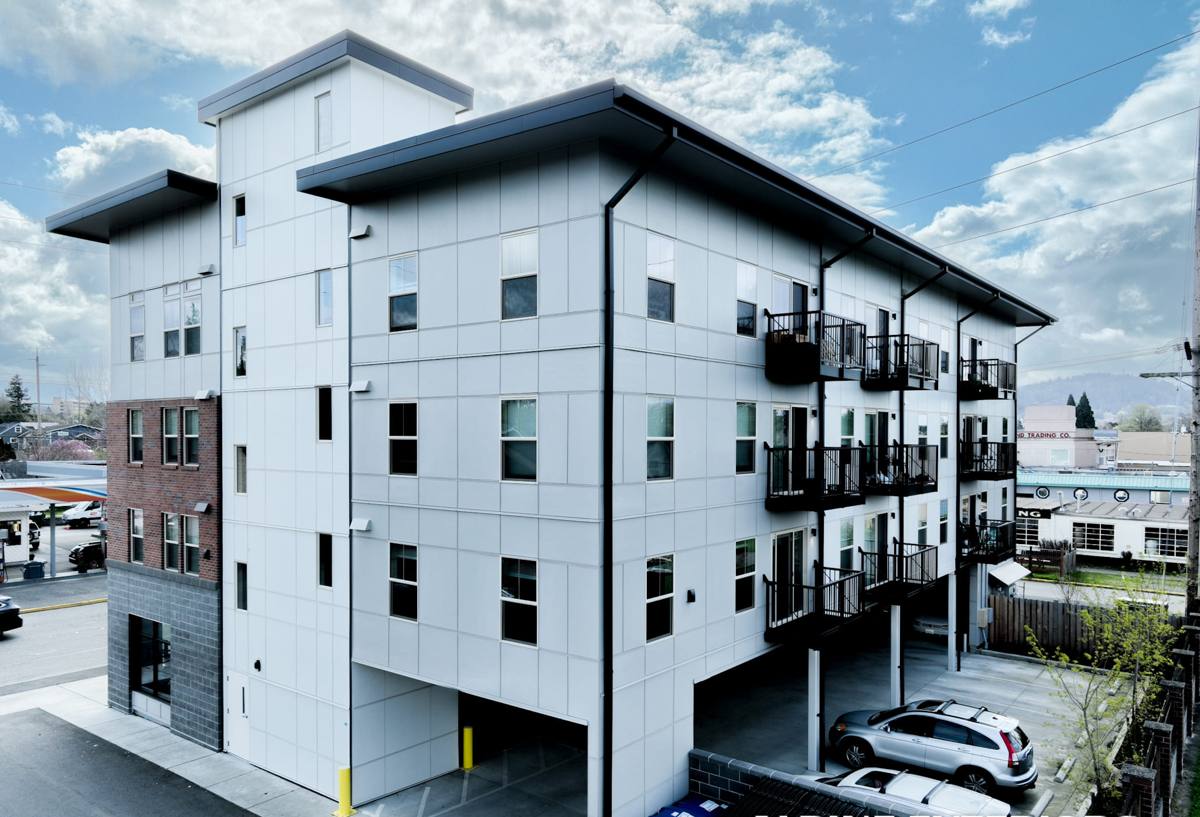
Why We Install Only James Hardie Fiber Cement — Not Vinyl, LP, or Wood
We standardized on James Hardie fiber cement siding for every home we side, island or mainland, and Guemes Island's exposure is a good example of why. Fiber cement is non-combustible and dimensionally stable — it doesn't swell, cup, or warp with repeated wetting the way wood-based products can, which matters directly on a lot with a long damp season. Hardie's ColorPlus finish is baked on at the factory under controlled conditions, and it holds color and resists fading in UV and salt air noticeably better than field-applied paint or the surface color on some other siding products. We won't install vinyl, LP SmartSide, primed wood, or engineered wood siding on homes we take on — not because those products have no legitimate use anywhere, but because the maintenance burden, moisture sensitivity, or long-term appearance trade-offs aren't ones we're willing to put our name behind, especially in an environment like this one. James Hardie's HZ5 formulation is engineered specifically for climates like the Pacific Northwest's, which is one more reason it's the product we put on homes here.
What a Correct Fiber Cement Install Actually Involves
Tear-Off and Substrate Inspection
Before any new siding goes up, the old siding comes off and the sheathing underneath gets inspected. On tree-shaded or waterfront lots, this is where we most often find soft or rotted sheathing from years of slow moisture intrusion behind an aging siding system. That gets repaired before anything new is installed — new siding over a compromised substrate just hides a problem instead of fixing it.
Moisture Management Behind the Siding
A weather-resistive barrier goes over the sheathing, lapped correctly so water is always shedding downward and outward, never trapped. On the most exposed elevations — the ones taking direct wind-driven rain off the water — a rainscreen gap behind the siding is often the right call, giving any moisture that does get past the cladding a path to drain and dry instead of sitting against the wall assembly.
Fastening and Flashing to Spec
Fastener choice matters more here than it does inland. We use corrosion-resistant fasteners appropriate for the exposure, and we flash every window, door, and penetration correctly rather than relying on caulk to make up for a missing flashing detail. Clearances from grade, roof lines, and decks get held to spec, because a board sitting too close to standing water or debris is the first place failure starts.
Finish Details and Caulking
Because ColorPlus siding arrives factory-finished, there's far less field painting and far fewer caulk joints than a site-finished product needs — which means fewer places for a future failure to start. Where caulk is actually called for, we use it only where Hardie specifies it, and any field-cut edges get properly sealed and touched up so the factory finish isn't compromised at the cuts.
Why Hiring a Crew That Already Works the Island Matters
Getting a crew, equipment, a disposal trailer, and staged material on and off Guemes Island means working around a ferry schedule, not a normal driveway. A contractor who rarely takes island jobs either pads the bid to cover the hassle, under-schedules the crew to cut a corner, or treats the island as a special case that gets less attention than a mainland job would. A crew that already works Guemes Island regularly has none of that friction — trips are bundled, deliveries are timed, and the job runs at the same pace and standard as any other. That's less about convenience and more about whether the job actually gets the attention it needs from start to finish.
James Hardie Product Lines That Fit Island Exposure
Not every Hardie product is the right fit for every wall on an island home. Exposure, look, and budget all factor into which line makes sense where.
| Product | Best For | Why It Fits Guemes Island |
|---|---|---|
| HardiePlank Lap Siding | Most exterior walls, including high-exposure elevations | Classic lap profile, holds up well under direct wind-driven rain when installed with correct laps and flashing |
| HardieShingle | Accent walls, gables, and traditional coastal-style facades | Gives a cedar-shake look without wood's moisture and moss vulnerability |
| HardiePanel | Board-and-batten accents, garages, secondary structures | Clean modern look, dimensionally stable against damp-season swelling |
| HardieTrim | Corners, window and door trim, fascia | Matches the fiber cement performance of the field siding instead of pairing it with a wood trim that will fail on a different timeline |
Living With Salt Air and Moss Season After Install
Correctly installed Hardie siding is low-maintenance, not no-maintenance, and island exposure means a little seasonal attention pays off. A yearly rinse to knock salt residue and general grime off the siding keeps the ColorPlus finish looking like it did on install day. Caulk joints and flashing details are worth a quick visual check once a year, since even a well-installed detail is worth confirming after a hard winter of wind-driven rain. Where trees keep a wall shaded and damp, trimming vegetation back enough to let air and light reach that side of the house cuts down on the moss and algae that thrive in still, damp air. Gutters that actually divert water away from the foundation and walls do more for long-term siding performance than most homeowners realize.
Our Process From Estimate to Finished Siding
We start with a site visit to look at the specific exposure of your home — which walls take direct wind-driven rain, how much shade and moss pressure the north and east sides have, and what condition the existing siding and sheathing are in. From there we walk through Hardie product lines and ColorPlus color options that fit the house and the setting. Permitting is handled before work starts, and we schedule the crew, material delivery, and disposal around the ferry rather than treating it as an afterthought. Installation follows the sequence above — tear-off and substrate repair, moisture barrier and flashing, fastening to spec, and finish detailing — and we walk the finished job with you before calling it done.
What to Ask Before Hiring Anyone to Side Your Guemes Island Home
- Have they installed siding on the island before, or is this their first island job?
- Do they install James Hardie fiber cement, and can they explain HZ5 versus other climate zone formulations?
- Will they inspect and repair sheathing before installing new siding, not just over it?
- Do they use corrosion-resistant fasteners appropriate for salt air exposure?
- Will they flash windows, doors, and penetrations properly rather than relying on caulk alone?
- How do they plan logistics — material delivery, dumpster, crew transport — around the ferry schedule?
- Is the estimate written against a specific scope, or is it a rough number padded for island uncertainty?
If you own a home on Guemes Island and your siding is showing its age — fading, soft spots, moss that won't quit, or just years of salt air catching up with it — we're glad to take a look. The estimate is free, there's no pressure, and you can fill out the form below to get started.