 Anacortes Siding
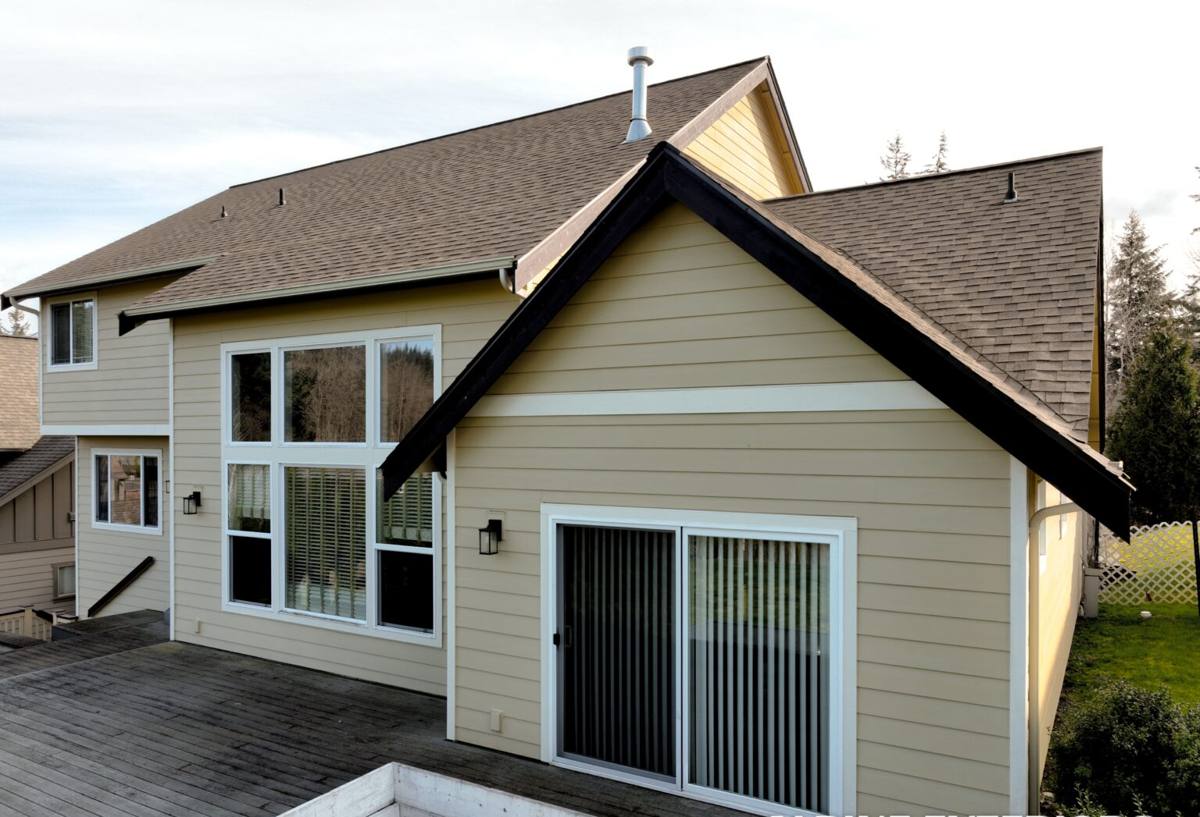
 Siding Replacement on Guemes Island
Guemes Island sits just across the channel from Anacortes, reachable only by a short ferry crossing, and that setting shapes almost everything about how a home's exterior ages here. Homes on the island face nearly constant exposure to salt-laden air off Guemes Channel and Rosario Strait, driving rain that comes in sideways during winter storms, and a moss and mildew season that runs longer than it does even a few miles inland in Anacortes proper. Siding on Guemes Island works harder than siding almost anywhere else in Skagit County, and when it's time to replace it, the material and the installation both need to account for that.
Siding replacement is a different job than siding repair, and it's worth being clear about that distinction up front. Repair patches or replaces a section of failing material. Replacement means removing the existing siding down to the sheathing, addressing whatever moisture or structural issues turn up underneath, and installing a new system correctly from the water-resistive barrier out. On an island property where the exterior takes a harder hit year after year, doing that job right the first time matters more than it does on a sheltered inland lot.
What This Climate Does to Siding Out Here
Salt Air Off the Channel
Guemes Island homes sit close to open water on more sides than a typical Anacortes lot, which means salt-bearing air reaches exterior walls more consistently and from more directions. Salt accelerates corrosion in fasteners and trim, and it breaks down lower-grade paints and factory finishes faster than a drier setting would. Any siding material going onto an island home needs to hold up to that corrosion load, not just the rainfall totals.
Driving Rain With Nothing to Break It
Open water exposure means wind-driven rain during winter storms doesn't fall straight down — it gets pushed into wall assemblies, seams, and trim joints with real force. That's a heavier moisture load on the wall system than the region's average rainfall numbers suggest on their own. Siding and flashing details that hold up fine on a protected inland wall can still fail here because water is finding its way in sideways.
A Long Moss and Mildew Season
Mild temperatures, high humidity, and shaded north-facing walls under mature trees add up to a moss and mildew season that stretches through most of the year across this part of Skagit County. Guemes Island's tree cover and waterfront humidity don't shorten that season any. Porous or moisture-holding siding materials are usually the first place it shows up, and it tends to hit hardest on the sides of a house that don't get much direct sun.
Signs a Guemes Island Home Needs Replacement, Not Just Repair
Not every siding problem calls for a full tear-off. But on an island property exposed to this much moisture and salt, certain signs mean patching a section will only buy a little time before the same issues resurface elsewhere on the wall.
- Soft, spongy, or crumbling siding in more than one area of the house, not just a single isolated spot
- Persistent moss or mildew staining that returns quickly after cleaning
- Visible cupping, warping, or buckling across multiple boards or panels
- Paint or finish failure — peeling, chalking, or fading — over a large portion of the exterior
- Soft sheathing or rot discovered when even a small repair is opened up
- Siding that's original to a home more than 20-25 years old and was never a fiber cement product
If more than one or two of these show up during an inspection, it's usually a sign that the whole wall assembly has been dealing with moisture for a while, and a full replacement will cost less over time than a series of repeated repairs.
What a Correct Siding Replacement Job Involves
A siding replacement is only as good as what happens underneath the new material. On a Guemes Island property, we treat the following as non-negotiable steps, not optional upgrades:
- Complete removal of the old siding down to the sheathing, so nothing gets covered up or hidden
- Inspection of the sheathing and framing for moisture damage or rot, with repairs made before anything new goes on
- Installation of a proper water-resistive barrier, with correct lapping and sealing at every seam
- Drainage or rain-screen detailing where the wall assembly calls for it, so any moisture that does get behind the siding can dry out
- Correct flashing at windows, doors, and every roof-to-wall transition, since these are the most common places water finds a way in
- Fastening to the manufacturer's spec — the right fastener type, spacing, and penetration depth for the product being installed
Skipping any one of these steps to save time or cost is exactly how a new siding job ends up with the same moisture problems within a few years, especially in a climate this demanding.
Why We Only Replace Siding With James Hardie Fiber Cement
We install James Hardie fiber cement siding exclusively. We don't offer LP SmartSide, vinyl siding, Cemplank, Allura, primed spruce, or cedar. That's a professional standard we've settled on, not a brand relationship or a sales preference, and it comes directly from what we've seen hold up — and what hasn't — on exposed, salt-air properties like the ones on Guemes Island.
- Non-combustible core: Fiber cement doesn't feed a fire the way wood-based siding products can, which matters for safety and often for insurance underwriting on rural, less accessible properties.
- Factory-applied ColorPlus finish: The color is baked on under controlled conditions rather than brushed on in the field, and it resists fading, chalking, and moisture intrusion far longer than site-applied paint.
- Climate-engineered HZ product lines: Hardie's HZ5 formulation is built for regions with heavy moisture exposure and freeze-thaw cycling, which describes Skagit County's marine climate well.
- Dimensional stability: Fiber cement doesn't swell, cup, or warp the way engineered wood products can after repeated wetting through a long wet season.
- Strong transferable warranty: Hardie backs its products with a substantial warranty structure, provided the installation follows their published specifications.
Every product we've named has a legitimate place in the market, and plenty of homeowners elsewhere are satisfied with them. But on an island property that takes this much salt air and wind-driven rain, we'd rather install one system we fully stand behind than offer a cheaper option that quietly shifts long-term maintenance risk back onto the homeowner.
Comparing Siding Materials for a Guemes Island Property
| Material | Moisture Behavior | Maintenance in Salt Air | Typical Longevity Here |
|---|---|---|---|
| James Hardie fiber cement | Dimensionally stable, resists swelling and warping | Low; factory finish resists fading and chalking | 30+ years with correct installation |
| Vinyl siding | Can warp or distort under heat and settle over time | Low upfront, but seams and fasteners remain exposure points | Variable; shorter on wind-exposed waterfront sites |
| LP SmartSide / engineered wood | Wood-based core is moisture-sensitive at cut edges and joints | Moderate; edge sealing and caulk upkeep matter | Depends heavily on installation quality and upkeep |
| Cedar / primed wood | Absorbs and releases moisture readily | High; regular refinishing needed in wet, salty air | Shorter without consistent maintenance |
Why a Crew That Already Works Guemes Island Matters
Guemes Island is only reachable by ferry, and that changes the logistics of a siding replacement in ways that a mainland-only contractor often hasn't planned for. Material deliveries, crew scheduling, and equipment staging all have to work around ferry timing rather than a simple truck route. A contractor who already works the island regularly has that logistics figured out, so the job isn't the first time they're solving it on the homeowner's schedule.
That familiarity goes beyond scheduling, too. A crew that's replaced siding on other Guemes Island homes already knows how salt air, open wind, and prolonged moisture behave differently here than on a typical Anacortes lot just across the channel. That shows up in the small decisions during the job — how flashing gets lapped, how much drainage detailing gets added behind the siding, which fastener grade gets used — and those details are exactly what determines whether a new siding system lasts a few years or several decades on an exposed island property.
A Simple Checklist Before Hiring for Siding Replacement on Guemes Island
- Ask what siding material they install and why, and whether they back it with a written warranty
- Confirm they carry current Washington contractor licensing and active liability insurance
- Ask directly whether they've worked on Guemes Island before, and how they handle ferry-dependent scheduling and material delivery
- Ask how they detail flashing at windows, doors, and roof-to-wall transitions for wind-driven rain
- Get a clear, written scope of work, including what happens if sheathing damage is found once the old siding comes off
Our Siding Replacement Process
We start with an on-site assessment of the existing siding and wall assembly, looking specifically for how the current material has handled moisture and salt exposure over time. From there we put together a clear, written scope and a realistic timeline that accounts for ferry access and material staging, so there are no surprises once the crew is on-site. During the tear-off, we inspect the sheathing before anything new goes on, and we treat correct flashing, drainage detailing, and fastening as standard practice on a property like this — not optional add-ons.
If you're weighing a siding replacement on a Guemes Island property, we're happy to come take a look and give you an honest read on what the exterior actually needs. Reach out below for a free, no-pressure estimate.