 Anacortes Siding
 La Conner's Climate Asks More of Your Siding Than Most Places
La Conner sits low along the water in Skagit County, and that location comes with a specific set of exterior challenges. Homes here deal with salt-laden air off the channel, wind-driven rain that hits siding sideways instead of straight down, and a long, damp moss season that can run from late fall well into spring. Any one of those factors will wear down a mediocre siding job. Together, they expose weak installation work fast — usually at the seams, the trim joints, and the lowest few feet of wall closest to grade.
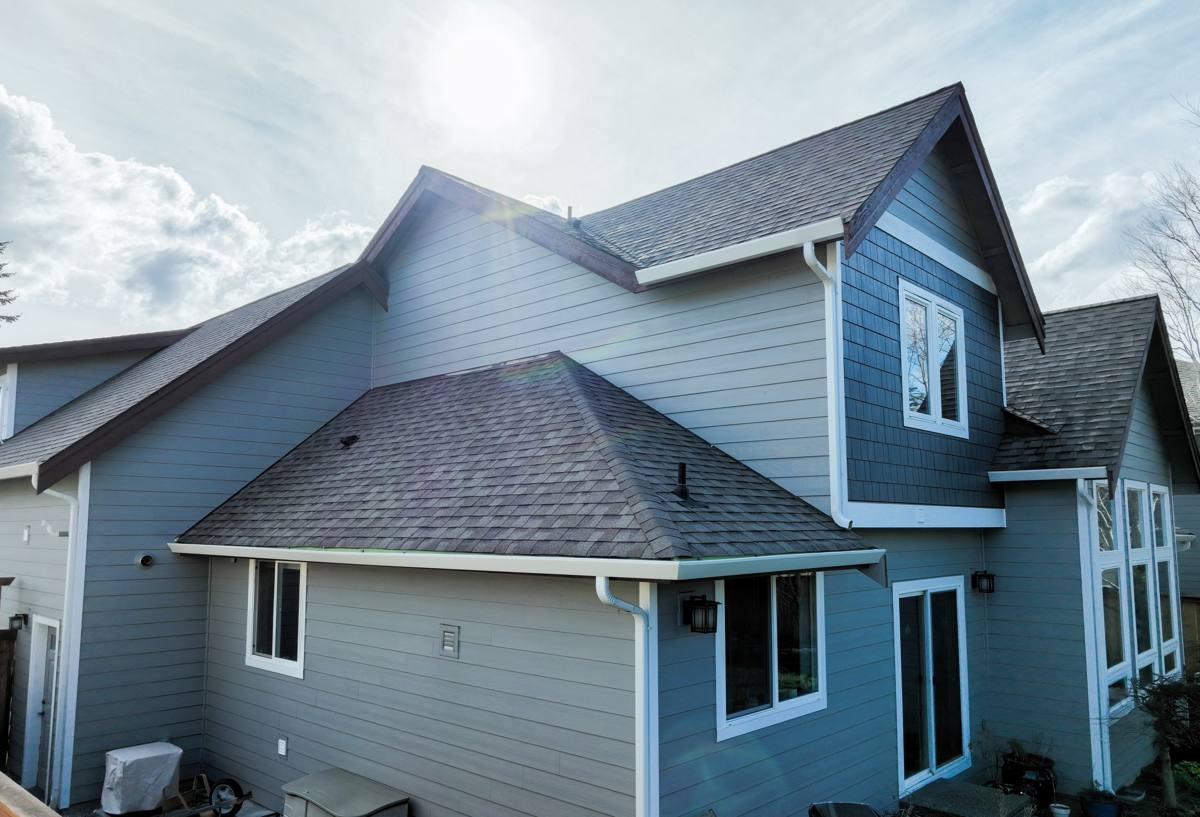
This is exactly the environment James Hardie fiber cement siding was engineered to handle, provided it's installed correctly. We install James Hardie exclusively — no vinyl, no LP SmartSide, no cedar, no other fiber cement brands — because after years of exterior work in Skagit County, it's the only siding system we're willing to put our name behind in conditions like La Conner's.
What Salt Air, Rain, and Moss Actually Do to Siding
Salt air
Airborne salt from the channel settles on exterior surfaces and accelerates corrosion of anything metal — fasteners, flashing, trim screws. It also breaks down cheap paint finishes faster than inland exposure, leaving chalky, faded siding within a few years. Fiber cement itself doesn't corrode, but the fasteners and flashing details holding it up absolutely can, which is why hardware selection matters as much as the siding panel itself.
Driving rain
Wind off the water pushes rain into joints, laps, and penetrations that would stay dry on a calmer site. Every horizontal seam, window trim gap, and utility penetration is a potential entry point if it isn't flashed and lapped correctly. This is where most siding failures start — not in the field of the wall, but at the details.
Moss and prolonged dampness
A long wet season means siding stays damp longer between dry spells. Moss and algae take hold on north-facing walls, shaded elevations, and anywhere water sits instead of shedding. Left alone, that moisture retention degrades paint and, on wood-based products, the substrate underneath. Fiber cement resists this kind of moisture damage far better than wood or wood-composite siding, but only if it's back-primed, gapped, and finished properly at installation.
Why James Hardie Is the Right System for This Exposure
James Hardie fiber cement is non-combustible, dimensionally stable, and manufactured with ColorPlus factory-applied finishes that hold color and resist fading far longer than field-applied paint. For a waterfront-adjacent community like La Conner, three things matter most:
- Moisture resistance: Fiber cement doesn't rot, delaminate, or swell the way wood and wood-composite products can when they stay damp for weeks at a time.
- Factory finish durability: ColorPlus finishes are baked on under controlled conditions, which holds up better against salt air and UV than most field-applied paint jobs.
- Climate-engineered product lines: James Hardie builds siding to regional climate specs (their HZ5 line is engineered for temperate, moisture-heavy climates like ours), rather than a one-size-fits-all product.
We don't install LP SmartSide, Cemplank, Allura, primed spruce, or cedar. Each has legitimate uses elsewhere, but in a salt-air, high-rainfall setting like La Conner, we've found the long-term maintenance burden and moisture risk isn't worth it compared to a correctly installed Hardie system.
What a Correct Installation Actually Involves
The siding panel is only part of the job. A James Hardie installation that's actually built for La Conner's exposure includes:
- Sheathing and moisture inspection — checking the existing wall assembly for hidden rot or moisture damage before anything new goes up, especially on walls that have taken years of wind-driven rain.
- Weather-resistive barrier — a correctly lapped house wrap or building paper installed to shed water downward, not trap it behind the siding.
- Rainscreen or proper gapping — a drainage gap behind the siding so any moisture that does get behind the panel can drain and dry instead of sitting against the wall.
- Starter strip and clearance — correct starter placement and a gap between siding and grade, decks, and roof lines so the bottom edge isn't sitting in standing water or snow melt.
- Corrosion-resistant fasteners and flashing — stainless or coated hardware at trim, penetrations, and flashing details, since standard fasteners corrode faster in salt air.
- Caulking and joint treatment per manufacturer spec — James Hardie has specific requirements for joint treatment and paintable caulk; skipping or shortcutting this is one of the most common causes of early failure.
- Factory-finished color matching — using ColorPlus touch-up products correctly at cut edges so field cuts don't become the first spot to fade or absorb moisture.
- We inspect for hidden moisture damage, soft sheathing, and existing flashing problems, not just surface condition of the old siding.
- We give you a written scope covering product lines, colors, trim details, and what's included — no vague allowances.
- We remove old siding and address any sheathing repairs before anything new goes on the wall.
- We install house wrap, rainscreen gap, starter strip, and flashing to spec, then the Hardie siding and trim.
- We finish with correct joint caulking and ColorPlus touch-up at cut edges.
- We walk the finished job with you before calling it done.
- Rinse siding annually to remove salt residue and organic buildup, especially on shaded or north-facing walls.
- Keep gutters clear so overflow doesn't run down the siding face repeatedly.
- Trim back vegetation and landscaping that keeps siding shaded and damp.
- Check caulked joints every year or two and re-caulk if you see cracking or gaps.
- Address moss promptly with a gentle wash rather than pressure-washing, which can damage joints and finish if used incorrectly.
Skip any one of these steps and the siding itself can still fail early, warranty or no warranty. The product is only as good as the installation underneath it.
Choosing Products and Colors That Make Sense for La Conner
Most La Conner homes we work on use HardiePlank lap siding for the main field, often paired with HardieTrim boards and, on some homes, HardiePanel vertical siding for accent sections or gable ends. ColorPlus factory finishes come in a range of colors engineered to hold up outdoors, which matters more here than in drier inland climates where a field-painted finish might last longer between touch-ups.
| Product | Typical Use | Why It Fits This Climate |
|---|---|---|
| HardiePlank Lap Siding | Main wall field | Proven lap profile sheds driving rain when installed with correct overlap |
| HardieTrim Boards | Corners, window/door trim | Dimensionally stable trim reduces gapping and caulk failure at joints |
| HardiePanel Vertical Siding | Gables, accent walls | Clean modern look; still relies on correct rainscreen detailing behind it |
| ColorPlus Factory Finish | All exposed surfaces | Baked-on finish resists salt air fading better than field-applied paint |
Darker colors show less visible fading over time in a marine environment, but any ColorPlus color will outperform a field-painted finish here. The bigger decision is usually profile and reveal size to match the home's existing style, not color durability, since ColorPlus handles that part regardless of shade.
How Our Process Works
We start with an on-site assessment of the existing siding and sheathing, since a lot of La Conner homes have taken decades of moisture exposure and we want to know what's underneath before we quote anything. From there:
Why Local Experience in La Conner Specifically Matters
Anyone can install siding on a calm, dry day. The difference shows up years later, on the walls that catch wind off the water and never fully dry out between rains. A crew that's already worked homes in and around La Conner knows which elevations tend to take the worst of the driving rain, where moss builds up fastest, and how much clearance to leave at grade and trim given how wet this ground stays. That's not something you get from a general installation manual — it's something you learn by doing the work here, on homes with the same exposure yours has.
It also matters for permitting and code compliance in Skagit County, and for knowing how to tie new siding into existing trim, roofing, and drainage details without creating a new leak path in the process.
Maintenance Expectations After Installation
Correctly installed James Hardie siding is low-maintenance, but "low" isn't "none," especially in a moss-prone marine climate. A simple annual routine goes a long way:
Cost Factors for a La Conner Siding Project
| Factor | Why It Affects Cost |
|---|---|
| Existing sheathing condition | Hidden moisture damage found during tear-off may require repair before new siding goes on |
| Home size and wall complexity | More corners, dormers, and trim details mean more labor and material cuts |
| Product mix | Lap siding, panel siding, and trim combinations affect material cost |
| Rainscreen detailing | Proper drainage gap installation adds labor but reduces long-term moisture risk |
| Color and profile selection | Some ColorPlus colors and specialty profiles carry different material costs |
We won't give you a number without seeing the home, since sheathing condition alone can change the scope significantly. What we can tell you upfront is that a correct installation, done once, costs less over time than a fast job that needs early repairs from moisture intrusion.
If you're weighing a siding replacement on a La Conner home and want a straight answer about what your walls actually need, we're glad to take a look. Reach out for a free, no-pressure estimate — we'll walk the exterior with you and tell you honestly what we find.