 Anacortes Siding
 Decks in La Conner Take a Different Kind of Beating
La Conner sits right where the Swinomish Channel meets the open air off Skagit Bay, and that location shapes everything about how a deck ages here. You get salt-laden air blowing off the water, long stretches of driving rain through fall and winter, and shaded, damp corners that hold moisture well into spring. A deck built the same way you'd build one in a dry inland climate simply won't hold up the same way in La Conner. It doesn't need to fail dramatically to be a bad job — it just needs to be built without the local conditions in mind, and within a few years you're dealing with soft boards, corroded hardware, or a slick, moss-covered surface every morning.
We work on homes throughout Anacortes and Skagit County, and La Conner decks get their own set of considerations because of the waterfront exposure and the tree cover common in the area. This page walks through what actually matters for a deck built here — not generic deck-building advice, but the specifics that come from working this stretch of coastline.
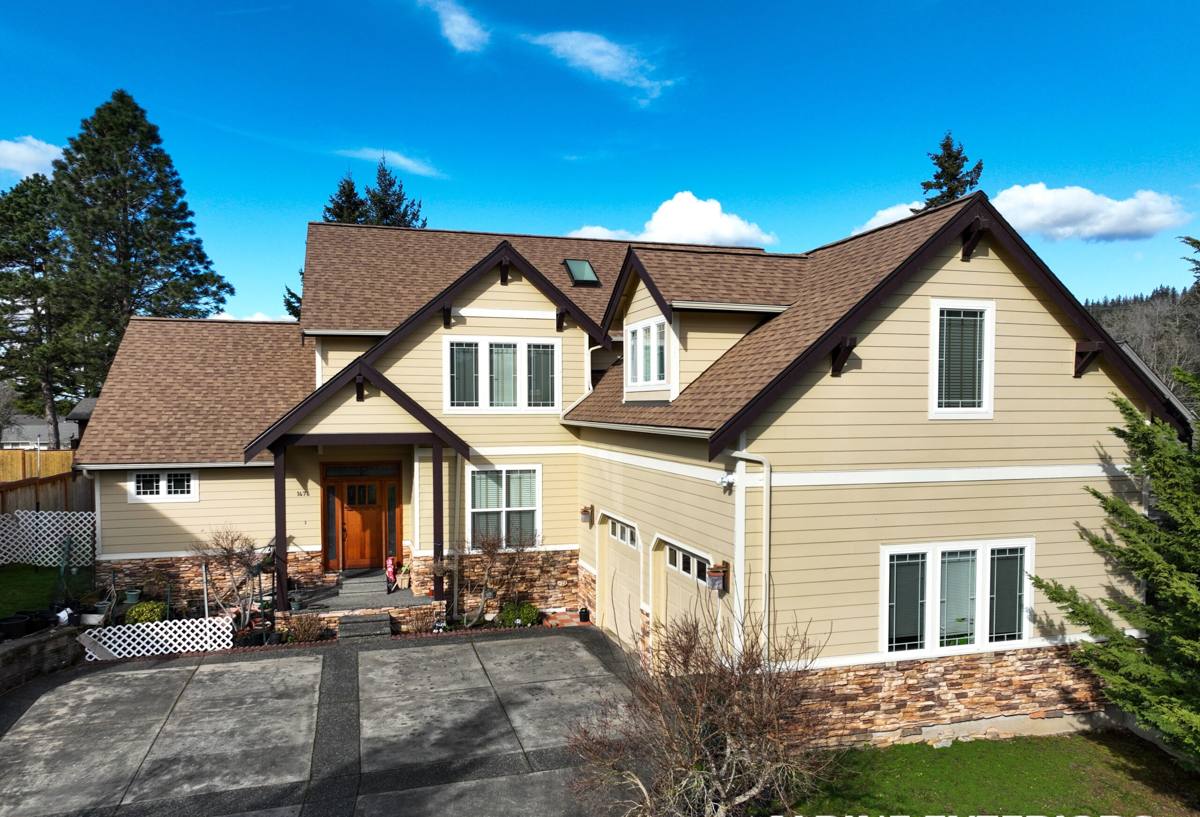
What Salt Air and Moisture Actually Do to a Deck
Salt air is corrosive to anything metal that isn't rated for it. Standard fasteners, brackets, and hangers will start showing rust streaks and pitting well before a comparable deck built a few miles inland. Once corrosion starts on structural hardware — ledger bolts, joist hangers, post bases — it's not cosmetic. It's a slow weakening of the connections holding the deck together.
Moisture is the other half of the problem. La Conner's rain doesn't come in short, hard bursts that dry out between storms — it settles in for days at a time, and shaded areas under trees or on the north side of a house can stay damp for weeks. That constant moisture is what feeds moss and algae growth on decking surfaces, and it's also what finds its way into any gap in flashing, fastening, or board spacing that wasn't detailed correctly.
Where the damage usually starts
- Ledger board attachment to the house, if flashing wasn't installed or was installed incorrectly
- Fastener heads and joist hangers using hardware not rated for coastal or treated-lumber exposure
- Board ends and cut edges left unsealed, where water soaks in fastest
- Low-airflow areas under the deck where moisture can't evaporate between rain events
- Stair stringers and post bases sitting in standing water or damp soil contact
What a Correctly Built Deck Looks Like Here
A deck built for this climate isn't a different style of deck — it's the same design choices most homeowners want, built with materials and details matched to the environment. The goal is a structure that sheds water instead of holding it, and hardware that won't quietly corrode out of sight.
Framing and structure
We use fasteners and structural connectors rated for coastal and treated-lumber exposure — not standard interior-grade hardware. Ledger flashing is installed as a system, not an afterthought, so water is directed away from the house rather than channeled behind the decking into the wall assembly. Joist spacing and airflow underneath the deck are planned so damp conditions don't linger longer than they have to.
Decking material
Composite and PVC decking have become the practical choice for a lot of La Conner homeowners because they don't absorb moisture the way wood does, which means less swelling, cupping, and rot risk over time, and no annual sealing. Real wood — cedar in particular — still has a place for homeowners who want that specific look and are comfortable with the maintenance schedule it requires: periodic sealing, more attention to moss growth, and closer inspection of end grain and fastener points. Both are legitimate choices; the right one depends on how much upkeep you want to take on, not on one material being universally better.
Composite vs. Wood Decking for La Conner Conditions
| Factor | Composite / PVC | Cedar or Wood |
|---|---|---|
| Moisture absorption | Minimal — resists swelling and rot | Absorbs water; needs sealing to manage it |
| Moss and algae resistance | Better on smooth/grooved boards; still needs periodic cleaning | More prone to moss buildup in shaded, damp areas |
| Maintenance routine | Occasional washing | Sealing every 1-2 years, more frequent cleaning |
| Upfront cost | Higher material cost | Lower material cost, higher lifetime labor |
| Appearance over time | Consistent color, doesn't gray or splinter | Natural look, but weathers and grays without upkeep |
Moss Is a Maintenance Issue, Not Just a Cosmetic One
Anacortes and the Skagit County waterfront get long moss seasons — mild, wet winters that give moss and algae months to establish themselves on any horizontal surface that stays damp. On a deck, that's not just an appearance problem. Moss holds moisture against the board surface, and on wood decking that accelerates the exact rot process you're trying to avoid. It also makes stairs and walking surfaces genuinely slippery, which is a real safety concern for a deck that gets used year-round.
Board spacing, surface texture, and how much direct sun and airflow a deck gets all affect how much moss pressure it faces. We factor this into the design and material choice rather than treating it as something to deal with after the fact with a pressure washer every spring.
Our Process for a La Conner Deck Project
- On-site assessment. We look at sun exposure, drainage, proximity to the water, tree cover, and how the deck ties into the house before recommending anything.
- Design and material selection. We walk through composite, PVC, and wood options honestly, including what upkeep each one actually requires for your specific spot on the property.
- Structural planning. Framing, hardware grade, ledger flashing, and drainage/airflow underneath the deck are planned to the site conditions, not a generic spec sheet.
- Permitting. We handle the permitting process required for deck construction in the area, including any setback or height considerations tied to waterfront proximity.
- Construction. Built to the plan with attention to the connection points — ledger, hardware, flashing — that determine whether a deck lasts fifteen years or thirty.
- Walkthrough. We go over what maintenance, if any, your specific decking material needs so there are no surprises down the road.
Sizing and Layout Considerations for Waterfront and Shaded Lots
La Conner properties near the water or tucked under mature trees often have layout constraints that don't come up on a typical inland lot — limited flat area, drainage that needs to be routed carefully, or a deck that has to work around existing shade patterns rather than fighting them. A deck that ignores natural drainage on a sloped or waterfront lot can end up funneling water toward the house foundation instead of away from it, which is a bigger problem than anything happening at the deck surface itself.
We design around what the lot actually does with water, not just what looks good on paper. That includes grading, gutter and downspout relationships, and where a deck's own drainage needs to go.
Practical Checklist: What to Ask About Before Building a Deck Here
- Is the hardware rated for coastal/salt-air exposure, or standard interior-grade fasteners?
- Is ledger flashing part of the plan, and is it detailed to direct water away from the house?
- What's the airflow situation underneath the deck — will damp conditions have a chance to dry out?
- What does the decking material actually require in year one, year five, and year ten?
- How does the deck handle drainage relative to the slope of the lot and nearby water?
- Is moss/algae resistance part of the material and layout decision, or an afterthought?
Why Local Experience on This Specific Stretch of Coastline Matters
A lot of deck problems we get called to fix weren't built badly out of carelessness — they were built by crews using methods that work fine in a drier, less corrosive climate and simply don't hold up on the Skagit County waterfront. Hardware specs, flashing details, and moisture management that are optional elsewhere aren't optional in La Conner. A crew that already works this area day to day isn't guessing at what the salt air and moss season will do to a given material or connection point — we've seen the failure patterns and build around them from the start.
That's the real value of hiring locally for this kind of project: fewer surprises five years in, and a deck that was built for the place it's actually standing, not a generic version of one.
Get a Straight Answer on What Your Deck Project Needs
Every La Conner property is a little different — sun, shade, distance from the water, tree cover, and what's already going on with your soil and drainage. Rather than guessing at what's right for your yard, we'll take a look, walk you through honest material and design options, and give you a clear picture of what a properly built deck looks like for your specific spot. Reach out for a free, no-pressure estimate using the form below.