 Anacortes Siding
 Deck Replacement Built for Oak Harbor's Marine Climate
Homes in the Oak Harbor area sit close to the water, and that proximity shapes everything about how a deck ages here. Salt-laden air corrodes fasteners and hardware faster than inland environments. Driving rain off the water finds every gap in old flashing and every warped board. And a moss season that can stretch from fall through spring keeps deck surfaces damp for months at a time, which accelerates rot in wood that isn't detailed correctly. A deck that was built without these conditions in mind rarely lasts as long as it should, no matter how good the lumber looked on installation day.
We replace decks for homeowners in and around Oak Harbor with those specific conditions in mind, not as an afterthought but as the starting point for how we design ledger connections, choose fasteners, and plan drainage. A deck built for a dry inland climate and a deck built for this stretch of the Salish Sea coastline are not the same project, even if they look identical from the street.
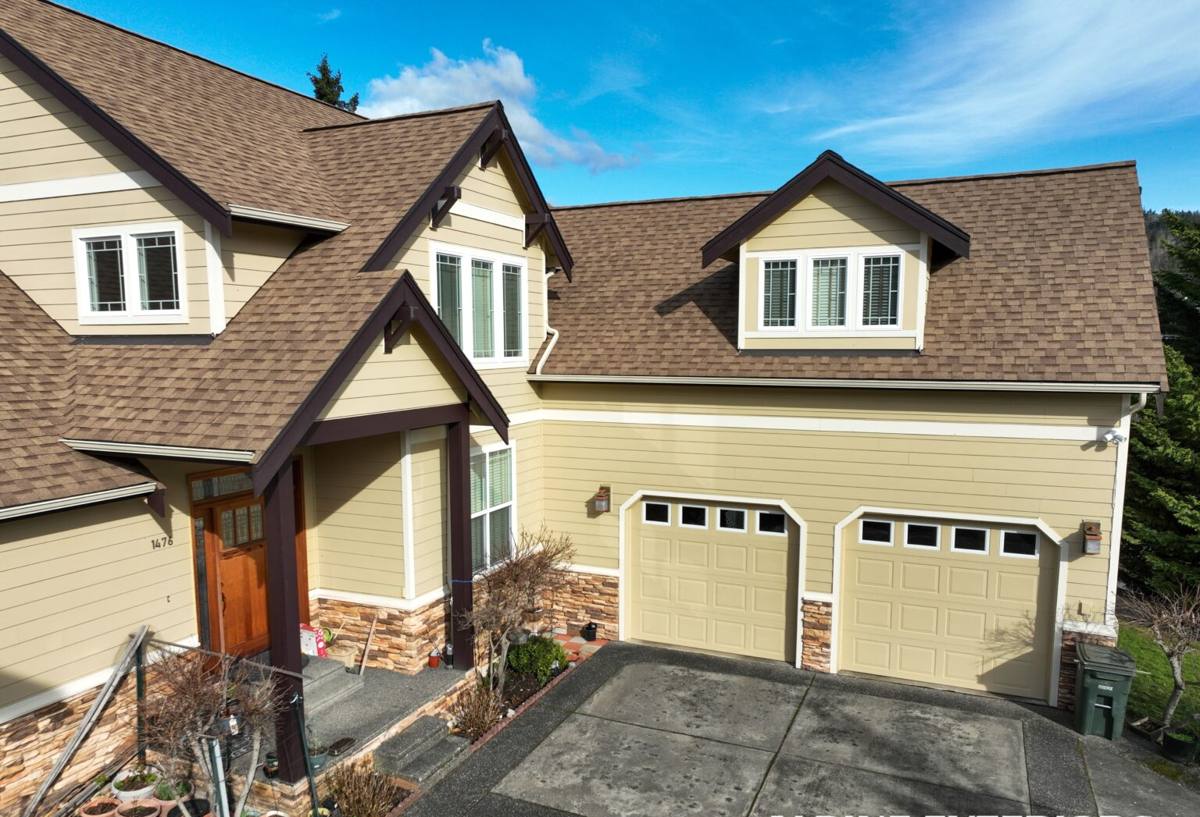
Signs Your Oak Harbor Deck Needs Replacing, Not Patching
Not every tired-looking deck needs a full tear-off. But there's a point where patching individual boards stops making financial sense and starts masking a bigger structural problem. Here's what we look for during an assessment.
- Soft or spongy spots underfoot, especially near the house or along the perimeter
- Visible gaps or separation where the deck ledger meets the house wall
- Rust streaking or corroded fastener heads across multiple boards
- Persistent moss or algae growth that returns within weeks of cleaning
- Cracked, cupped, or splintering boards concentrated on one side of the deck (usually the side facing prevailing wind and rain)
- Railing posts that wiggle or feel less rigid than they used to
- Discoloration or staining on the underside of the deck or on the siding directly below it
If you're only seeing one or two of these and they're isolated to a small area, board-level repair may still be reasonable. If several of these show up together, especially anything involving the ledger connection or the substructure, that's usually a sign the deck's working life is over and a replacement is the more honest recommendation.
Why Ledger Rot Is the One We Take Most Seriously
The ledger board is the framing member that bolts the deck to the house, and it's also the single most common failure point in older decks throughout this region. Wherever flashing was skipped or installed incorrectly, water works its way behind the ledger and sits against the house rim joist. That's a slow, hidden kind of rot — it can be advancing for years before a soft spot or a sagging corner gives it away. Any deck replacement we do addresses the ledger connection specifically, with correct flashing and appropriate fasteners, because this is the detail that determines whether the next deck lasts fifteen years or thirty.
What a Correct Deck Replacement Involves
A deck replacement isn't just swapping old boards for new ones. Done right, it's a full look at the structure underneath, starting from the house connection and working outward.
1. Removal and Structural Inspection
We tear off the old decking, railing, and where necessary the framing, and inspect the ledger, posts, footings, and any framing hardware. This is often the point where we find problems the homeowner didn't know about — undersized footings, missing joist hangers, or a ledger that's been quietly rotting behind the siding.
2. Ledger Flashing and House Connection
Proper flashing at the ledger is non-negotiable in a climate this wet. We install flashing that directs water away from the house structure rather than letting it pool against the rim joist, and we use fasteners rated for the exposure this deck will see.
3. Framing and Fasteners
Joists, beams, and posts get sized to the deck's actual load and span, not just replaced in the same undersized dimensions as before. In a marine-air environment, we favor corrosion-resistant hardware and fasteners rated for treated lumber contact, since standard hardware corrodes noticeably faster within a few miles of saltwater.
4. Decking Material Selection
This is where homeowner priorities matter most — budget, maintenance appetite, and how long you plan to stay in the home all factor in. We'll walk through the honest trade-offs below.
5. Drainage and Airflow Underneath
Standing water and trapped moisture under a deck is what feeds moss and rot. We grade and detail the substructure so water sheds away rather than pooling, and we leave enough clearance and airflow underneath that the framing can actually dry out between rain events, rather than staying damp all winter.
6. Railings, Stairs, and Final Details
Railings get rebuilt to current safety spacing and post-attachment standards, not just remounted to old framing. Stairs are checked for rise-and-run consistency, which matters both for comfort and liability.
Decking Material Options: Honest Trade-Offs for This Climate
There's no single "best" decking material — there's a best material for your budget, maintenance tolerance, and how much sun versus shade your particular yard gets. Here's how the common options actually perform in a wet, salt-air environment like this one.
| Material | Moisture Behavior Here | Maintenance | Typical Lifespan |
|---|---|---|---|
| Pressure-treated lumber | Absorbs moisture readily; needs sealing to resist the wet season | Annual cleaning and periodic sealing/staining | 10–15 years with upkeep |
| Cedar | Naturally rot-resistant but still needs finish maintenance in constant damp | Regular cleaning, re-staining every few years | 15–20 years with upkeep |
| Composite decking | Doesn't absorb water or rot, but can trap moss on the surface if not cleaned | Occasional washing, no staining or sealing | 25+ years, manufacturer-dependent warranty |
| PVC/capped polymer | Fully moisture-resistant surface, least susceptible to moss staining | Lowest maintenance of the group | 25+ years, manufacturer-dependent warranty |
We don't push one material over another as a blanket rule — a lot of it comes down to what you want to be doing (or not doing) every spring. What we do insist on is that whatever decking goes down the top, the framing and flashing underneath it are done correctly, because even the best composite board will fail early if it's sitting on a rotting, poorly flashed frame.
Moss and Algae: Managing the Long Wet Season
Moss isn't just cosmetic. On wood decking it holds moisture against the board surface and accelerates decay; on any decking material it makes the surface slick and can create a real slip hazard on stairs and ramps. A few things reduce how much of a problem it becomes over the life of your new deck:
- Correct spacing between boards so water drains through instead of sitting on the surface
- Adequate clearance from overhanging trees and shrubs that keep the deck shaded and damp
- Grading and gutter work that keeps roof runoff from dumping directly onto or near the deck
- A decking surface texture and material chosen with moss resistance in mind, if that's a priority for you
- A simple annual or biannual cleaning routine, which matters more here than in drier parts of the state
We'll flag any site conditions during the estimate — heavy shade, poor drainage, low airflow underneath — that are likely to make moss a recurring issue, so you know what to expect rather than being surprised by it later.
Why Local Experience with Oak Harbor Conditions Matters
Building a deck to a generic code minimum is different from building one that's actually going to hold up here. A crew that hasn't worked this stretch of coastline might not think twice about standard hardware, standard flashing details, or a decking layout that looks fine on paper but traps water in practice. We've replaced enough decks in this area to know where the recurring failure points are — the ledger connection, the fastener corrosion, the shaded north side that never quite dries out — and we build around those problems from the start rather than discovering them the hard way five years in.
That local familiarity also shows up in smaller, practical ways: knowing what inspection and permitting expectations typically apply for deck work in this area, understanding how wind exposure off the water affects railing and post bracing, and having a realistic sense of how long materials actually last here versus their generic marketing claims.
What Affects the Cost of a Deck Replacement
Every deck is different, so we don't quote a number without seeing the site, but these are the main variables that move the price up or down.
| Cost Factor | Why It Matters |
|---|---|
| Size and shape of the deck | Square footage and complexity of the layout (multiple levels, angles, built-in seating) both add labor |
| Decking material chosen | Pressure-treated, cedar, composite, and PVC all sit at different price points per square foot |
| Condition of the existing framing | If posts, footings, or the ledger need full replacement rather than reuse, that adds structural work |
| Height and stairs | Elevated decks need more substantial post and beam work, plus code-compliant stair and railing systems |
| Railing style | Basic wood or composite railing costs less than glass panel or metal-baluster systems |
| Site access | Difficult access for material delivery or old-deck removal can add time to the project |
As a broad range, straightforward deck replacements in this region typically run from the mid four figures for a smaller, simple wood deck up into the five figures for larger decks with composite or PVC decking, elevated framing, or upgraded railing. The only way to get a number that actually applies to your home is a site visit — anything quoted without seeing the existing structure is a guess.
Our Process, Start to Finish
- On-site assessment — we inspect the existing deck, check the ledger and framing where accessible, and talk through what you want out of the new deck
- Written estimate — a clear scope of work and price range based on material choice and what we found during the inspection
- Permitting — we handle the permit process where required, so you're not left guessing about local requirements
- Demo and structural work — removal of the old deck and any necessary repair or replacement of posts, footings, and framing
- Flashing and framing install — the ledger connection, joists, and beams built to handle this area's exposure
- Decking, railing, and stairs — installed to the material manufacturer's specifications and current railing code
- Final walkthrough — we go over the finished deck with you, including basic maintenance guidance specific to the material you chose
Maintaining Your New Deck Through the Wet Months
Whatever material you choose, a little seasonal attention goes a long way in this climate. Clear leaves and debris from between boards before they trap moisture. Keep gutters and downspouts clear so runoff isn't draining directly onto the deck surface. If you chose wood, plan on resealing or restaining on the schedule the product calls for rather than waiting until it visibly needs it. Even composite and PVC decking benefit from an occasional wash to keep moss and algae from getting a foothold on the surface texture.
If your deck is showing any of the signs above, or you're just ready to stop patching and get a straight answer about whether replacement makes sense, we're happy to take a look. Reach out for a free, no-pressure estimate using the form below.