 Anacortes Siding
 Siding Built for Oak Harbor's Marine Climate
Oak Harbor sits close enough to the water that the same conditions shaping siding decisions across Skagit County apply here with extra force: salt-laden air off Puget Sound, driving rain that comes in sideways during winter storms, and a moss season that can stretch from October through May. Wood-based and vinyl siding products struggle with this combination over the long haul. James Hardie fiber cement siding was engineered specifically for wet, coastal, cool-summer climates like this one, which is the main reason it is the only siding product we install.
This page focuses on one thing: what a correct James Hardie installation looks like on an Oak Harbor home, why the local climate changes the specifics of that job, and what to expect when you hire a crew that already works this area regularly.
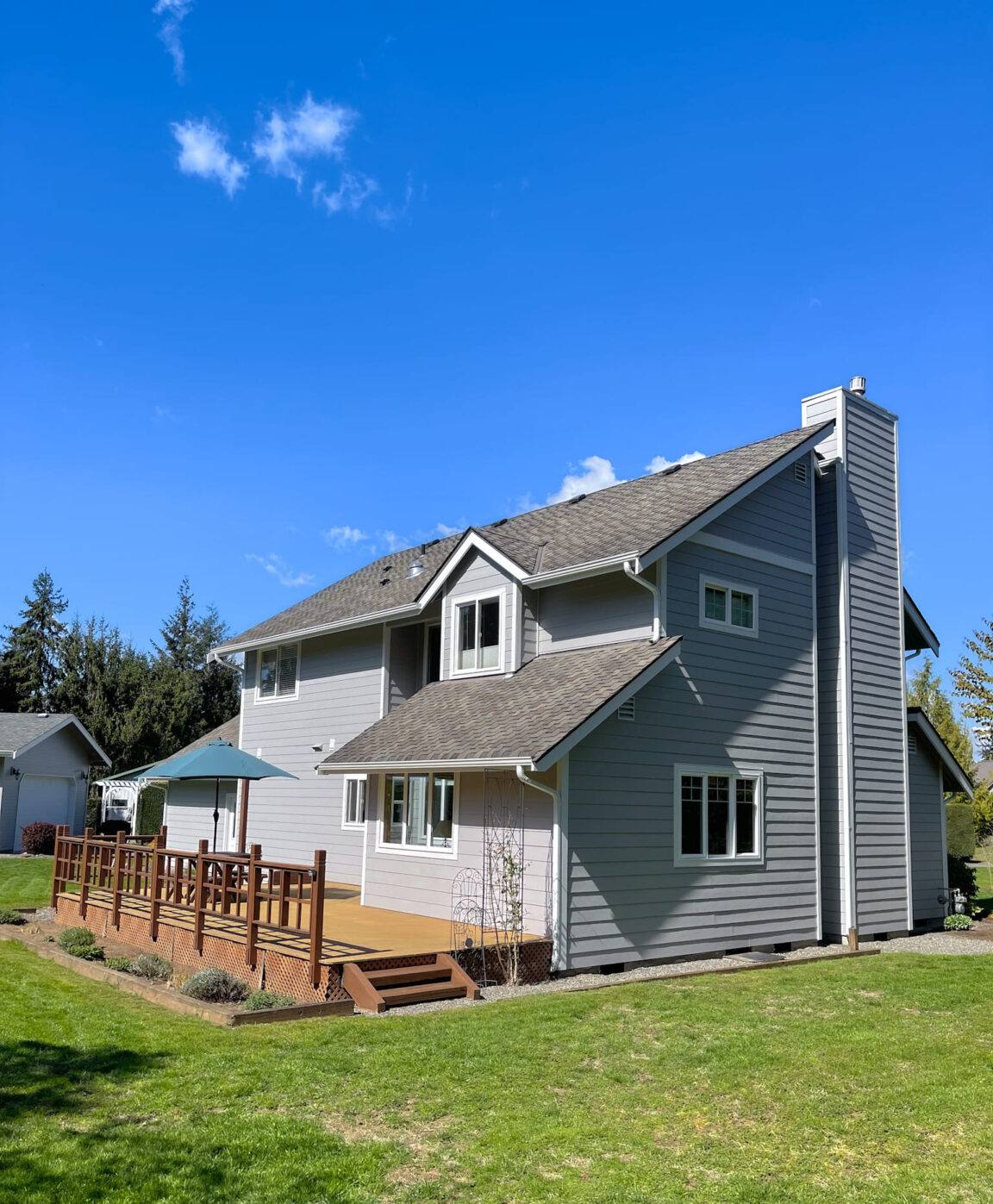
Why Salt Air, Rain, and Moss Matter More Here
Salt Air and Coastal Moisture
Homes near the water deal with airborne salt that settles on exterior surfaces and accelerates corrosion of fasteners, flashing, and metal trim. It also holds moisture against siding longer than it would inland, which matters for any product that can swell, rot, or delaminate when it stays damp. Fiber cement doesn't rot and doesn't absorb water the way wood-based products do, which is a real advantage in a marine environment like Oak Harbor's.
Driving Rain
Wind-driven rain off the Sound doesn't just wet the face of a wall — it pushes water sideways and upward into laps, joints, and penetrations that a calm-weather rain would never reach. This is why lap spacing, caulking choices, and flashing details matter more here than in a drier inland climate. A siding job that looks fine in July can fail in a January storm if those details were rushed.
Moss and Persistent Dampness
Skagit County's long wet season keeps north-facing walls, shaded areas, and anything near overhanging trees damp for extended stretches. Moss and algae take hold on surfaces that stay damp and don't get much sun. On wood siding, trapped moisture under moss growth can lead to rot. Fiber cement itself won't rot from surface moss, but growth still needs to be addressed so it doesn't hold water against caulk joints, trim, and paint film longer than necessary.
What Correct Installation Looks Like in This Climate
James Hardie siding performs the way it's rated to perform only when it's installed to the manufacturer's specifications. In a climate like Oak Harbor's, a few details carry more weight than they would somewhere drier:
- Proper clearance and drainage: siding held off the foundation and any horizontal surfaces per Hardie's minimum clearances, so standing water and splash-back don't sit against the bottom edge
- Correct lap and fastener spacing: tight, consistent laps and fasteners placed per Hardie's engineering specs to resist wind-driven rain intrusion
- Rain screen or drainage plane behind the siding: a water-resistive barrier and drainage gap that lets any moisture that does get behind the panels drain and dry out instead of sitting against the sheathing
- Sealed and flashed penetrations: every window, door, vent, and fixture penetration properly flashed and sealed before siding goes on, not caulked over afterward as an afterthought
- Factory-primed cut edges sealed: any field-cut panel edge treated per Hardie's requirements so raw edges don't wick moisture
- Corrosion-resistant fasteners and trim: hardware rated for coastal exposure, since standard fasteners corrode faster in salt air
Skip any one of these and you can end up with moisture problems behind siding that looks fine from the curb — the kind of failure that shows up years later as soft sheathing or stained interior walls, long after a rushed crew is gone.
James Hardie Product Lines for This Kind of Exposure
Hardie builds region-specific formulations under its HZ5 engineering, which is what's specified for the Pacific Northwest's wet, moderate climate. That matters for Oak Harbor homes because the product itself is formulated to resist moisture-related damage in exactly these conditions, not just coated to look good.
| Product | Common Use | Why It Fits This Climate |
|---|---|---|
| HardiePlank lap siding | Primary wall covering, most home styles | Traditional lap profile, HZ5-engineered for wet climates, resists moisture-driven warping |
| HardiePanel vertical siding | Modern facades, accent walls, gable ends | Fewer horizontal laps for water to work into on exposed elevations |
| HardieTrim boards | Corners, window and door casing, fascia | Dense, stable trim that holds paint and resists the swelling wood trim experiences in damp conditions |
| ColorPlus factory finish | Any of the above | Baked-on finish resists fading and chipping better than field-applied paint, reducing repaint cycles in a climate that's hard on exterior paint |
Our Process for an Oak Harbor Job
1. On-Site Assessment
We look at more than square footage. Exposure to prevailing wind and rain, proximity to the water, tree cover and shade patterns that feed moss growth, and the condition of existing sheathing and flashing all factor into the plan before we quote anything.
2. Tear-Off and Sheathing Check
Old siding comes off and we inspect what's underneath. In a wet climate, this step catches problems — soft sheathing, prior water intrusion, inadequate old flashing — before they get sealed behind new siding.
3. Water-Resistive Barrier and Drainage Plane
A proper barrier and drainage gap go on before any siding, giving incidental moisture a way out instead of a place to sit.
4. Flashing and Penetration Detailing
Windows, doors, and any wall penetrations get flashed and sealed to shed water outward and downward, matched to how wind-driven rain actually hits this area.
5. Siding Installation to Hardie Spec
Panels, fasteners, and trim go on per Hardie's published installation requirements — the clearances and spacing noted above aren't optional steps we skip to save time.
6. Final Walkthrough
We walk the finished job with the homeowner, checking laps, caulk lines, and trim details up close, not just from the street.
Why a Crew That Already Works Oak Harbor Matters
Installation quality is what determines whether James Hardie siding delivers the performance it's built for, and installation quality depends heavily on whether the crew understands the specific conditions of the site. A crew that regularly works Anacortes and the surrounding Skagit County coastline already knows what wind-driven rain does to a poorly lapped joint, has a feel for which elevations on a given lot will hold moss longest, and doesn't need to relearn coastal fastener and flashing practices on your home. That local repetition shows up in fewer callbacks and a job that holds up through several wet seasons, not just the first one.
Maintenance Expectations After Installation
Correctly installed James Hardie siding is low-maintenance, not zero-maintenance. In Oak Harbor's climate, plan on:
- Periodic rinsing to clear salt residue and organic buildup, especially on shaded or north-facing walls
- Visual checks of caulk joints around windows, doors, and trim every year or two, since caulk is the component most likely to need attention before the siding itself does
- Prompt trimming back of overhanging vegetation that keeps a wall shaded and damp longer than necessary, which slows moss regrowth
- Watching for any moss or algae buildup at ground-level laps and cleaning it before it holds moisture against the bottom courses
None of this compares to the paint failure, caulking breakdown, and moisture repairs that wood-based or vinyl siding tends to need on a similar timeline in this climate.
Cost Factors for an Oak Harbor Project
| Factor | Why It Affects Cost |
|---|---|
| Existing siding removal | Tear-off labor and disposal add cost versus building over existing siding, though we generally don't recommend covering over unknown sheathing conditions |
| Sheathing repair | Water damage found during tear-off may require sheathing replacement before new siding goes on |
| Home size and complexity | Multiple stories, dormers, and cut-up wall lines take more labor per square foot than a simple rectangular elevation |
| Product line and profile | Vertical panel, wide-plank, and specialty trim configurations vary in material and labor cost |
| Trim and detail work | Corner boards, window casing, and fascia detailing add labor beyond the flat wall areas |
We don't quote broad numbers without seeing the home — too many of these factors are site-specific — but we'll walk you through exactly what's driving the number on your estimate.
A Simple Pre-Estimate Checklist
Before we come out, it helps to have a look at a few things yourself:
- Any walls with visible moss, algae, or persistent dampness
- Areas where paint or existing siding is peeling, cracking, or soft to the touch
- Windows or doors with staining or bubbling paint nearby, which can indicate flashing issues
- Rooflines and gutters that may be directing water onto specific wall sections
- Any prior repair patches that look different from the surrounding siding
Bring what you notice to the estimate — it helps us focus the inspection and gives you a more accurate picture of scope.
If you're in Oak Harbor or elsewhere around Anacortes and thinking about new siding, we're happy to take a look and walk you through what your home actually needs. Request a free, no-pressure estimate using the form below.