 Anacortes Siding
 Why Guemes Island Roofs Age Differently
Guemes Island sits just off Anacortes in Skagit County, surrounded by the salt water of Guemes Channel and the Salish Sea. That location is part of what makes the island a great place to live, but it's also why roofs out here don't age the same way a roof does twenty miles inland. Salt-laden air corrodes exposed metal faster, driving rain off the water finds every weak seam and nail pop, and the heavy tree cover across much of the island keeps roofs shaded and damp for a good chunk of the year. Add in a long moss season that can run from fall through spring, and you've got a climate that's genuinely harder on a roof than most manufacturers' warranty testing accounts for.
None of this means island homes need exotic materials or constant babysitting. It means the replacement has to be done with this specific environment in mind — the right underlayment, the right fasteners, the right ventilation, and a maintenance plan the homeowner actually understands before we leave.
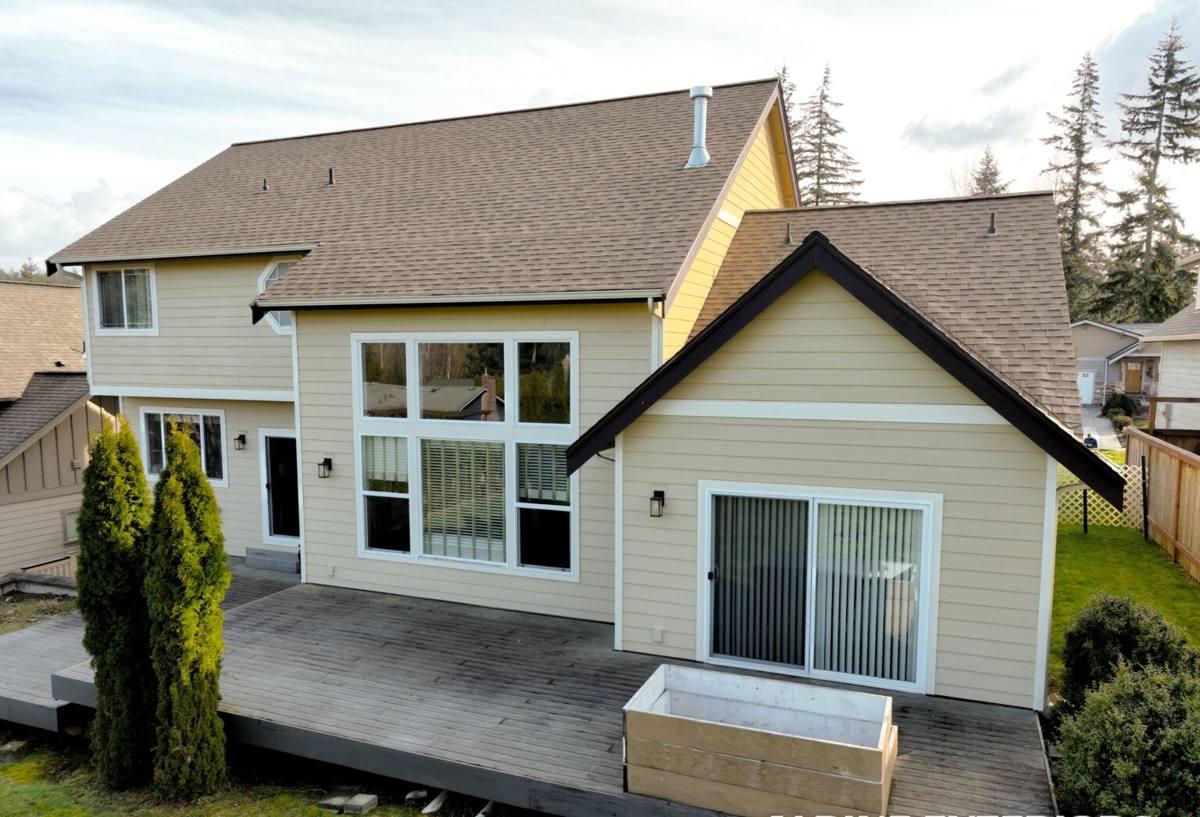
Signs a Guemes Island Roof Needs Replacement, Not Another Repair
Repairs make sense when a roof has isolated damage and the rest of the system is sound. Replacement makes sense when the underlying materials — decking, underlayment, flashing — are failing broadly, even if the shingles or panels on top still look okay from the ground. On the island, the moisture side of that equation matters as much as age.
- Granule loss heavy enough that you can see bare asphalt in multiple spots, not just one worn valley
- Soft or spongy decking underfoot, usually a sign moisture has been getting past the roofing layer for a while
- Moss and algae that keep coming back within a season or two of cleaning, especially on north-facing or heavily shaded slopes
- Daylight visible through the roof deck from inside the attic, or water staining on rafters
- Curling, cracking, or lifted shingle edges — often worse on the sides of the house that take the most wind-driven rain off the water
- A roof approaching or past its expected service life, especially if it was installed with standard felt underlayment rather than a marine-appropriate synthetic
If you're only seeing one or two of these, a targeted repair may still be the right call. We'll tell you that honestly rather than push a full tear-off you don't need yet.
Getting Materials and Crews to an Island Job
This is the part of a Guemes Island roof replacement that doesn't come up on the mainland: everything — crew, tools, dump trailers, and full pallets of shingles or metal panels — has to cross on the Guemes Island ferry out of Anacortes. It's a short crossing, but it runs on a set schedule with limited vehicle space, and a full tear-off generates a lot of material both coming and going.
We plan around that instead of discovering it mid-job. That means staging materials ahead of the ferry cutoff, scheduling crew crossings so work starts on time instead of half a day late, and coordinating debris hauling so tear-off waste isn't sitting on your property waiting for a return trip. A contractor who hasn't worked the island before will often underestimate this and let it stretch a project out by days. It's a logistics problem, not a technical one, but it directly affects how long your driveway has a crew and a dumpster in it.
Choosing a Roofing Material for Salt Air and Moss
There's no single "best" roofing material for every Guemes Island home — it depends on tree cover, roof pitch, budget, and how much long-term maintenance you want to take on. Here's how the common options actually compare in this specific climate.
| Material | Typical Lifespan Here | Moss Resistance | Salt Air Behavior | Maintenance |
|---|---|---|---|---|
| Architectural asphalt shingle | 20-30 years | Moderate — needs periodic cleaning under tree cover | Good; not affected by corrosion | Low to moderate |
| Standing seam metal | 40-50+ years | Very good — moss struggles to hold on smooth panels | Depends on coating and fastener quality; marine-grade coatings hold up well | Low |
| Cedar shake | 20-30 years with upkeep | Poor without regular treatment — organic material moss favors | Weathers naturally but needs more attention near salt spray | High |
| Composite/synthetic shake | 30-40 years | Good — engineered to resist moisture uptake | Good; doesn't corrode or absorb salt | Low to moderate |
For most wooded Guemes Island lots, we lean toward architectural asphalt with a moss-inhibiting design or standing seam metal, both paired with proper ventilation. Cedar can still be the right choice for homeowners who want the look and are committed to the upkeep — we'll walk through the honest maintenance trade-off rather than talk anyone out of a material they've already decided on.
Fasteners and Flashing Matter More Here
Whatever the roofing material, salt air accelerates corrosion on exposed metal. We use fasteners and flashing rated for coastal exposure rather than standard-grade hardware — the cost difference is small, and it's one of the most common points of early failure we see when replacing roofs on homes near the water.
What a Correct Roof Replacement Actually Involves
A roof replacement is more than swapping old shingles for new ones. Done right, it addresses everything underneath the surface layer too:
- Full tear-off down to the deck — layering new material over old traps moisture and hides deck damage
- Deck inspection and repair, replacing any plywood or sheathing that's soft, delaminated, or water-stained
- Ice-and-water shield at eaves, valleys, and penetrations, which matters here less for ice and more for the sheer volume of wind-driven rain that gets pushed sideways under standard underlayment
- Synthetic underlayment across the full field rather than felt, which holds up better to prolonged dampness under tree cover
- New flashing at chimneys, skylights, and wall intersections — old flashing is one of the most common hidden leak sources on older island homes
- Balanced ventilation between intake and exhaust, which controls the moisture buildup that feeds moss and rot from the inside out
- Corrosion-resistant fasteners rated for coastal exposure
Skipping any one of these to save money up front tends to show up as a callback within a few years — usually right around a valley, a chimney, or an eave that wasn't properly protected.
Ventilation and Moisture: The Overlooked Factor
A new roof with poor attic ventilation will fail early no matter how good the shingles or panels are. In a marine climate, warm moist air trapped in an attic condenses against a cool roof deck, and that moisture feeds rot and, ironically, can accelerate moss growth from underneath as well as above. On heavily shaded Guemes Island lots, we pay close attention to intake vents at the eaves and exhaust at the ridge, sized to the actual attic volume — not just whatever vent count was there before. This is a detail that's easy to skip and hard to notice until it's already caused damage.
Our Process for a Guemes Island Roof Replacement
- On-site assessment — we inspect the deck, ventilation, flashing points, and shaded/moss-prone areas, not just the shingle surface
- Written estimate with material options and honest trade-offs for your specific roof and tree cover
- Ferry-aware scheduling — materials and crew timed to the ferry schedule so the job stays on track
- Tear-off and deck repair, with any damaged sheathing replaced before anything new goes down
- Underlayment, flashing, and ventilation installed to marine-climate standards
- Final roofing material installation per manufacturer spec, using coastal-rated fasteners
- Site cleanup and debris haul-off, coordinated with the ferry so waste doesn't sit on your property
- Walkthrough covering what maintenance to expect given your specific tree cover and roof exposure
Living With a New Roof on Guemes Island
A properly installed roof still needs some seasonal attention in this climate — that's just the reality of salt air, rain, and tree cover, not a sign anything was done wrong. A simple maintenance routine keeps a new roof performing for its full lifespan:
- Clear gutters and downspouts each fall before the wet season, especially on tree-covered lots
- Remove moss and organic debris from valleys and north-facing slopes before it builds up, rather than waiting until it's visible from the ground
- Check flashing around chimneys and skylights annually for lifted edges or gaps
- Trim back overhanging branches to reduce shade and debris accumulation on the roof surface
- Have the roof looked at after any major windstorm off the water
Why Hire a Crew That Already Works Guemes Island
Roofing a home on the island isn't the same job as roofing one a few miles inland in Anacortes, and it shows in the details a contractor either accounts for or doesn't: ferry-based scheduling, coastal-grade fasteners and flashing, underlayment chosen for prolonged dampness under tree cover, and ventilation sized for a shaded, salt-air environment. A crew that's done this work on the island before isn't guessing at any of it — it's just how the job gets planned from the first estimate. That experience shows up later as fewer callbacks, not a higher price tag.
If your roof is showing wear, or you just want a straight answer about whether it needs replacing or can hold on a bit longer, we're happy to take a look. Reach out for a free, no-pressure estimate using the form below.