 Anacortes Siding
 Oak Harbor's Climate Is Harder on Siding Than Most Homeowners Realize
Oak Harbor sits on Whidbey Island, connected to Anacortes by the Deception Pass Bridge, and it shares the same marine weather system that moves through Skagit County and the surrounding waterways. That means salt-laden air, long stretches of wind-driven rain, and enough shade and moisture to grow moss on nearly any surface that holds still long enough. Siding here isn't just a cosmetic decision — it's the layer standing between your house and a climate that works on it every single day of the year.
A lot of the siding failures we get called out to inspect in this area aren't dramatic. They're slow: a soft spot behind a downspout, a paint film that's chalked and cracked from UV and salt exposure, a north wall with a green film that never quite dries out. None of that happens overnight, and none of it is unique to old houses — it happens to siding that was never suited to this environment in the first place, or that was installed without the details this climate demands.
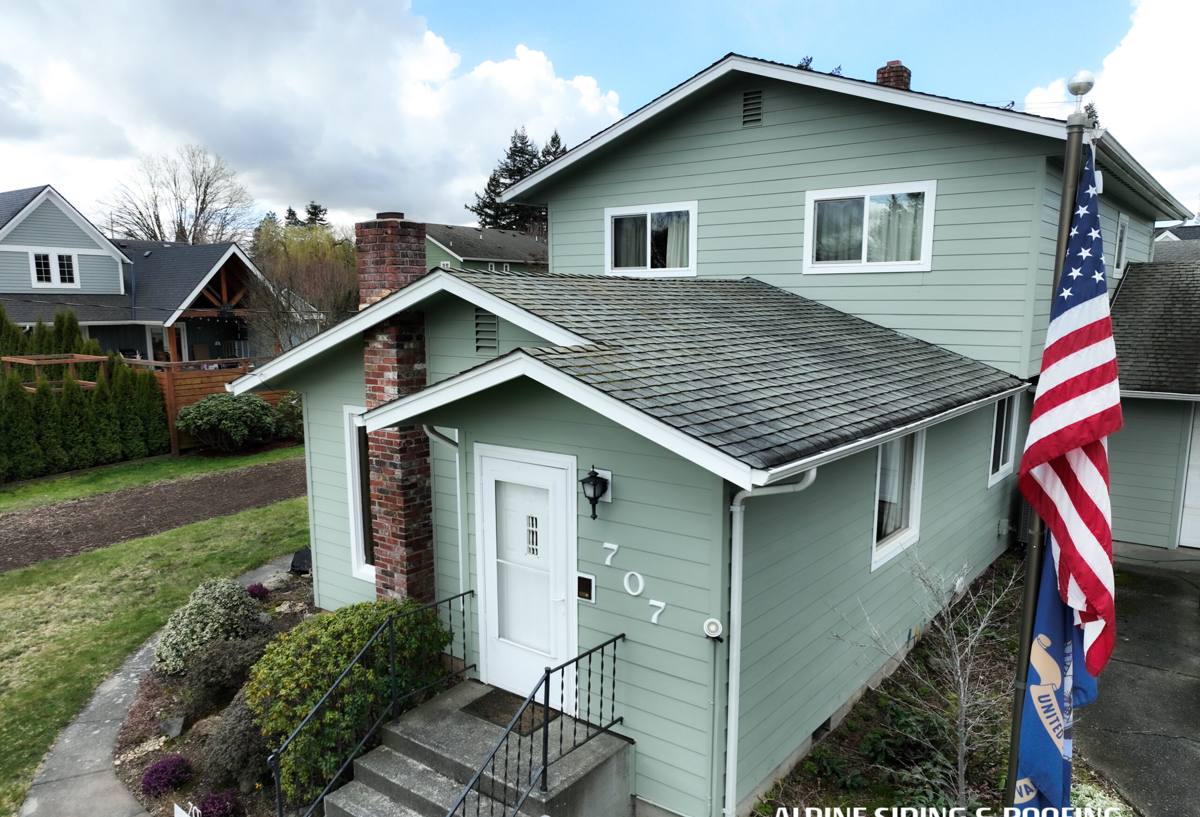
What Salt Air, Rain, and Moss Actually Do to a Building
Salt Air and Marine Exposure
Airborne salt is corrosive to metal fasteners and flashing, and it accelerates the breakdown of paint and coatings on many siding materials. Products that rely on a factory or field-applied coating for their looks and protection tend to fade, chalk, or lose adhesion faster near the water than they would inland — even a few miles can make a noticeable difference.
Driving Rain and Wind
Storms coming off the Strait don't just drop rain straight down — they push it sideways into wall assemblies, seams, and trim joints. Siding that isn't installed with the right overlaps, flashing, and drainage plane can let that wind-driven moisture find its way behind the cladding, where it does the most damage out of sight.
Moss and Constant Shade
Between tall evergreens and long overcast stretches, plenty of Oak Harbor lots have walls that rarely see direct sun. Moss and algae take hold on surfaces that stay damp, and once established they hold even more moisture against the wall — a cycle that shortens the life of anything not built to resist it.
What a Correctly Installed Siding Job Actually Involves
Good siding installation is mostly invisible once the job is done — the parts that matter most are underneath. A correct install for this climate includes:
- Removal of old siding and inspection of the sheathing underneath for hidden rot or moisture damage before anything new goes up
- A continuous weather-resistant barrier, installed shingle-style so every layer drains outward and down
- Proper flashing at every window, door, and roofline intersection — the single most common failure point we find on older homes
- Correct fastener type, spacing, and penetration depth per the manufacturer's installation specification, not a generalized nailing pattern
- Rain-screen gapping or ventilation detailing where the wall assembly calls for it, so moisture that does get in can dry out
- Caulking and sealant only where the manufacturer specifies it — over-caulking traps moisture just as often as it keeps it out
Skip any one of these steps and the siding can look fine for a year or two while problems build behind it. This is why we treat installation as a system, not just a material choice.
Why We Install Only James Hardie Fiber Cement
We standardized on James Hardie fiber cement siding and don't install vinyl, LP SmartSide, Cemplank, Allura, primed spruce, or cedar. That's a deliberate call, not a limitation of what we're capable of installing. Fiber cement is non-combustible, it doesn't warp or rot the way wood-based products can, and it holds up to sustained damp exposure far better than materials that depend on staying dry to perform.
James Hardie's ColorPlus factory-applied finish is baked on and cured under controlled conditions, which gives it stronger fade and chip resistance than field-applied paint — a real advantage in an environment where salt air and UV are constantly working against a finish. Hardie also engineers climate-specific product lines (their HZ5 line is built for wetter, harsher climates like ours) rather than selling one version everywhere. Combined with a strong transferable warranty, it's the product we're willing to put our name behind on homes that have to deal with what this coastline throws at them.
Comparing Siding Materials in a Marine Climate
| Material | Moisture & Rot Resistance | Moss/Algae Resistance | Maintenance | Typical Lifespan |
|---|---|---|---|---|
| James Hardie Fiber Cement | High — won't rot, holds shape when wet | Good — dense surface resists growth | Low — occasional wash | 30+ years |
| Vinyl | Moderate — doesn't rot but can warp/crack in cold snaps and wind | Moderate | Low, but limited repair options | 20-30 years |
| LP SmartSide (engineered wood) | Moderate — treated, but wood-based core is moisture-sensitive at cut edges | Moderate | Moderate — finish upkeep matters | 20-30 years |
| Cedar / Primed Spruce | Lower — natural wood, moisture-sensitive | Lower — organic material feeds growth | High — regular refinishing needed | 15-25 years with upkeep |
Every material on this list has legitimate uses somewhere. In a climate that combines salt air, sustained rain, and shade-driven moss the way Oak Harbor's does, we've found fiber cement consistently holds up with the least ongoing maintenance burden — which is the whole reason we built our business around it.
Our Installation Process
- On-site assessment — we look at your home's exposure, existing siding condition, trim details, and any moisture issues already showing on the sheathing or trim.
- Written estimate — a clear scope covering tear-off, prep, materials, trim work, and timeline, with no vague allowances.
- Prep and tear-off — removal of old siding, inspection and repair of any damaged sheathing before new material goes up.
- Weather barrier and flashing — the drainage plane and flashing details that determine whether the wall stays dry for the next 30 years.
- Hardie installation — panels or planks installed to manufacturer specification for fastening, clearances, and joint treatment.
- Trim, caulking, and finish detail — the visible work done last, once the structural details underneath are locked in.
- Final walkthrough — we go over the finished job with you before calling it done.
What Affects the Cost of a Siding Project Here
Every home is different, but the same handful of factors drive most of the cost variation we see on Oak Harbor jobs:
| Factor | Why It Matters |
|---|---|
| Tear-off and disposal | Removing old siding (and hauling it away) adds labor before new material can go up |
| Sheathing repair | Hidden rot found during tear-off has to be fixed before new siding is installed over it |
| Home size and story height | More wall area and taller walls mean more material, more staging, and more labor time |
| Trim and architectural detail | Homes with more corners, gables, and window trim take longer to flash and finish correctly |
| Product line and finish | Hardie's panel styles, textures, and ColorPlus color options carry different material costs |
We give straightforward written estimates so you know what's driving the number, not just a lump-sum total.
Keeping New Siding Looking Right in This Climate
James Hardie siding is low-maintenance, not zero-maintenance. A little routine care goes a long way in this environment:
- Rinse the exterior once or twice a year with a garden hose to clear salt residue, pollen, and surface grime
- Keep gutters clear so overflow doesn't run down the wall face and feed moss growth
- Trim back vegetation that keeps a wall section shaded and damp
- Check caulking at trim joints periodically and have any cracked sections resealed
- Address any impact damage or chipped finish promptly rather than letting moisture get behind it
Why Hiring a Crew That Already Works in Oak Harbor Matters
A contractor who works this area regularly already knows how the marine exposure, rain patterns, and moss pressure here differ from a job twenty miles inland. That shows up in small decisions — how much overlap to build into the weather barrier, which walls need extra flashing attention, how a house's orientation to prevailing wind and rain should shape the install plan. It also means we're not learning the area on your dime, and we're around afterward if you ever have a question about the work.
If you're weighing a siding project on your Oak Harbor home, we're happy to take a look and give you a straightforward, no-pressure estimate — just fill out the form below.