 Anacortes Siding
 Building Decks for Life on Guemes Island
Guemes Island sits close enough to Anacortes to feel like a short ferry ride away, but far enough into the water that its homes take a different kind of weather beating than houses just a few miles inland. Decks out here deal with salt-laden air coming straight off Rosario Strait and the surrounding waters, wind-driven rain that gets pushed sideways under eaves and railings, and a wet season that runs long enough for moss and algae to get a real foothold on anything that stays shaded and damp. A deck built with mainland assumptions — standard fasteners, a coat of stain and call it done — tends to show its age fast in this environment. A deck built for Guemes Island conditions specifically holds up the way it should.
We're not talking about exotic engineering. We're talking about material choices, fastener grades, drainage details, and finishing decisions that account for salt exposure and near-constant moisture instead of ignoring it. That's the difference between a deck that needs real attention every couple of years and one that mostly just needs a rinse and an occasional check-up.
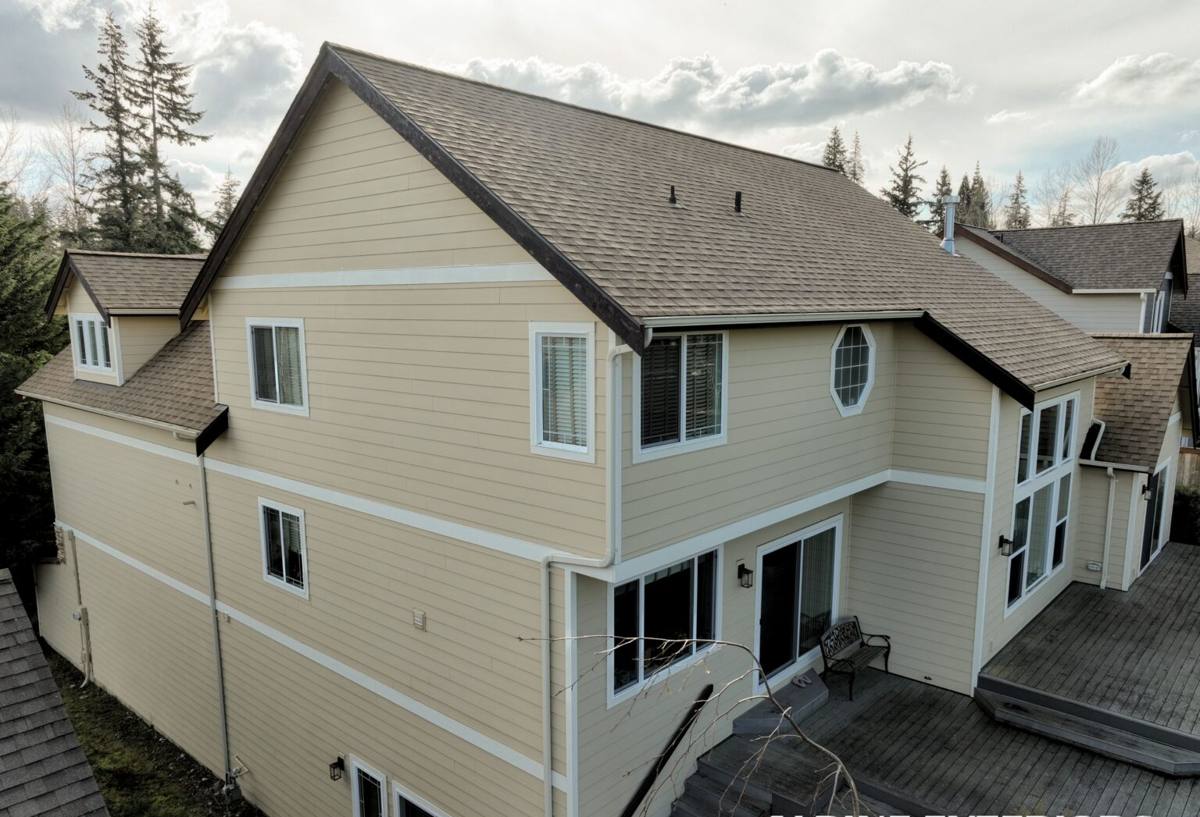
What Guemes Island's Climate Actually Does to a Deck
Salt Air and Metal Fasteners
Marine air carries salt further inland than most people expect, and on an island it's simply part of the daily environment. Salt accelerates corrosion in standard fasteners, hidden hangers, and lower-grade hardware. Once a fastener starts rusting, it can weep stains into the decking around it and lose holding strength long before the wood itself is a problem. This is one of the most common issues we find when we're asked to look at an older deck on the island — the boards look fine, but the hardware underneath doesn't.
Driving Rain and Trapped Moisture
Skagit County gets plenty of rain generally, but island exposure adds wind that drives water at angles a typical deck detail wasn't drawn for. Water gets pushed under rail caps, into ledger connections, and between deck boards that are spaced too tight or laid without a real drainage gap. Wood that stays wet longer than it needs to is wood that rots, cups, and grows mildew faster than it should.
Moss, Algae, and Shade
Between the tree cover common on the island and the extended damp season, north-facing and shaded decks can develop a moss or algae film that makes surfaces slick and, over time, holds moisture against the wood or composite surface. This isn't just a cosmetic issue — a slippery deck near steps or a waterside slope is a real fall hazard, and moss growth left unaddressed can shorten the life of certain decking materials.
What a Correct Deck Build Involves Out Here
A deck that's actually built for this environment isn't a different-looking deck — it's the same deck built with different underlying choices. The things that matter most are largely invisible once the project is finished, which is exactly why they get skipped by builders who aren't used to island conditions.
- Stainless steel or heavy hot-dip galvanized fasteners and hardware rated for coastal/marine exposure, not standard exterior-grade hardware
- Structural connections (ledger boards, post bases, joist hangers) sized and fastened to resist corrosion, not just load
- Proper board spacing and a real drainage plane so water sheds instead of pooling or wicking between boards
- Flashing at the ledger board where the deck meets the house, to keep water from working into the structure or the siding above it
- Post bases set above grade and off standing water, with any ground-contact wood rated for the exposure it will actually see
- Railing and cap details that shed water outward instead of channeling it into joints and end grain
- A finish or decking material chosen with the shade pattern and moss risk of that specific site in mind
Decking Material Options for Guemes Island Homes
There's no single "best" decking material for every home on the island — the right choice depends on how much sun the deck gets, how close it sits to the water, budget, and how much upkeep the homeowner actually wants to do. Here's how the common options compare under these specific conditions.
| Material | Salt Air Performance | Moss/Algae Resistance | Maintenance |
|---|---|---|---|
| Pressure-treated wood | Good with proper fasteners; needs sealing | Moderate — needs regular cleaning in shaded areas | Re-stain/seal every 1-2 years |
| Cedar | Good natural resistance; fasteners still matter | Moderate to good if finished and maintained | Periodic cleaning and refinishing |
| Composite decking | Excellent — won't rot or corrode | Good; surface texture varies by product | Occasional wash; no staining/sealing |
| PVC/capped polymer | Excellent — fully sealed surface | Very good; smoother, harder surface | Lowest — mostly just rinsing |
We'll walk through these tradeoffs honestly during a site visit. A shaded, water-facing deck is a very different design conversation than a sunny, sheltered one, even if they're both on the same road.
A Note on Wood-Composite Combinations
Some homeowners like the look of real wood railings paired with a lower-maintenance composite deck surface, or vice versa. That's a reasonable approach as long as the structural framework underneath is built to handle the moisture and salt exposure consistently — mixing materials on the surface is fine; cutting corners on the substructure underneath isn't.
Substructure: The Part Nobody Sees But Everyone Relies On
The framing, ledger connection, footings, and hardware underneath a deck do the actual structural work, and on Guemes Island they're the part most likely to fail early if built with mainland-standard materials instead of marine-grade ones. We build the substructure to the same standard regardless of what decking material sits on top, because a beautiful composite deck surface on a corroding frame is still a deck with a limited lifespan. This means correctly sized joists and beams for the actual span and load, hardware rated for the exposure, and footings set to handle the drainage and soil conditions of that specific lot — not a generic assumption carried over from an inland job.
Our Process for a Guemes Island Deck Project
- Site visit and assessment. We look at sun exposure, wind direction, proximity to water, existing drainage, and how the deck will actually be used before we talk materials.
- Design and material selection. We walk through decking, railing, and finish options with the tradeoffs specific to that site — not a generic pitch.
- Permitting. We handle the permitting steps required for the project, including anything specific to island/waterfront jurisdiction where applicable.
- Build. Framing and substructure first, built to marine-exposure standards, followed by decking, railing, and finish work.
- Final walkthrough. We go over the finished deck with you, including basic care guidance specific to the material you chose.
Ferry scheduling is part of any project logistics on Guemes Island, and we plan our crew time and material deliveries around it so the project timeline stays realistic rather than getting stretched out by avoidable back-and-forth trips.
Keeping a Guemes Island Deck in Good Shape
Even a correctly built deck needs some ongoing attention in this environment — the goal of a good build is to make that upkeep minimal, not eliminate it entirely.
- Rinse salt residue and organic debris off the surface periodically, especially after storms
- Keep gutters and nearby drainage clear so water isn't dumping directly onto or near the deck
- Check railing posts and stair connections annually for any looseness, which can signal a fastener issue
- Address moss or algae buildup promptly in shaded areas rather than letting it establish
- Re-seal or re-stain wood decking on the schedule appropriate to that specific product and exposure
- Have connections and flashing points inspected every few years, since these are the details most likely to fail quietly
Why It Matters to Hire a Crew That Already Works Guemes Island
General deck-building skill doesn't automatically translate to correct decisions in a marine, high-moisture environment. A crew that regularly works Anacortes and the surrounding Skagit County islands already knows which fastener grades hold up, which decking products handle shaded, damp exposure well, and where water actually tends to find its way into a structure out here — because they've seen it happen on other jobs. That experience shows up in details a homeowner might never think to ask about, but that determine whether a deck is still solid in ten years or needs major hardware repairs in three.
It also matters for logistics. Ferry schedules, material delivery timing, and site access on an island project all take planning that a crew unfamiliar with Guemes Island simply hasn't had to work out before.
Get a Straightforward Estimate
If you're planning a new deck or replacing one that's showing its age, we're happy to come take a look and talk through what makes sense for your specific site and budget — no pressure, no upsell on materials you don't need. Use the form below to request a free estimate for your Guemes Island deck project.