 Anacortes Siding
 Edison's Roofs Work Harder Than Most
Edison sits where Skagit County farmland meets the salt water of Samish Bay, and that location puts a roof through more than the average Puget Sound home ever sees. You've got salt-laden air drifting in off the bay, long stretches of driving rain that comes in sideways off the water, and a moss season that can run nearly nine months of the year in the shaded, damp pockets common to this part of the county. Any one of those on its own is manageable. Together, over years, they're what turns a roof that should last decades into one that's leaking, staining, and rusting fasteners well before its time.
Metal roofing, done correctly, handles all three of those conditions better than most other roofing materials available — but "done correctly" is doing a lot of work in that sentence. A metal roof installed with the wrong fasteners, the wrong underlayment, or without real attention to how water moves off a roof near the coast will fail in exactly the same ways a bad roof of any other material fails. This page is about what a metal roof needs to actually hold up on an Edison home, not just what metal roofing is in general.
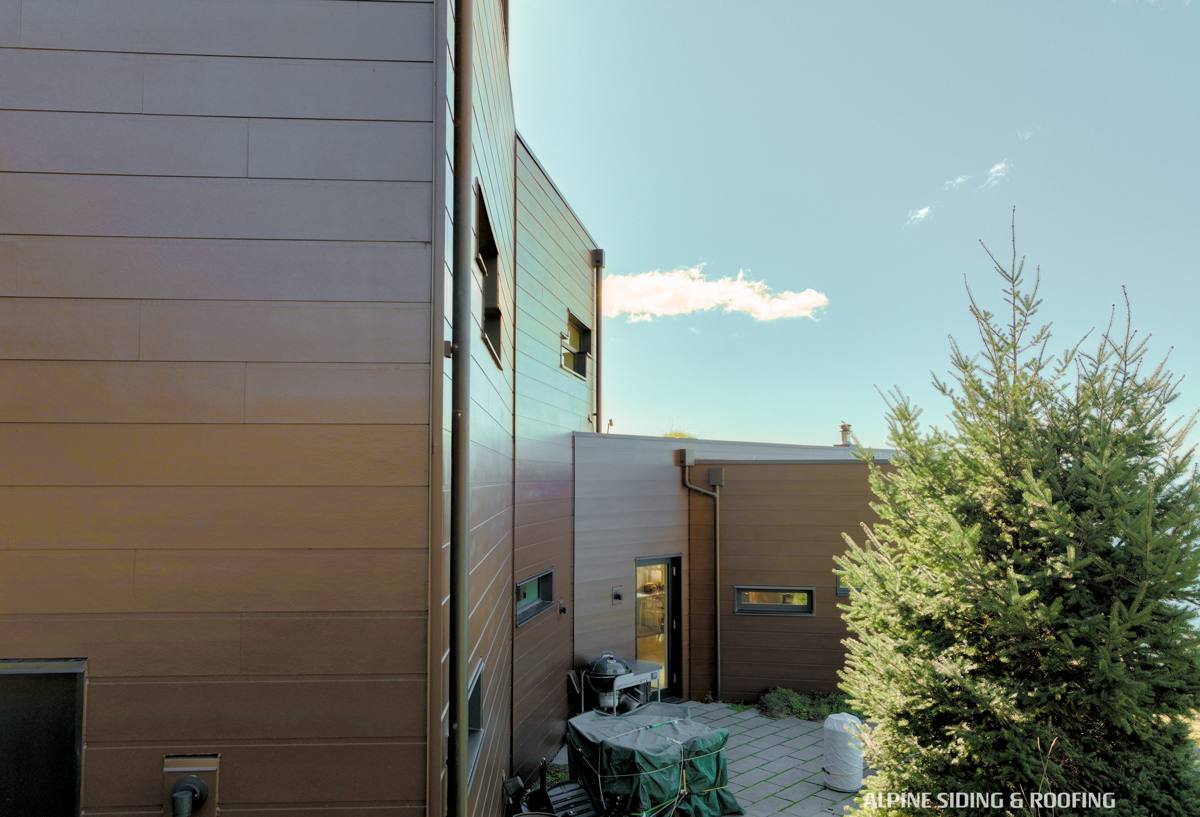
What Salt Air Actually Does to a Roof
Homes near Samish Bay live inside a slow, steady exposure to airborne salt. It doesn't take a storm surge or flooding to cause damage — salt in the air settles on every exposed surface, and over time it accelerates corrosion on anything metal that isn't properly coated or isn't the right alloy to begin with. This shows up first at fasteners, exposed screw heads, and cut edges where the protective coating has been compromised during installation.
Where salt exposure shows up first
- Exposed fastener heads that weren't capped or gasketed correctly
- Cut panel edges left unsealed after trimming to fit a roofline
- Flashing seams where two dissimilar metals were allowed to touch
- Gutter and valley areas where salt-laden runoff sits longest
This is why the specific coating and fastener package matters more for an Edison roof than it would for a home twenty miles inland. We don't treat that as an upsell — it's the baseline for a roof going in this close to the water.
Driving Rain and the Water-Shedding Details
Wind-driven rain off Samish Bay doesn't fall straight down — it gets pushed sideways and up under laps, fascia, and flashing that would stay dry in a calmer setting. A metal roof sheds bulk water extremely well when the panel system is right, but the places where water actually gets into a house are almost never the flat field of the roof. They're the transitions: where a roof meets a wall, where a valley collects two roof planes, where a vent or chimney interrupts the panel run.
A correct installation treats every one of those transitions as its own small project — proper underlayment laps, step flashing woven correctly rather than just caulked over, and valley metal sized for real volume rather than the minimum the code allows. On an exposed site near the bay, we size and detail these areas assuming worse conditions than the average Skagit County lot sees, because Edison often gets them.
Moss Season and Roof Design
Anacortes-area moss season runs long, and Edison's mix of tree cover, farmland humidity, and marine air keeps roofs damp for extended stretches even between rain events. Moss doesn't just sit on a roof looking bad — it holds moisture against the roofing material, works into laps and seams, and on some materials accelerates granule loss or wood rot underneath. Metal roofing is far more moss-resistant than composition shingle or wood, since there's no porous surface for spores to root into, but it isn't moss-proof. Debris in valleys, shaded north-facing slopes, and areas under overhanging trees can still grow moss on top of a metal panel over time.
The fix isn't a different roof — it's roof design and airflow that don't give moss a foothold to begin with, plus a maintenance rhythm that keeps debris from accumulating in the first place.
What a Correct Metal Roofing Job Involves
A metal roof is a system, not a single product. Getting an Edison installation right means every layer is chosen for this climate, not just the visible panel on top.
The layers that matter
- Underlayment: a synthetic, high-temp-rated underlayment with real waterproofing at seams and around penetrations — not a basic felt that degrades under a metal roof's thermal cycling.
- Fastener package: matched to the panel's metal type to avoid galvanic corrosion, with gasketed heads rated for coastal exposure.
- Flashing: custom-formed for the actual roof geometry, not stock pieces caulked into place.
- Ventilation: intake and exhaust sized to keep the underside of the deck dry, which matters as much for moss and rot prevention as it does for energy performance.
- Panel attachment method: concealed-fastener systems where budget allows, since they remove the single biggest long-term failure point on an exposed-fastener roof.
Skipping any one of these doesn't usually cause an immediate problem. It shows up in year six or year ten, as a leak that traces back to a corner someone cut during install.
Comparing Metal Roofing Options for a Coastal Skagit County Home
| Panel Type | Best Fit For | Coastal Durability | Maintenance |
|---|---|---|---|
| Standing seam (concealed fastener) | Full re-roofs, homes near the water | Highest — no exposed penetrations | Lowest — occasional debris clearing |
| Exposed-fastener panel | Outbuildings, budget-driven projects | Good, if fasteners are inspected periodically | Moderate — fasteners may need attention over time |
| Stone-coated steel | Homes wanting a shake or tile look | Good, with proper coating and cut-edge sealing | Low to moderate |
We'll walk through which of these actually fits your roofline, budget, and how close your lot sits to the bay before recommending one over another. There isn't a single right answer for every Edison property.
Our Process for an Edison Metal Roof
We start with an on-site look at your existing roof deck, current flashing details, and how water currently moves off the house — including anything we can see that's already showing salt or moisture damage. From there:
- We assess deck condition and repair or replace any compromised sheathing before anything goes on top of it.
- We install underlayment sized for this climate, with extra attention at valleys, eaves, and any low-slope transitions.
- We custom-form flashing on site rather than relying on stock trim pieces that don't match your roof's actual geometry.
- We install panels with a fastener and gasket package matched to the metal and to coastal exposure.
- We confirm intake and exhaust ventilation is adequate for the roof's size and slope.
- We walk the finished roof with you and point out anything that needs periodic attention going forward.
Keeping an Edison Metal Roof Performing Long-Term
Metal roofing is low-maintenance, not no-maintenance. A short annual routine keeps moss, salt, and debris from becoming problems.
- Clear needles, leaves, and moss debris from valleys and low-slope areas, especially after fall storms
- Check gutters for salt-laden buildup that can hold moisture against fascia and roof edges
- Look at shaded, north-facing roof sections where moss is most likely to establish
- Have flashing and seams visually checked every few years, particularly after a hard windstorm off the bay
- Trim back overhanging branches that keep sections of the roof from drying out between rains
What Drives Cost on a Metal Roof in This Area
| Factor | Why It Matters Here |
|---|---|
| Panel system chosen | Standing seam costs more up front but reduces long-term fastener and corrosion risk near the bay |
| Roof complexity | More valleys, dormers, and penetrations mean more custom flashing work |
| Deck condition | Moisture or rot found under an old roof adds repair cost before installation can proceed |
| Ventilation upgrades | Older Edison homes often need intake or exhaust vent work added during a re-roof |
Costs vary property to property, but as a general range, most full metal roof replacements in this region land somewhere in the mid-five-figures for standing seam on an average home, with exposed-fastener systems running lower and complex rooflines running higher. We'll give you a firm number after seeing the actual roof, not a phone estimate.
Why It Matters That We Already Work in Edison
A crew that only occasionally works this far out on Samish Bay tends to detail a roof the same way they would twenty miles inland — same fastener specs, same flashing approach, same maintenance advice. That's how coastal homes end up with roofs that look fine for a few years and then develop corrosion and leak points all at once. We work throughout Skagit County, including Edison and the surrounding Samish Bay area regularly enough to know which details actually matter out here: the fastener packages that hold up, the flashing details that keep driving rain out, and the roof designs that don't leave moss anywhere to take hold. That's not a marketing line — it's the difference between a roof that needs attention in year five and one that doesn't need real attention for twenty or thirty years.
If you're weighing a metal roof for a home in Edison or anywhere else along Samish Bay, we're happy to take a look and walk you through what your specific roof needs. There's no pressure and no cost for the estimate — just a straight assessment of what your roof is dealing with and what it would take to get it right.