 Anacortes Siding
 Guemes Island Siding: A Different Job Than the Mainland
Guemes Island sits just across the Guemes Channel from Anacortes, but a siding job out there isn't the same job as one three miles inland. Homes on the island face a fuller dose of everything Skagit County's marine climate can throw at a wall: salt-laden air coming straight off the water, driving rain that hits horizontally in a stiff wind, and long stretches of damp, shaded weather that keep moss and algae established on north-facing walls for months at a time. Add in ferry-dependent access for materials and crews, and it's easy to see why a lot of siding contractors treat island work as an afterthought instead of a specialty.
We don't. This page is about one service, one place: siding installation for homes on Guemes Island. What the climate actually does to a wall system out there, what a correct install has to account for, and how we plan a job around ferry schedules instead of pretending the island is just another neighborhood.
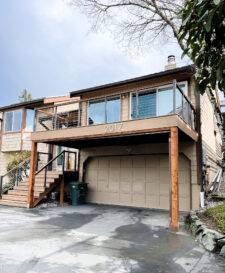
What Salt Air, Driving Rain, and Moss Season Actually Do to a Wall
Every one of these three conditions attacks siding differently, and a real island job has to plan for all three at once, not just the one that's most visible.
Salt Air
Airborne salt is corrosive to metal and abrasive to unprotected wood and coatings. Fasteners, flashing, and trim hardware that would last decades on a mainland home can start failing years early on a waterfront or near-waterfront property. It also breaks down paint film faster, which is a big part of why factory-cured finishes hold up better here than anything painted on site.
Driving Rain
Wind off the water doesn't let rain fall straight down — it drives it sideways into wall assemblies, laps, and butt joints. A siding system with even small gaps in its drainage plane will let that wind-driven moisture find its way behind the cladding, where it can sit against sheathing and framing for days before it ever shows up as a visible problem.
Moss and Algae Season
Shaded, tree-lined lots — common on much of the island — stay damp longer after every rain event. That extended dampness is exactly what moss and algae need to get a foothold on siding, trim, and roof lines. Left alone, it holds moisture against the surface and accelerates whatever decay process is already underway underneath.
Why We Install Only James Hardie Fiber Cement on Guemes Island Homes
We've standardized on James Hardie fiber cement siding for every home we side, and island homes are where that decision matters most. Fiber cement is non-combustible, dimensionally stable, and doesn't feed the kind of moisture-driven decay that wood-based products are prone to in a wet marine climate. James Hardie's ColorPlus factory-applied finish is baked on under controlled conditions, which gives it far better resistance to salt exposure and UV fade than a coating applied on site in variable weather — a real advantage when a wall is taking direct salt spray for years on end.
James Hardie also builds HZ5 and HZ10 product lines engineered for different climate exposures, which lets us match the right formulation to a given lot's exposure level rather than installing one generic product everywhere. Combined with a transferable warranty that follows the house, it's the system we're comfortable putting our name behind on a property that's going to sit exposed to this kind of weather for the next several decades.
What a Correct Installation Involves
Siding installation is a system, not a single material. On an island property exposed to driving rain and salt, the details behind the panels matter as much as the panels themselves.
- A continuous weather-resistant barrier installed and lapped correctly, shingle-style, so water is always directed outward and down
- Properly flashed windows, doors, and any wall penetrations, with head flashing that actually sheds water past the barrier rather than behind it
- Correct fastener placement and type — matched to the product, not just whatever is on the truck, to resist the corrosive effects of salt air
- Manufacturer-specified clearances at the ground, roofline, and any horizontal trim, so panels aren't sitting in standing water or trapped moisture
- Properly caulked and sealed joints at inside and outside corners, using sealants rated for the exposure
- Adequate gaps at butt joints and panel ends to allow for expansion without water intrusion
Skip any one of these and the siding itself can be flawless while the wall behind it still fails. This is where a lot of problems on older island homes actually started — not with the wrong material, but with a correct-looking installation that missed one of these details.
Planning Around the Ferry: How Our Process Works for Island Jobs
Access is the part of an island job that a mainland-only crew usually gets wrong. We plan Guemes Island installations around the ferry schedule from the start, not as an afterthought once the job is underway.
Site Visit and Estimate
We walk the exterior, check existing wall conditions and any signs of moisture damage, and talk through exposure on each elevation — the side facing the water usually needs a different conversation than a sheltered, tree-covered side.
Materials and Scheduling
Because every trip on and off the island runs through the ferry, we plan material deliveries and crew days in efficient blocks rather than piecemeal trips. That means ordering complete, staging materials properly, and scheduling a crew for consecutive work days instead of stretching a job out over scattered single-day visits.
Installation and Cleanup
Once we're on site, the goal is to work efficiently within the ferry-constrained days we've planned for, keep the site clean, and communicate clearly if weather pushes the schedule — which it can, more on an exposed island lot than almost anywhere else in the county.
Colors and Profiles for Waterfront and Wooded Guemes Island Lots
Guemes Island homes range from open waterfront exposure to heavily wooded, shaded lots, and the right siding choice often depends on which one you've got.
On waterfront or open-exposure homes, factory-cured ColorPlus finishes hold their color and resist salt-driven fade far better than a site-applied paint job, which matters when repainting means another ferry trip for a crew. On shaded, wooded lots, darker colors and horizontal lap profiles can show streaking and moss growth faster than lighter tones or profiles with more self-draining detail — worth discussing before you commit to a color, not after moss has already taken hold.
Cost Factors for Guemes Island Siding Installation
Every project is different, but these are the factors that most often move a Guemes Island siding job up or down in scope and cost.
| Factor | Why It Matters on Guemes Island |
|---|---|
| Wall exposure | Direct waterfront or wind-exposed walls often warrant a higher-exposure HZ product and more careful flashing detail than sheltered walls |
| Existing wall condition | Salt air and trapped moisture can mean hidden sheathing repair is needed before new siding goes on |
| Access and logistics | Ferry scheduling affects how materials and crew time are planned, which factors into project timeline |
| Home size and complexity | Corners, trim details, window and door count, and roofline intersections all add labor and flashing work |
| Product line and finish | HZ5 versus HZ10 formulations and ColorPlus finish options are priced differently depending on exposure needs |
Pre-Installation Checklist for Island Homeowners
If you're planning a siding project on Guemes Island, these are worth thinking through before a crew shows up.
- Walk your home's exterior and note which walls take direct wind or water exposure versus which are sheltered
- Check for existing moss or algae growth, especially on north-facing and shaded walls
- Look for any soft spots, staining, or bubbling that could point to moisture already behind the current siding
- Think about ferry-friendly scheduling windows that work for your household during the project
- Decide whether you want a uniform exposure rating across the whole house or a mixed approach based on wall-by-wall exposure
- Ask any contractor you're considering directly about their experience with island access and logistics, not just siding installation in general
Why a Crew That Already Works Guemes Island Matters
A contractor who's never planned a job around a ferry schedule will either underestimate how long an island project takes or pass that inefficiency along in the price. A crew that already understands the exposure differences between a waterfront wall and a wooded, shaded one will make better decisions about flashing, fasteners, and product selection before the first panel goes up — not after a problem shows up in five years.
We install James Hardie fiber cement siding on Guemes Island homes because it's the system built to handle salt air, driving rain, and a long moss season without asking a homeowner to repaint or patch it every few years. If you're planning a siding project on the island, we're happy to walk your property, talk through your specific exposure, and put together a free, no-pressure estimate — just fill out the form below.