 Anacortes Siding
 Guemes Island Homes Face a Tougher Version of Anacortes Weather
Guemes Island sits close enough to Anacortes to feel like a neighborhood, but the siding on an island home works harder than siding on a house a few miles inland. There's no buffer between the exterior walls and open water on most of the island — salt-laden air moves across the property constantly, wind-driven rain hits with more force because there's less tree and terrain to slow it down, and heavy tree cover on the shaded, low-traffic sides of many homes keeps moss and algae growing for a good chunk of the year. Add in that Guemes is only reachable by ferry, and you have an environment where the wrong siding choice, or a rushed installation, shows its problems faster and costs more to fix.
This page is about one thing: what it actually takes to put James Hardie fiber cement siding on a Guemes Island home correctly, and why that's a different job than siding a house on the mainland side of Skagit County.
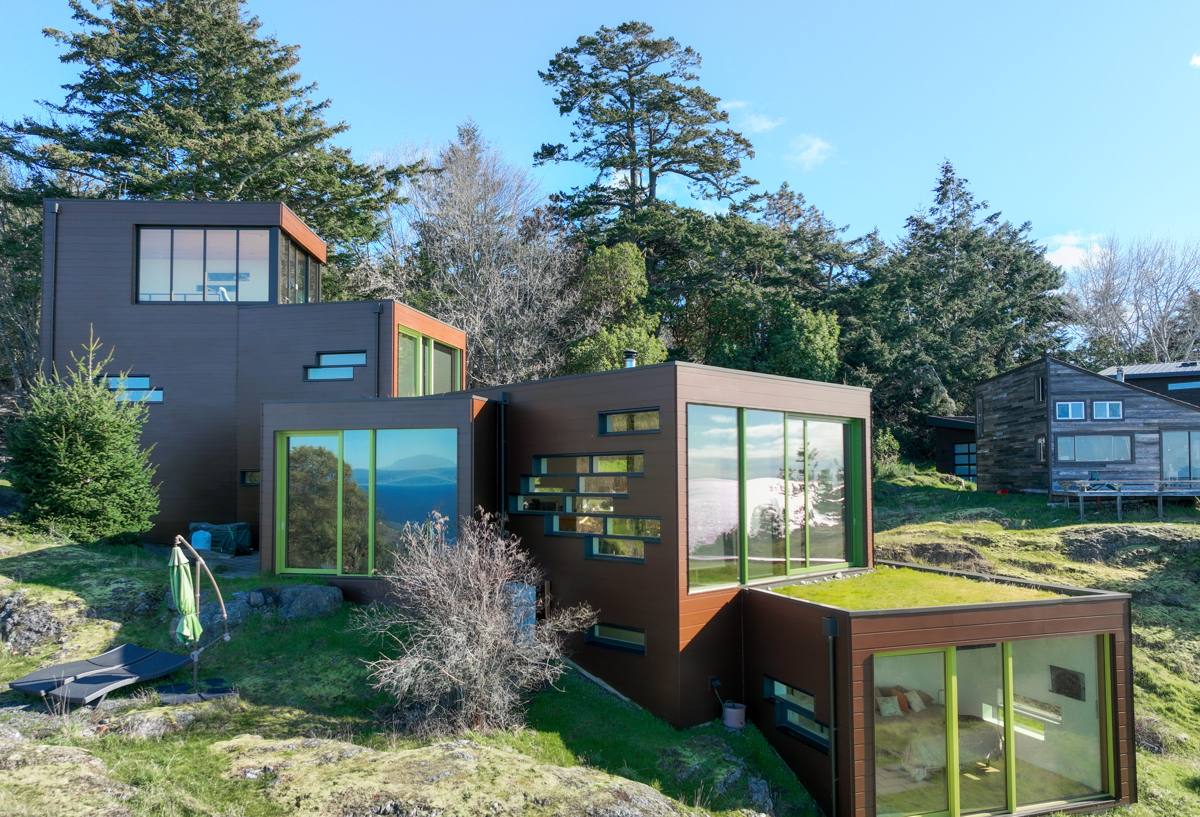
What Salt Air, Driving Rain, and Moss Season Actually Do to Siding
Homeowners often assume the biggest threat to siding is a single big storm. On Guemes Island, the bigger threat is the slow, constant exposure that builds up between storms.
Salt Air
Airborne salt doesn't just affect metal fasteners and hardware — it accelerates the breakdown of paint films, causes chalking and fading on lower-grade siding materials, and works its way into seams and end cuts that aren't properly sealed. Over years, that slow chemical wear is what causes premature caulking failure, color loss, and soft spots at panel joints on homes that face open water or get regular wind off the Salish Sea.
Driving Rain
Wind-driven rain doesn't fall straight down — it gets pushed sideways into lap joints, around window and door trim, and up under starter courses. Siding that isn't installed with the right clearances, flashing, and drainage path will trap that moisture against the wall sheathing instead of shedding it, which is where rot and hidden water damage actually start.
Moss Season
Guemes Island's tree cover means long stretches of shade on north- and east-facing walls, especially on lots with mature evergreens. Combined with the region's wet fall-through-spring stretch, that shade creates ideal conditions for moss, algae, and mildew to take hold on horizontal siding surfaces and anywhere water sits instead of draining. Left alone, that growth holds moisture against the siding surface and can stain or degrade lower-quality finishes over time.
Why James Hardie Fiber Cement Fits This Environment
We install James Hardie exclusively, and on a property like a Guemes Island home, the reasons are practical, not just brand preference. Fiber cement doesn't rot, it's non-combustible, and it holds its shape and finish under sustained moisture exposure far better than wood-based or foam-core alternatives.
The ColorPlus Factory Finish Advantage
James Hardie's ColorPlus finish is baked on at the factory under controlled conditions, rather than field-applied with a brush or sprayer on-site. That matters more on an island than almost anywhere else in the county: repainting siding on Guemes means coordinating a painting crew's ferry trips, weather windows, and material hauling all over again. A factory finish that's engineered to resist fading and chipping in coastal conditions, and that comes with its own finish warranty, takes that entire maintenance cycle off the table for years.
Engineered for the Climate, Not Just the Region
Hardie's HZ5 product line is engineered specifically for the freeze-thaw and moisture patterns of the Pacific Northwest, which is different from how the company engineers siding for the Southeast or Southwest. That climate-specific engineering is part of why we don't treat "Hardie siding" as one generic product — the version we install on Guemes Island homes is built for exactly this kind of exposure.
HardiePlank vs. HardieShingle: Which Fits an Island Home
Most Guemes Island homes fall into one of two Hardie product families, and the right choice depends on the home's style and how exposed it is.
| Product | Best Fit | Practical Consideration |
|---|---|---|
| HardiePlank Lap Siding | Traditional and craftsman-style homes, most waterfront and open-exposure lots | Clean horizontal lines shed wind-driven rain efficiently when installed with correct lap and clearance |
| HardieShingle | Cottage-style homes, shaded or wooded lots with more architectural detail | More surface texture and seams, so correct flashing and gapping matters even more in shaded, moss-prone areas |
Neither product is "better" in the abstract — the deciding factor is the specific wall's sun exposure, wind exposure, and how the home is designed to shed water.
What a Correct Installation Involves
James Hardie siding is only as good as the installation behind it. On Guemes Island, a few details matter more than they would on a sheltered inland lot:
- A drainage gap (rainscreen) behind the siding so any moisture that gets past the surface can drain and dry out instead of sitting against the wall
- Stainless steel or hot-dip galvanized fasteners rated for coastal exposure — standard fasteners corrode faster in salt air and cause staining and loosening over time
- Correct lap spacing and clearance at the bottom starter course, which is the single most common spot for wind-driven rain to force its way behind the siding
- Properly flashed and sealed window and door trim, since these penetrations are where driving rain finds gaps first
- Factory-cut and factory-primed panel ends used wherever possible, since a field cut without sealed edges is a weak point for moisture intrusion
- Adequate clearance between the bottom of the siding and grade, decks, or roof lines, so splash-back and standing water don't sit against the material
Skipping any one of these doesn't usually cause an immediate, visible problem — it causes a problem in three to five years, after the crew is long gone and the homeowner is dealing with a warranty claim instead of a straightforward install.
The Ferry Factor: Why Island Logistics Change the Job
A siding project on Guemes Island isn't just a materials-and-labor job — it's also a logistics job. Every panel, fastener box, and piece of trim has to cross on the ferry, which means the schedule has to account for sailing times, vehicle space, and weather delays that simply don't exist for a job in Anacortes proper.
A crew that hasn't worked the island before often underestimates this. They plan the job the way they'd plan a mainland job, then lose days re-crossing for forgotten material, running into ferry backups, or discovering mid-project that they need to make an unplanned trip for a tool or a fix. Those delays don't just cost time — they're often when corners start getting cut, because a crew under schedule pressure is more likely to skip a flashing detail or rush a lap course to avoid another ferry crossing.
A crew that already works Guemes Island builds the ferry schedule into the plan from day one: staging enough material on-site to avoid mid-project runs, batching site visits, and accounting for weather-dependent sailing delays before they become a problem instead of after.
Cost Factors Specific to a Guemes Island Project
Material and labor pricing for James Hardie siding is similar to what you'd see elsewhere in Skagit County, but a few island-specific factors affect the total project differently than a mainland job would.
| Factor | Why It Matters on Guemes Island |
|---|---|
| Ferry crossings for materials and crew | Fewer, better-planned trips keep the schedule tight; last-minute trips add cost and delay |
| Material staging and storage on-site | Having enough Hardie panels, trim, and fasteners staged upfront avoids stalling the job mid-week |
| Debris removal | Old siding and packaging waste has to be hauled back off the island, which needs to be planned into the schedule, not left as an afterthought |
| Tree cover and access | Wooded lots with limited equipment access can require more hand-carrying of material and more time on setup |
| Weather windows | Coastal wind and rain patterns can narrow the days available for exterior work more than on a sheltered inland lot |
Our Process for a Guemes Island Siding Project
- On-site walk-through: We assess the home's exposure — which walls face open water or prevailing wind, which are shaded and moss-prone, and where the existing siding or trim shows early wear.
- Product and detail plan: We choose between HardiePlank and HardieShingle (or a mix, if the home's design calls for it), select a ColorPlus finish suited to the home's exposure, and plan fastener and flashing details around the specific problem spots we found.
- Logistics and scheduling: We build the ferry schedule, material staging, and crew trips into the project plan before work starts, so the install proceeds without avoidable interruptions.
- Removal and prep: Old siding comes off, the wall sheathing and moisture barrier get inspected for any hidden damage, and any rot or soft spots are addressed before new siding goes on.
- Installation: Rainscreen, starter courses, corrosion-resistant fasteners, and flashing details are installed to spec — not shortcut to save a crossing.
- Final inspection and walk-through: We check lap lines, seams, trim, and finish before calling the job done, and walk the homeowner through what was done and why.
What to Ask Before Hiring Anyone for an Island Siding Job
Whether you go with us or someone else, these are the questions worth asking before signing a contract for siding work on Guemes Island:
- Have you completed projects on Guemes Island before, and do you already have a logistics plan for material and crew crossings?
- What fastener type will you use, and is it rated for coastal salt exposure?
- Will there be a drainage gap (rainscreen) behind the siding, or will it be installed directly against the wall?
- How will old siding and debris be removed from the island?
- What's the manufacturer's warranty, and does it cover the finish separately from the material?
- Can you walk me through how flashing will be handled at windows, doors, and the bottom starter course?
A contractor who answers these clearly and specifically, without hesitation, is one who's actually done the work before — not just quoted it.
Why a Crew That Already Works Guemes Island Matters
Anacortes and Skagit County have plenty of siding contractors, but not all of them have worked island jobs regularly. The difference shows up in the details: knowing to stage extra fasteners because a forgotten box means a lost half-day, knowing which walls on a typical island lot need extra attention for moss and shade, and knowing how to plan around ferry schedules instead of discovering the hard way that the 3:15 sailing is full.
None of that is complicated, but all of it adds up. A crew that treats a Guemes Island job like any other Anacortes job usually ends up cutting time somewhere to make up for the logistics they didn't plan for — and on a home exposed to this much salt air and rain, the corner that gets cut is usually the one that matters most five years later.
If you're considering James Hardie siding for a home on Guemes Island, we're happy to walk the property, look at your home's specific sun and wind exposure, and put together a straightforward, no-pressure estimate. There's a form below to get started whenever you're ready.