 Anacortes Siding
 Why Oak Harbor Roofs Take a Different Kind of Beating
Oak Harbor sits close enough to Anacortes that our crew is over the Deception Pass Bridge and on site within the same morning we'd cover a job in town, but the roofs themselves face a slightly different mix of punishment than what you'll find further inland in Skagit County. Homes near the water deal with salt-laden air that speeds up corrosion on fasteners, flashing, and any exposed metal. Add in driving rain that comes sideways off Puget Sound during winter storms, and a wet season that stretches from October well into May, and you've got a roof system that has to manage moisture from multiple directions at once, not just from above.
Then there's moss. Between the tree cover on many Oak Harbor lots and the long stretch of damp, low-light months, moss and algae get a real head start on roofs here compared to drier parts of the state. None of this means a roof can't last its full expected lifespan — it means the materials, ventilation, and flashing details all have to be chosen with this specific climate in mind, not a generic spec sheet.
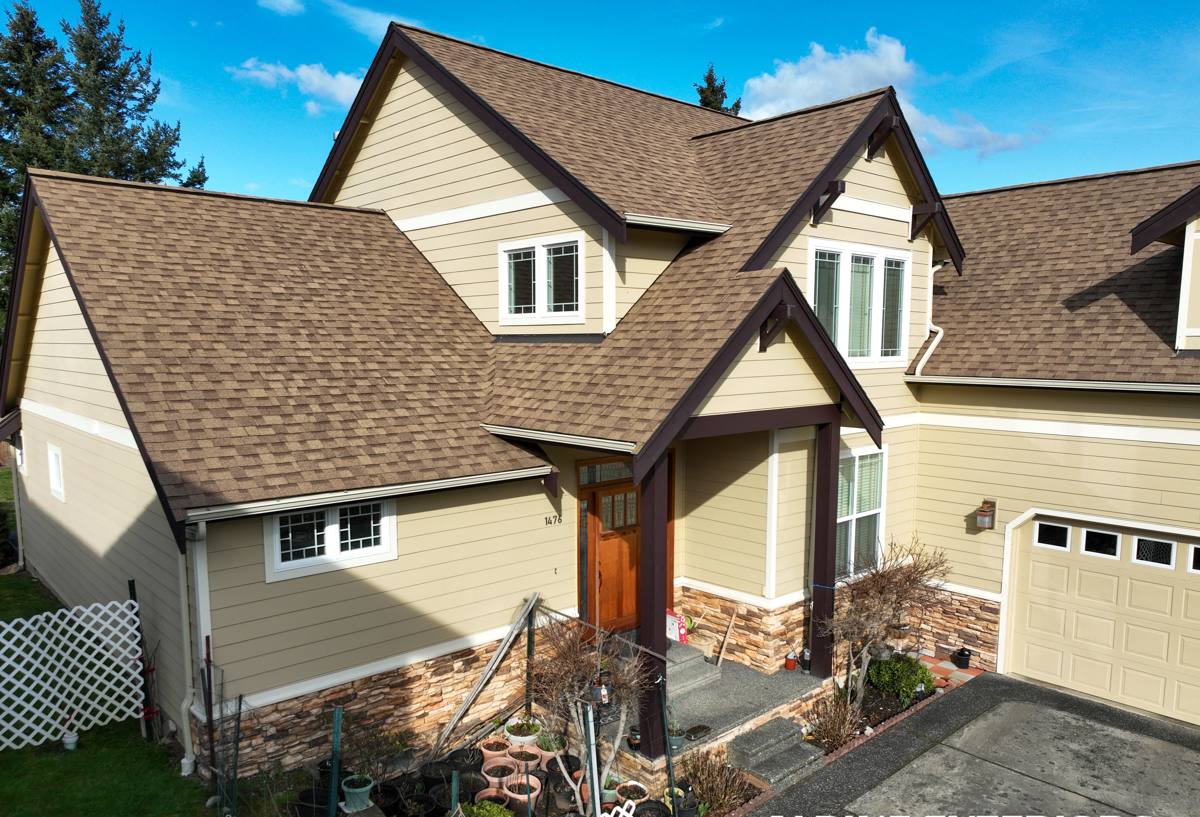
What a Correct Roof Replacement Actually Involves
A roof replacement is more than stripping old shingles and nailing down new ones. Done right, it's a full system: decking, underlayment, flashing, ventilation, and the finish material all working together. Skipping any one of those steps to save time is usually where leaks start showing up two or three winters later.
Decking and Underlayment
Once the old roofing is off, the plywood or OSB decking underneath gets inspected for soft spots, delamination, or rot — common wherever a roof has had a slow leak for a while without anyone noticing. Any bad decking gets replaced before anything else goes down. Over the deck, we install synthetic underlayment across the full roof, with self-adhering ice-and-water shield at the eaves, valleys, and around every penetration (vents, chimneys, skylights). In a climate with this much sustained rain, that ice-and-water shield is doing a lot of the real waterproofing work, not just the shingles.
Flashing and Penetrations
Most roof leaks don't come from the field of the roof — they come from flashing that was reused, undersized, or installed with the wrong lap direction. Step flashing at walls, counter-flashing at chimneys, and properly lapped drip edge at the eaves and rakes all matter more in a wet climate than in a dry one, because there's simply more water looking for a way in over the course of a year.
Ventilation Isn't Optional Here
Balanced attic ventilation — intake low at the eaves, exhaust high at the ridge — keeps moist air from condensing inside the attic and rotting the decking from underneath. In a marine climate, an under-ventilated attic can do as much damage to a roof deck as a bad leak, just more slowly and less visibly.
Matching the Material to the Climate
There's no single "best" roofing material for every Oak Harbor home — it depends on your budget, your roof's exposure to wind and salt air, and how much maintenance you're realistically going to keep up with. Here's how the common options compare for this specific climate:
| Material | Moss / Algae Resistance | Salt Air Durability | Typical Lifespan | Maintenance |
|---|---|---|---|---|
| Architectural asphalt shingle (algae-resistant) | Good, with copper/zinc granule treatment | Good with corrosion-resistant fasteners and flashing | 25–30 years | Periodic moss/debris removal |
| Standard 3-tab asphalt shingle | Fair — stains and moss faster without treated granules | Fair | 15–20 years | More frequent cleaning |
| Standing seam metal | Excellent — moss struggles to grip smooth metal | Very good with marine-grade coatings and stainless fasteners | 40–50+ years | Low |
| Synthetic/composite shake or slate | Good | Good | 30–50 years | Low to moderate |
We'll walk you through what fits your roof's pitch, your budget, and how much you want to deal with maintenance down the road — there's no single right answer for every house.
Moss, Algae, and the Long Wet Season
Moss doesn't just look bad — over time it holds moisture against the shingle surface and can work its way under tabs and shingle edges, especially at the north-facing slopes and shaded valleys that stay damp longest. A few things make a real difference:
- Algae-resistant shingles with copper or zinc-infused granules, which slow regrowth for years longer than standard granules
- Zinc or copper strips installed near the ridge, so rainwater carries trace metal down the roof and discourages new growth
- Keeping gutters, valleys, and roof-to-wall transitions clear of needles and debris, since that's where moss and standing moisture get their start
- Trimming back overhanging branches — the roof itself is only half the equation; shade and debris from trees do the rest
None of these steps make a roof moss-proof forever, but together they buy years of extra life and cut down on how often you need someone up there scraping and treating it.
Our Process for an Oak Harbor Roof Replacement
- On-site inspection. We get on the roof (not just a drive-by look) and check the decking, flashing, ventilation, and current material condition, and note anything specific to your home's exposure — tree cover, wind direction, water views.
- Written scope and material options. You get a clear, itemized quote showing exactly what's included — tear-off, decking repair allowance, underlayment, flashing, ventilation, and material choice — not a one-line lump sum.
- Permitting. Roof replacements typically require a permit through the applicable local jurisdiction. We handle that paperwork before any tear-off begins.
- Tear-off and decking inspection. Old roofing comes off down to the deck, decking gets inspected and repaired as needed, and you're kept in the loop if we find anything beyond what was visible from the ground.
- Installation. Underlayment, ice-and-water shield, flashing, ventilation components, and the finish material go on in that order, following manufacturer specs for nailing pattern and exposure — which matters for both warranty coverage and wind performance.
- Daily cleanup and final walk-through. Job sites get swept and magnet-rolled for stray nails each day, and we do a final walk-through with you before calling it done, including warranty paperwork.
Repair, Recoat, or Full Replace?
Not every roof problem means a full replacement. But there are signs that point away from a patch job and toward tearing off and starting fresh:
- Granule loss heavy enough that you can see bare asphalt in multiple spots, not just one worn patch
- Shingles that are cupping, curling, or cracking across large sections of the roof, not isolated to one slope
- More than one active leak, or a leak that keeps returning to the same general area after repairs
- Soft or spongy decking felt underfoot, or sagging visible from the ground
- A roof at or past 20–25 years old (asphalt) with moss that's lifted shingle edges rather than just sitting on the surface
- Daylight visible through the roof deck from inside the attic
If your roof shows one or two of these in a limited area, a repair may genuinely be the right call — we'll tell you that instead of pushing a replacement you don't need yet.
Why a Local Anacortes Crew Matters for Oak Harbor Jobs
Working Oak Harbor regularly — crossing Deception Pass, not just driving by it — means we already understand how wind exposure and moisture behave differently on the Whidbey Island side versus in Anacortes proper, and we plan flashing, fastening, and material choice accordingly instead of applying a one-size-fits-all spec. It also means faster response if a storm damages a roof mid-project or an inspection needs to be scheduled quickly. A crew that treats Oak Harbor as a regular part of its territory, rather than an occasional out-of-town job, shows up with the right materials the first time and isn't learning the local permitting process on your dime.
What Affects Your Price
Every quote is specific to the house, but a few factors move the number more than anything else: roof size and pitch (steeper roofs take longer and cost more in labor), how much decking needs replacing once the old roofing is off, the material tier you choose, and the complexity of the roofline — valleys, dormers, chimneys, and skylights all add flashing work. We'll break out each of these in writing so you can see exactly where your money is going, not just a single bottom-line number.
If your roof is showing its age or you just want an honest opinion on whether it's a repair or a replacement, we're happy to take a look. Fill out the form below for a free, no-pressure estimate — we'll tell you what we actually see, not just what sells the biggest job.