 Anacortes Siding
 Skyline's Deck-Building Climate Is Not Like Anacortes Down the Hill
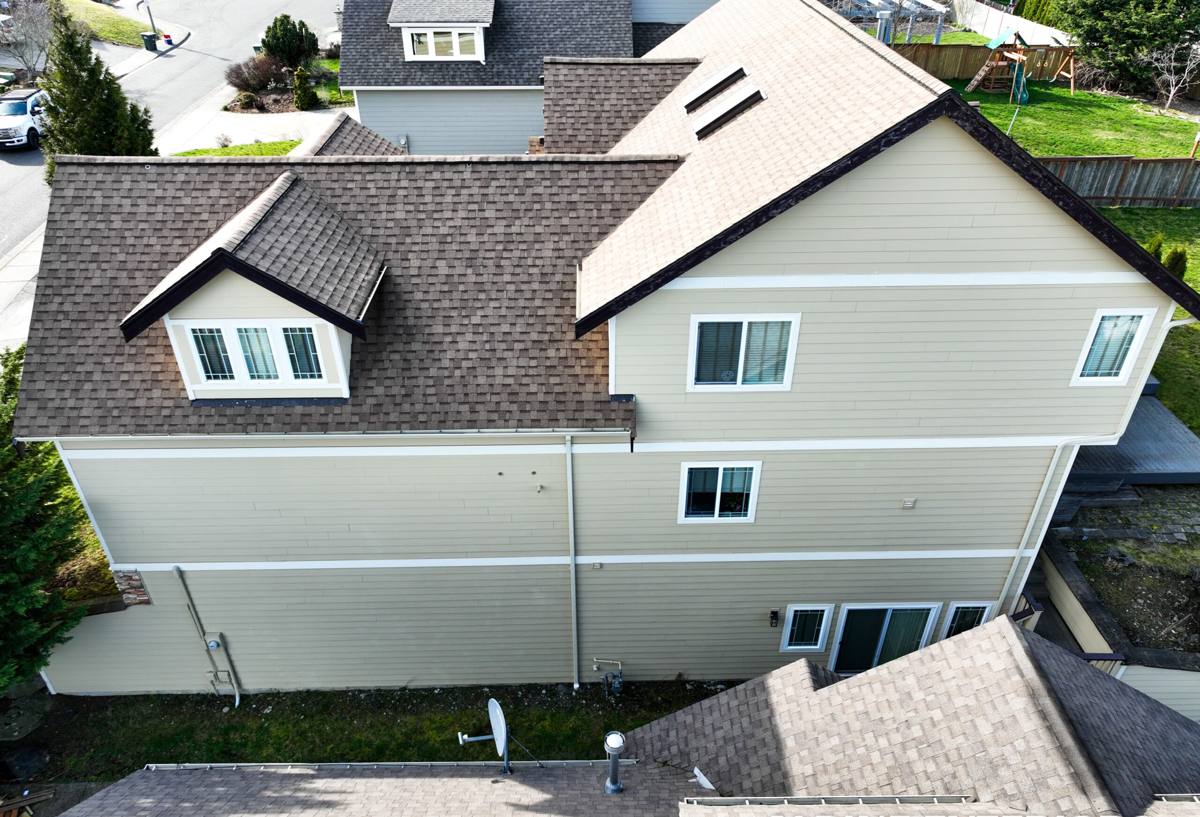
Skyline sits up on Fidalgo Island's higher, view-facing ground, and that elevation and exposure change what a deck has to put up with. Homes here catch more direct wind off the water, more salt-laden air, and more driving rain than a deck tucked into a sheltered lot a few blocks inland. Add in the long, wet stretch of the Pacific Northwest calendar when the sun barely gets above the tree line, and you have a recipe for a deck surface that stays damp far longer than most homeowners expect.
None of that means a deck can't hold up here — it means the material choice and the install details matter more than they would on a typical inland Skagit County lot. A deck built for a dry-side climate, or built to a generic spec sheet, tends to show problems in Skyline faster than it would elsewhere in the county.
What Salt Air, Wind-Driven Rain, and Moss Actually Do to a Deck
Each of these factors attacks a deck in a different way, and they compound each other over a Skyline winter.
Salt Air
Salt-laden air corrodes exposed metal fasteners, hinges, and railing hardware faster than it would a few miles from the water. Standard coated screws and brackets can start showing rust streaks and pitting well before their rated lifespan if they weren't specified for a marine-adjacent environment.
Driving Rain
Wind-driven rain doesn't just fall straight down — it gets pushed sideways under railings, into board gaps, and against ledger connections. On an elevated, wind-exposed lot, water finds its way into places a calmer site would never test.
Moss and Algae
Shaded, north-facing, or tree-covered sections of a deck stay damp for weeks at a stretch during our long wet season. That moisture, combined with organic debris from surrounding trees, is exactly what moss and algae need to take hold. Beyond looking bad, a mossy deck surface gets slick and can become a real slip hazard on stairs and transitions.
Why Composite Decking Is a Strong Match for This Neighborhood
Composite decking doesn't absorb water the way wood does, doesn't need annual staining or sealing, and modern capped composite boards resist moss and algae growth far better than bare wood ever will. For a Skyline homeowner who wants a deck they can actually use and enjoy the view from — not one they're constantly re-treating — that's the appeal.
That said, composite is not maintenance-free, and it is not immune to a bad installation. The board itself resists moisture better than wood, but the fasteners, the substructure, the drainage plan, and the gaps between boards still have to be done right for this specific climate. A composite deck installed to a low-exposure inland spec, with standard hardware and no attention to airflow underneath, can still trap moisture, grow mildew in shaded sections, and loosen fasteners over time.
Choosing the Right Composite Board for a Skyline Lot
Not all composite decking performs the same way in wind-exposed, salt-air conditions. The table below is a general guide to how common decking approaches compare for this kind of site — actual product lines vary, and we'll walk through specific options during your estimate.
| Decking Type | Moisture Resistance | Moss/Algae Resistance | Ongoing Maintenance | Typical Lifespan |
|---|---|---|---|---|
| Pressure-treated wood | Fair — absorbs water, can cup or split | Low — needs regular cleaning/treatment | Annual staining/sealing | 10-15 years |
| Basic/uncapped composite | Good, but can wick moisture at cut ends | Moderate — surface can stain over time | Periodic cleaning | 15-20 years |
| Capped composite | Very good — shell resists water intrusion | Good — shell resists staining and growth | Occasional washing | 20-30 years |
| PVC decking | Excellent — no wood content to absorb moisture | Very good | Occasional washing | 25-30+ years |
For most Skyline homes, we lean toward capped composite or PVC boards because the outer shell holds up better against sustained dampness and salt exposure than an uncapped product. The right pick still depends on your budget, how much sun or shade the deck gets, and how the deck ties into the rest of the house.
Color and Finish Considerations
Darker composite tones absorb more heat and can accelerate expansion and contraction in boards, which matters on a deck that's already dealing with temperature swings from wind exposure. Lighter and mid-tone colors also tend to show moss and algae growth less readily than very dark boards, which is worth weighing for shaded sections of a Skyline deck.
What a Correct Installation Requires on a Site Like This
The board is only part of the equation. On an exposed, wet-climate lot, the installation details are what actually determine whether a composite deck performs for its full rated life.
- Fastener grade: Stainless steel or marine-rated coated fasteners and brackets, not standard hardware, to resist salt-air corrosion.
- Substructure spacing: Joist spacing set to the manufacturer's wet-climate or coastal specification, not the minimum allowed spacing.
- Joist protection: Joist tape or an equivalent moisture barrier on the framing to keep water from sitting against the wood substructure.
- Ventilation underneath: Enough clearance and airflow below the deck so trapped moisture can actually dry out between rain events.
- Proper slope and gapping: Correct board spacing and a slight slope away from the house so water sheds instead of pooling.
- Ledger and flashing: A properly flashed ledger board connection, since this is one of the most common points where wind-driven rain gets pushed into a structure.
Skipping any of these to save time or cost doesn't show up on day one — it shows up two or three winters in, as soft framing, loosening boards, or persistent damp spots that never fully dry.
Our Process for a Skyline Composite Decking Project
We start with a site visit, not a sales pitch. On an elevated, view-oriented lot like most in Skyline, we're looking at wind exposure, sun and shade patterns across the deck footprint, existing drainage, and the condition of any structure we'd be building on or tying into.
What We Check Before We Quote
We look at the ledger connection and existing framing if it's a rebuild, confirm what permitting applies through the City of Anacortes or Skagit County depending on your exact location, and talk through board options that fit both your budget and how much sun or shade that particular deck gets.
During the Build
We build the substructure to a spec that accounts for this climate — not a generic minimum — then install boards with attention to gapping, fastening, and drainage. We walk the finished deck with you before we call the job done, so you know what maintenance (if any) it actually needs.
Keeping a Skyline Composite Deck Looking Right Through Moss Season
Composite decking cuts maintenance dramatically compared to wood, but "low-maintenance" isn't "no-maintenance" in this climate. A simple seasonal routine keeps a capped composite deck performing and looking good for its full lifespan.
- Sweep off leaves, needles, and organic debris regularly, especially in fall — this is the biggest driver of moss and algae growth on shaded boards.
- Wash the deck surface a couple of times a year with a soft-bristle broom and a mild soap-and-water solution or a manufacturer-approved composite deck cleaner.
- Avoid high-pressure power washing directly on composite boards, which can damage the cap layer on some products — use low pressure and a wide-fan tip if you pressure wash at all.
- Keep planters, furniture legs, and mats off the surface for extended periods so moisture and debris don't build up underneath them.
- Check railing hardware and fasteners once a year for any early signs of corrosion, especially on the most wind-exposed side of the deck.
- Make sure gutters and downspouts near the deck are clear so roof runoff isn't dumping extra water onto the deck surface or framing below.
Why It Matters That We Already Work in Skyline
A neighborhood like Skyline has its own quirks — steep or limited site access on some lots, view-oriented layouts that put decks in more exposed positions than the house below them, and permitting that depends on exactly where a property falls between Anacortes city limits and unincorporated Skagit County. A crew that's already built decks on similar lots up here isn't guessing about hardware grade, substructure spacing, or how a particular orientation handles wind-driven rain — we've seen how these decks actually hold up over time in this exact setting, not just on paper.
That experience shows up in fewer surprises during the build and a deck that's specified correctly the first time, instead of one that needs early repairs because it was built to a generic standard instead of this neighborhood's actual conditions.
If you're planning a new composite deck or replacing an aging one in Skyline, we're happy to take a look and walk the site with you. Reach out through the form below for a free, no-pressure estimate.