 Anacortes Siding
 Storm Damage Roof Repair for Bow Homes
Bow sits in a stretch of Skagit County that takes weather from two directions at once — open water exposure off Samish Bay and Padilla Bay to the west, and the funneling wind that comes down off the foothills to the east. Roofs out here don't fail the way roofs fail in a sheltered inland neighborhood. They fail at the edges first: ridge caps that lift in a gust, flashing that's been worked loose by years of wind-driven rain, and valleys that stay wet long after a storm has passed because moss and needle debris are holding water against the shingle mat. If you own a home in Bow, storm damage repair isn't a once-in-a-decade call — it's routine maintenance that most homeowners just don't think about until water shows up on a ceiling.
This page covers what storm damage actually looks like on a Bow roof, what a repair should include if it's going to hold, and how we approach the work when we're called out after a wind event or a heavy rain system moves through.
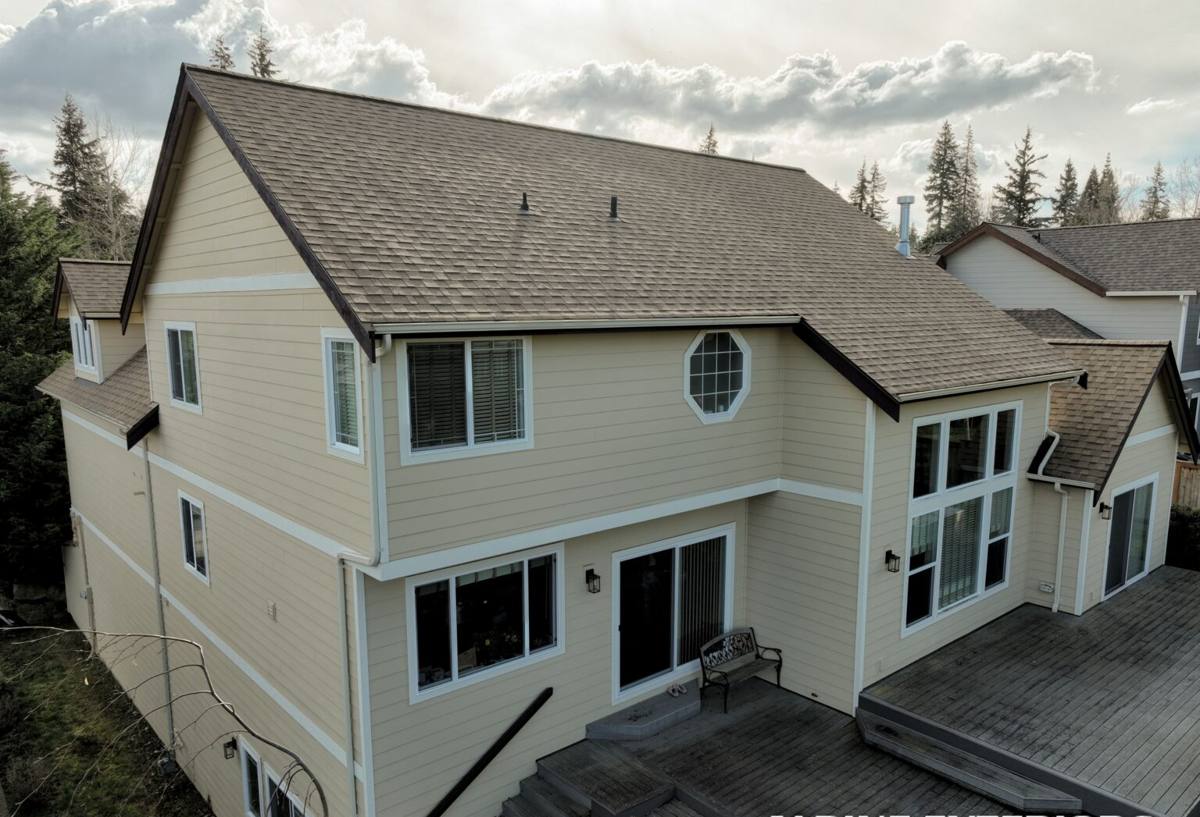
Why Bow Roofs Take a Different Kind of Beating
Three things define roofing conditions in this part of Skagit County, and all three show up in the repair calls we get.
Salt Air and Corrosion
Homes closer to the water deal with a slow, steady corrosion problem that inland Anacortes and Mount Vernon properties mostly don't. Salt-laden air accelerates rust on exposed fasteners, drip edge, and any galvanized flashing that isn't holding up as well as it should. A nail head that's rusted through doesn't announce itself — it just quietly stops doing its job, and the first sign is usually a lifted shingle tab after the next windstorm.
Driving Rain
Storms coming off the water don't fall straight down here — they come in sideways. Wind-driven rain finds every gap in flashing, every place where a shingle course wasn't lapped quite right, and every penetration around a vent pipe or chimney. A roof that's watertight in a normal rain can still leak in a storm, because the water is being pushed uphill under the shingles instead of running off them.
A Long Moss Season
Skagit County's wet season runs long, and shaded, north-facing roof sections in Bow often stay damp for months at a stretch. Moss and moisture-holding debris don't just look bad — they hold water against the shingle surface, work granules loose, and lift shingle edges just enough for wind to get underneath during the next storm. Moss damage and storm damage are connected more often than homeowners realize: the moss sets the roof up, and the wind finishes the job.
What Actually Counts as Storm Damage
Not every storm-related roof problem looks dramatic. Some of the most common damage we find after a wind event in Bow includes:
- Lifted or torn-off shingle tabs, especially along ridges, hips, and roof edges where wind uplift is strongest
- Flashing pulled loose or bent around chimneys, skylights, and vent pipes
- Fasteners backed out or corroded through, leaving shingles loosely attached
- Gutter and fascia damage from wind-thrown branches or debris
- Granule loss on shingles that were already weakened by prolonged moss or moisture exposure
- Soft spots or discoloration on interior ceilings that show up days after the storm, once water has had time to work through
That last point matters. A lot of storm damage doesn't show up as a hole — it shows up as a slow leak that starts weeks later. That's why we recommend a roof check after any significant wind event, even if nothing looks obviously wrong from the ground.
What a Correct Storm Repair Actually Involves
A rushed storm repair is one of the most common ways a homeowner ends up paying for the same roof twice. Here's what we consider the minimum for a repair that actually holds.
1. A Full Inspection, Not Just a Patch
Storm damage is rarely contained to the spot where the leak showed up inside the house. Wind uplift damage often starts several feet away from where water is actually entering, so we walk the whole roof — not just the reported problem area — before we quote a repair.
2. Underlayment and Decking Check
If wind-driven rain has been getting under the shingles for any length of time, the underlayment and the decking beneath it can be compromised even when the shingles themselves look mostly fine. Replacing shingles over soft or water-damaged decking is a temporary fix at best — we check the deck at every repair location before closing it back up.
3. Matching and Integrating Materials
Replacement shingles need to tie into the existing roof properly — correct nailing pattern, correct exposure, and flashing that's integrated with the surrounding courses rather than caulked on top as a shortcut. A patch that isn't woven into the existing roofline is one of the most common causes of repeat leaks.
4. Flashing and Fastener Upgrades Where Needed
Given the corrosion issues salt air causes in this area, we often recommend upgrading corroded fasteners or thin flashing to better-rated materials during a repair, rather than just replacing what failed with the same spec that failed.
Our Storm Repair Process
- Call or request an estimate. Tell us what you're seeing — a leak, missing shingles, debris damage — and roughly when it happened.
- On-site inspection. We walk the roof, check the attic or ceiling from the inside where accessible, and document the damage.
- Written estimate. You get a clear scope of work and price before anything is touched — no surprise add-ons once we're on the roof.
- Temporary protection if needed. If a storm has left an active leak, we can tarp or seal the area to stop water intrusion while a full repair is scheduled.
- Repair. We complete the work to match the existing roof system, checking decking, underlayment, and flashing as part of the job — not as an upsell after the fact.
- Final walkthrough. We show you what was done and flag anything else on the roof worth keeping an eye on, even if it wasn't part of this repair.
Repair or Replace? What Actually Drives That Decision
Storm damage sometimes reveals a roof that was already near the end of its useful life — the storm didn't cause the underlying problem, it just exposed it. Here's how we think through that decision with homeowners.
| Factor | Leans Toward Repair | Leans Toward Replacement |
|---|---|---|
| Roof age | Under 12-15 years | Approaching or past manufacturer lifespan |
| Extent of damage | Isolated to one section or slope | Spread across multiple slopes or the whole roof |
| Decking condition | Solid, dry, no soft spots found | Soft, delaminated, or water-stained in multiple areas |
| Moss/granule history | Minimal wear beyond the storm event | Significant granule loss or moss damage predating the storm |
| Prior repairs | First repair on this roof | Multiple past patches in different areas |
If a roof only needs repair on paper but has three or four prior patch jobs and visible wear across the whole surface, we'll say so plainly. We'd rather tell a Bow homeowner honestly that a repair is a short-term fix than sell a patch we know won't hold through the next storm season.
Materials We Use and Why
For storm repairs, we match the existing roofing material whenever a reasonable match is available, since mixing shingle types or profiles on the same slope creates its own long-term problems. Where we have flexibility — flashing, underlayment, fasteners — our standard is to spec materials rated for coastal and high-moisture exposure, given what salt air and this region's rain do to lower-grade hardware over time. That's a slightly higher upfront cost in some cases, but it's a standard we apply because we're the ones coming back if a cheaper fastener corrodes out in three years instead of fifteen.
Insurance and Documentation
Many storm repairs in this area are at least partially covered by homeowner's insurance, particularly for sudden events like windstorms. A few things help that process go smoother:
- Photograph visible damage from the ground as soon as it's safe to do so, before any cleanup
- Note the date and general weather event, since insurers often ask for a timeline
- Get a written, itemized estimate — adjusters generally want specifics, not a verbal ballpark
- Keep any tarping or emergency mitigation documented, since insurers usually expect reasonable steps to prevent further damage
We provide detailed written estimates that homeowners can submit to their insurer, and we're happy to talk through what we found on the roof if an adjuster has questions.
Why a Crew That Already Works Bow Matters
Storm repair isn't a generic skill — it's specific to what a given roof and a given region actually deal with. A crew that works Bow and the surrounding Anacortes area regularly already knows which roof styles and ages are common here, what salt air does to fasteners over time, and which slopes typically hold moss and moisture longest through the wet season. That local pattern recognition shows up in faster, more accurate diagnosis — we're not guessing at what a Skagit County storm does to a roof, we're seeing it repeatedly.
It also matters for response time. After a regional storm, roofing crews get busy fast, and companies based well outside the area often can't get to smaller repair jobs for weeks. Being local means we can typically get out for an inspection and temporary protection much sooner.
Signs You Should Have Your Roof Checked After a Storm
- Shingles or granules visible in gutters, downspouts, or on the ground around the house
- Any ceiling stain, no matter how small, that appeared after a windy or rainy stretch
- Visible gaps, curled edges, or missing shingle tabs from the ground
- Flashing around a chimney, skylight, or vent that looks bent or separated
- A musty smell in an attic or upper closet that wasn't there before
- Debris impact — a fallen branch, even a small one, that struck the roof directly
If a home in Bow shows any of these signs after a storm, it's worth having someone look before the next weather system moves through, rather than waiting for a leak to become obvious inside the house.
If you've had storm damage — or just want a roof checked after a rough stretch of weather — we're glad to come take a look. The estimate is free, there's no pressure to move forward, and you'll get a straight answer about what's actually needed. Use the form below to get started.